
PENTAX 17: The Half-Frame Film Camera That Doubles Your Exposures

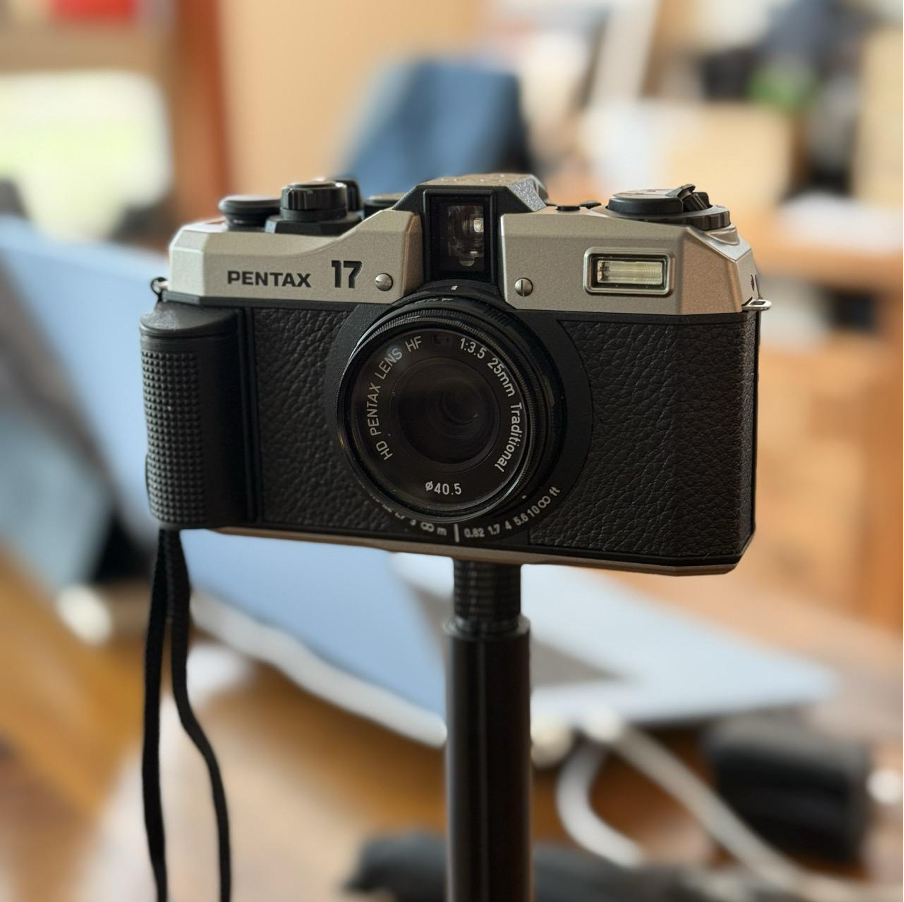
Table of Contents
 Pentax 17 At a Glance
Pentax 17 At a Glance
The PENTAX 17 is a half-frame 35mm film camera that captures two vertical images per frame, doubling your shots to 72 exposures per roll while maintaining the tactile film experience. With its six-zone focusing system and programmed exposure modes, it bridges smartphone photography habits with traditional film techniques in a pocketable, award-winning design. At $499, it’s the most accessible new film camera from a major manufacturer in two decades.
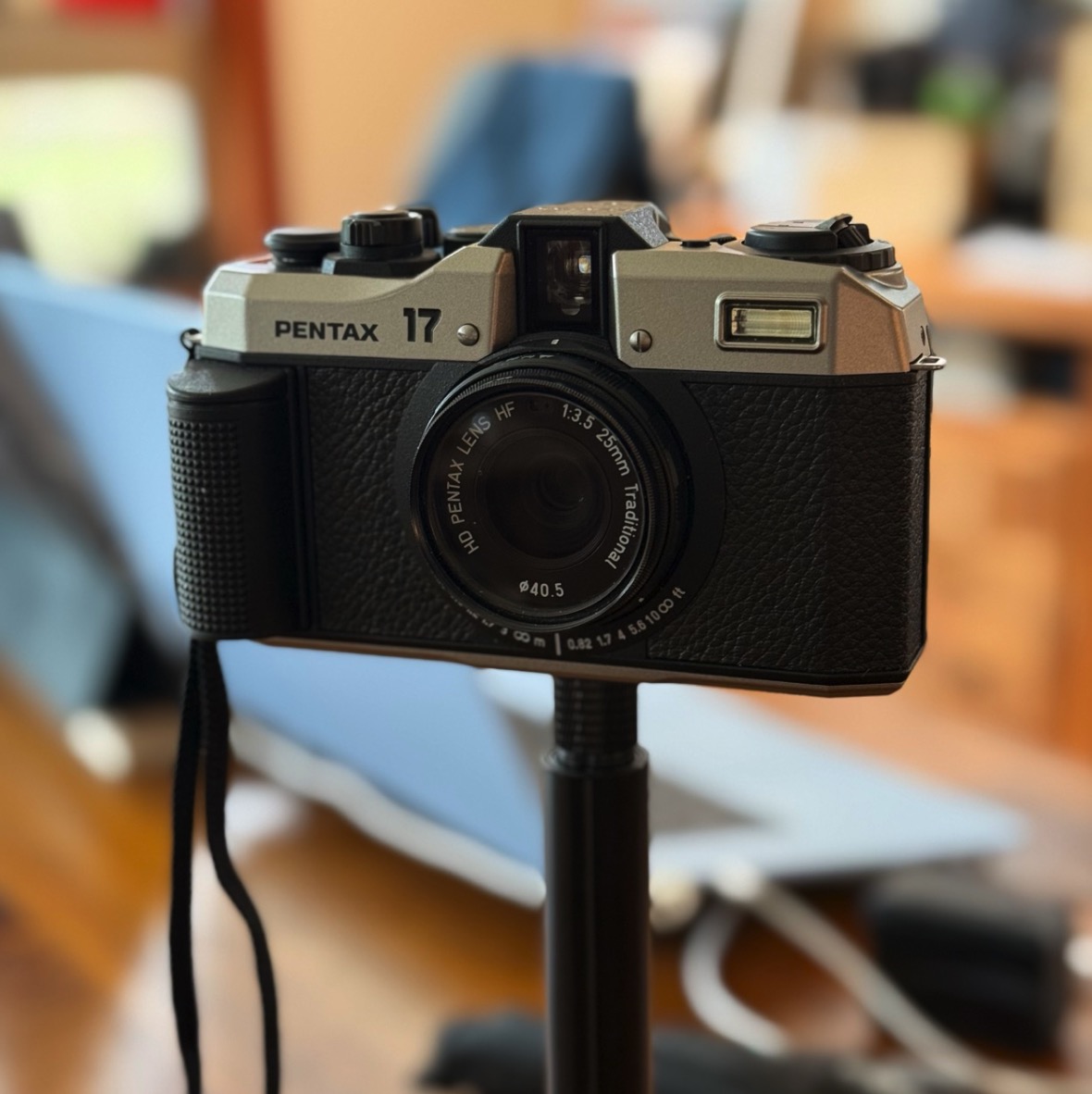
Half-frame 35mm camera with zone focusing system and automatic exposure with compensation controls. Features DX code reading for automatic ISO detection with manual override capability. Plastic body construction with built-in light meter requiring battery power. Produces 72 vertical images on a standard 36-exposure roll due to the half-frame format. Includes creative shooting modes and an exposure compensation dial.
- Doubles shot count per roll with half-frame format, reducing film costs.
- Reliable build quality from one of the biggest names in film photography.
- Warranty support and service network.
- Simple operation makes it accessible for beginners while offering creative control for more experienced shooters.
- Half-frame format means smaller negative size, which results in reduced image quality compared to full 35mm.
- Limited manual controls compared to traditional film cameras it comes from.
- Prominent screw placement on the grip is uncomfortable.
- Format: 35mm half-frame (18x24mm)
- Lens: Fixed focal length
- Focusing: Zone focus system
- Exposure:: Automatic with compensation
- ISO Range: DX code reading with manual override
- Metering: Built-in light meter (battery powered)
- Body Material: Plastic construction
- Power: Battery operated for meter
- Film Capacity: 72 exposures per 36-exposure roll
- Features: Exposure compensation, creative modes
Released more than a year ago, the PENTAX 17 marked the celebrated return of Pentax to the film camera market after a two-decade hiatus, bringing a fresh take on analog photography through its half-frame design.
By capturing two 17 mm × 24 mm vertical-format images within a traditional 35 mm (36 mm × 24 mm) film frame, the PENTAX 17 effectively doubles your exposures per roll—72 shots on a standard 36-exposure film—while delivering the tactile, engaged experience that only film can provide.
Some film photographers love the 72 shots, while others think it makes the output so small that it’s not worth using the film. If I shoot a roll of absolute bangers, then I’m happy, but with exposures that are out of focus, well, then I’ve got twice as many shots not to like.
Doubling your exposure can get tedious compared to my other film cameras; there’s something nice about the familiarity of 36 frames, so 72 can feel overwhelming. I know that sounds odd in a world where cameras can shoot thousands or tens of thousands of images with a single card, but the point of a film camera is to shoot in discrete chunks. Waiting a month to finish off the 72 shots just to get my money’s worth doesn’t feel as “fun” as 36 frames.
Still, it’s enjoyable to shoot film, and I find it meditative compared to my digital work. If I get eight or ten images I like out of 72 frames, it’s enough to keep motivating me.

Pentax 17 Design Philosophy
The PENTAX 17 emerged from Ricoh Imaging’s Film Project initiative, first announced in December 2022, responding to the growing popularity of film cameras among young photographers seeking the distinctive, nostalgic ambience different from digital cameras.
Ricoh designed the camera specifically for two demographics: first-time film shooters accustomed to vertical smartphone images, and photographers looking for cost-effective film shooting through the half-frame format’s doubled exposure count. Ricoh’s
The approach explains many of the camera’s design choices, from its vertical viewfinder to its simplified exposure controls.
Pentax 17 Construction
Crafted with both nostalgia and modern aesthetics in mind, the PENTAX 17 boasts a lightweight body that earned it top honors at the German Design Award 2025, Red Dot, and the iF Design Award 2025.
The camera’s top and bottom covers are constructed from solid but lightweight magnesium alloy—the same material used in flagship cameras like the PENTAX K-1 Mark II and PENTAX 645Z—while the body employs plastic to reduce overall weight.
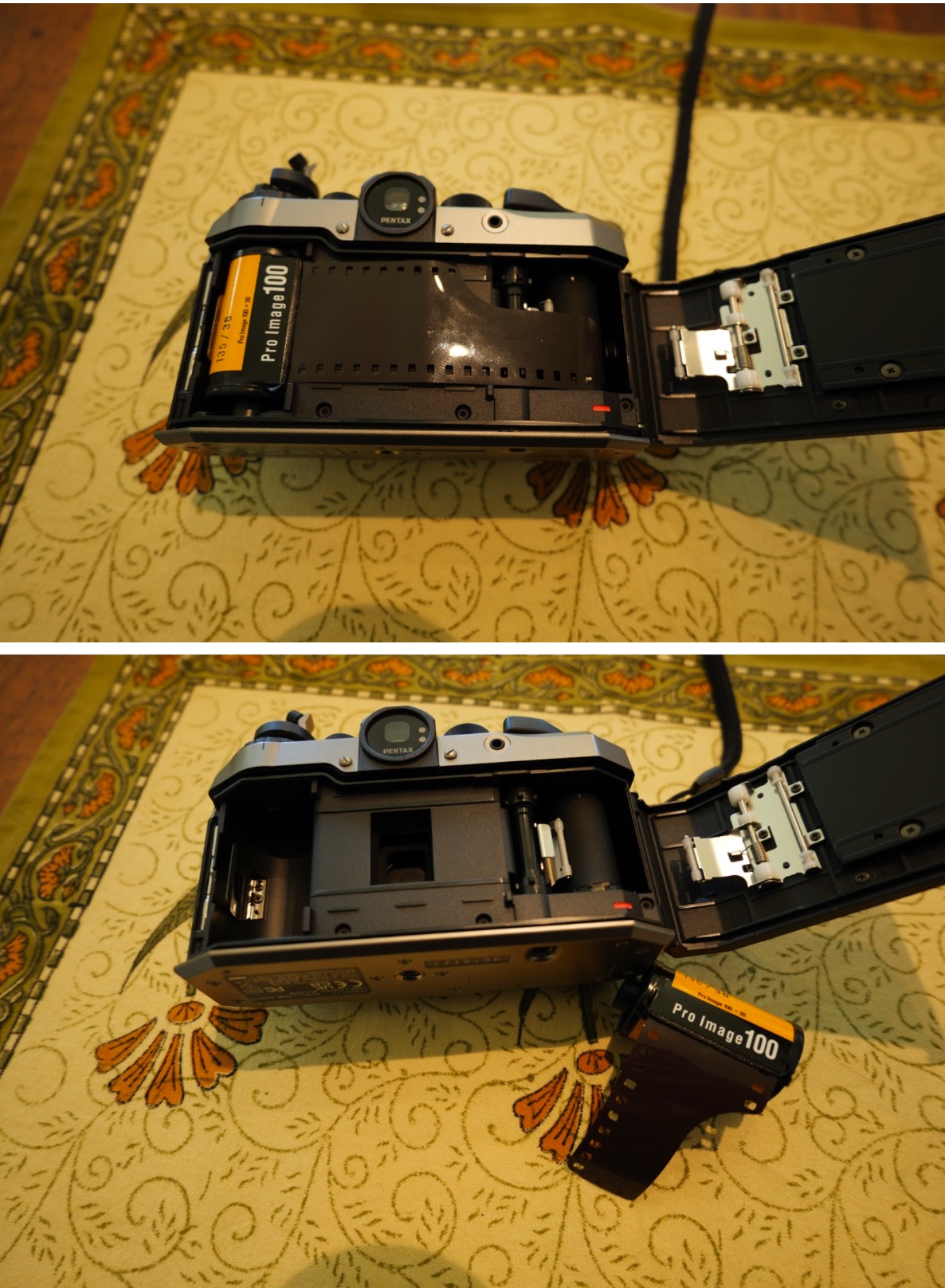
It weighs about 290 grams (or about 10 ounces) without film or battery. The camera measures 125mm long, 75mm tall, and 55mm thick (roughly five inches by two inches by three inches), making it genuinely pocketable. Its retro-inspired controls for manual film advance, zone-focus ring, and dials feel very deliberate. I like how the camera feels like a point-and-shoot creatively. It’s a fun camera to pick up and capture images in a way that digital cameras can’t. There’s no menu to use, no LCD screen to touch, just a camera and its buttons.
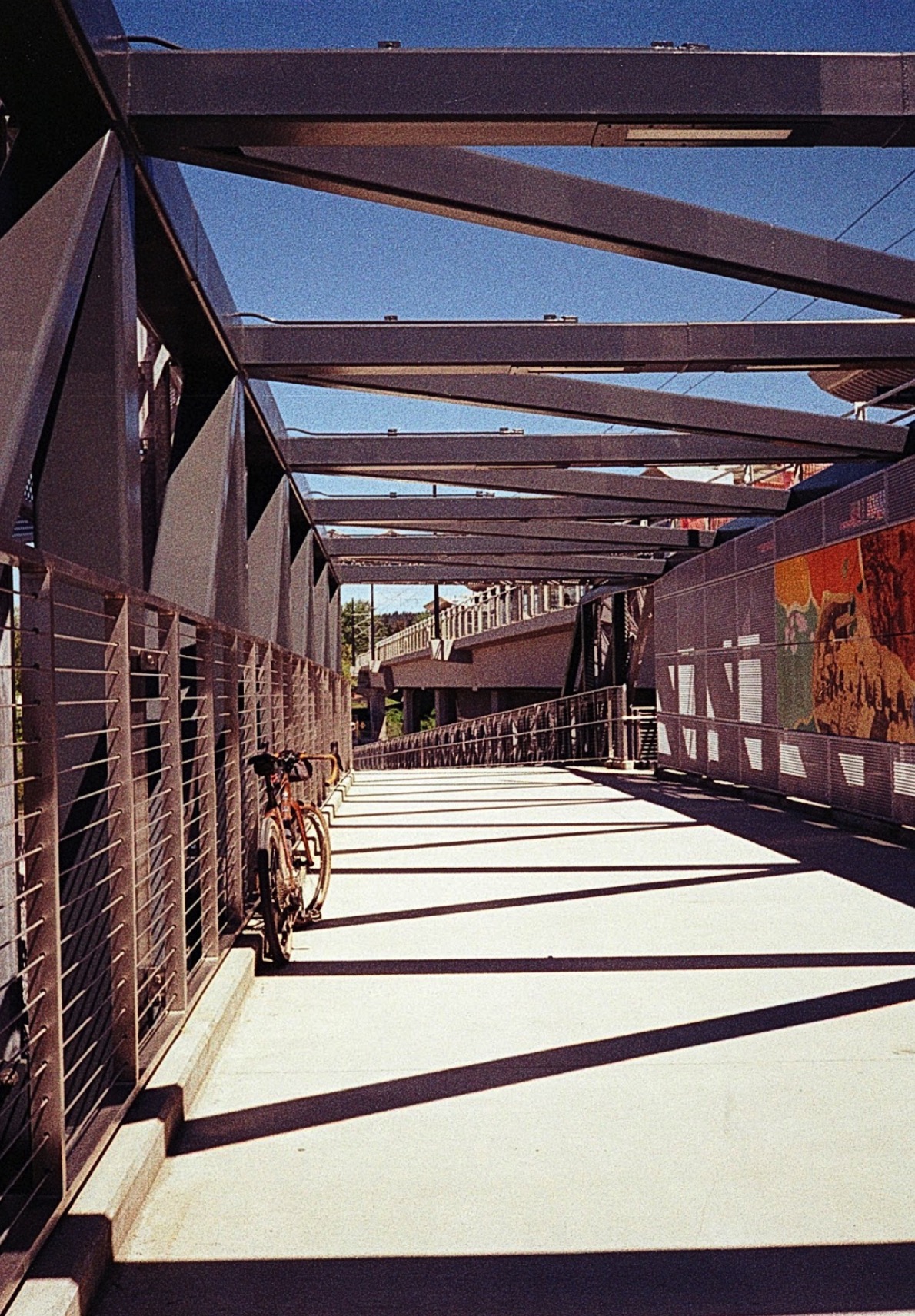
Designed With Better Optics
The PENTAX 17 features a newly developed 25mm f/3.5 lens (equivalent to 37mm in full-frame terms) based on a design that traces its history to the celebrated Pentax Espio Mini from 1994 and the RICOH Auto Half.
The lens incorporates Pentax’s contemporary HD (High Definition) coating to optimize image quality for half-frame captures. However, since images are half the size of a full frame, it’s not always easy to tell if the coating helps the final product.
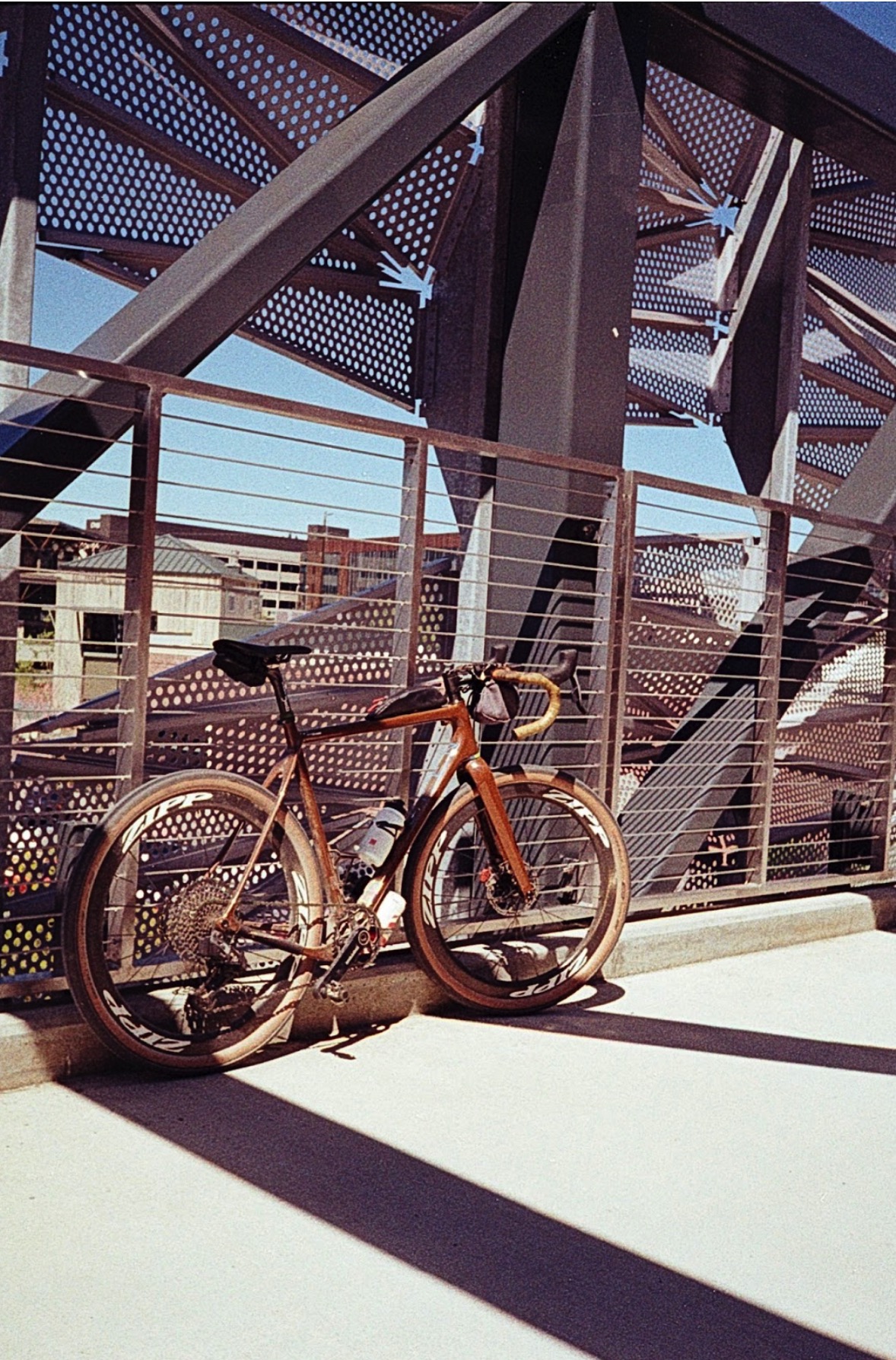
I’ve been shooting with one for a couple of months, and I’ve mostly gotten good, even, sometimes great results. The unexpected feature is tack-sharp images. That’s a descriptive phrase usually reserved for digital SLRs or mirrorless cameras, not a film camera in 2025.
An electronically controlled shutter is integrated into the lens, ensuring accurate shutter speed control from 1/350 second to 4 seconds. This lens produces beautifully rounded bokeh effects while maintaining sharpness in the foreground subject.

Pentax 17 Six-Zone Focusing System
The PENTAX 17 uses a six-zone focusing system that is easy to use. The focusing zones span from macro photography at 0.25 meters to infinity, with specific settings optimized for different shooting scenes. You can think of it like the other lenses in a smartphone, each with its own focal length and focus distance.
The six focus zones are strategically designed
- Macro (0.24-0.26m): Perfect for detailed close-ups of flowers or small objects
- Tabletop (0.47-0.54m): Ideal for café and restaurant photography
- Close-up (1.0-1.4m): Optimized for portraits and group shots
- Standard (1.4-2.2m): General photography distance
- Medium (2.1-5.3m): Group photos and medium-range subjects
- Mountain/Infinity: Landscape and distant subjects
The optical viewfinder features a bright frame finder with parallax compensation for close-up work, allowing photographers to frame accurately when shooting as close as 25 centimeters (around 10 inches). Zone markings are visible directly through the viewfinder.
PENTAX 17 Tips and Tricks
If you’ve already bought a PENTAX 17 or are considering doing so, I’ve compiled a short list of tips and tricks for getting the most out of a new half-frame camera. Since the camera lacks an aperture ring, I’ve included these tips, based on input from Pentax, to provide insight into the aperture settings per mode.
- Program Flash for Overcast Conditions: To enhance your photos on overcast days when lighting is flat and diffused, use the Pentax 17’s Program Flash mode. This mode activates the built-in flash to introduce contrast and depth, making it particularly effective for adding visual interest in snowy or rainy conditions. However, it’s important to note that the Pentax 17 lacks weather sealing. So, when shooting in adverse weather, ensure the camera is adequately protected from moisture to prevent potential damage. I used Program Flash to pop wildflowers on an overcast day.
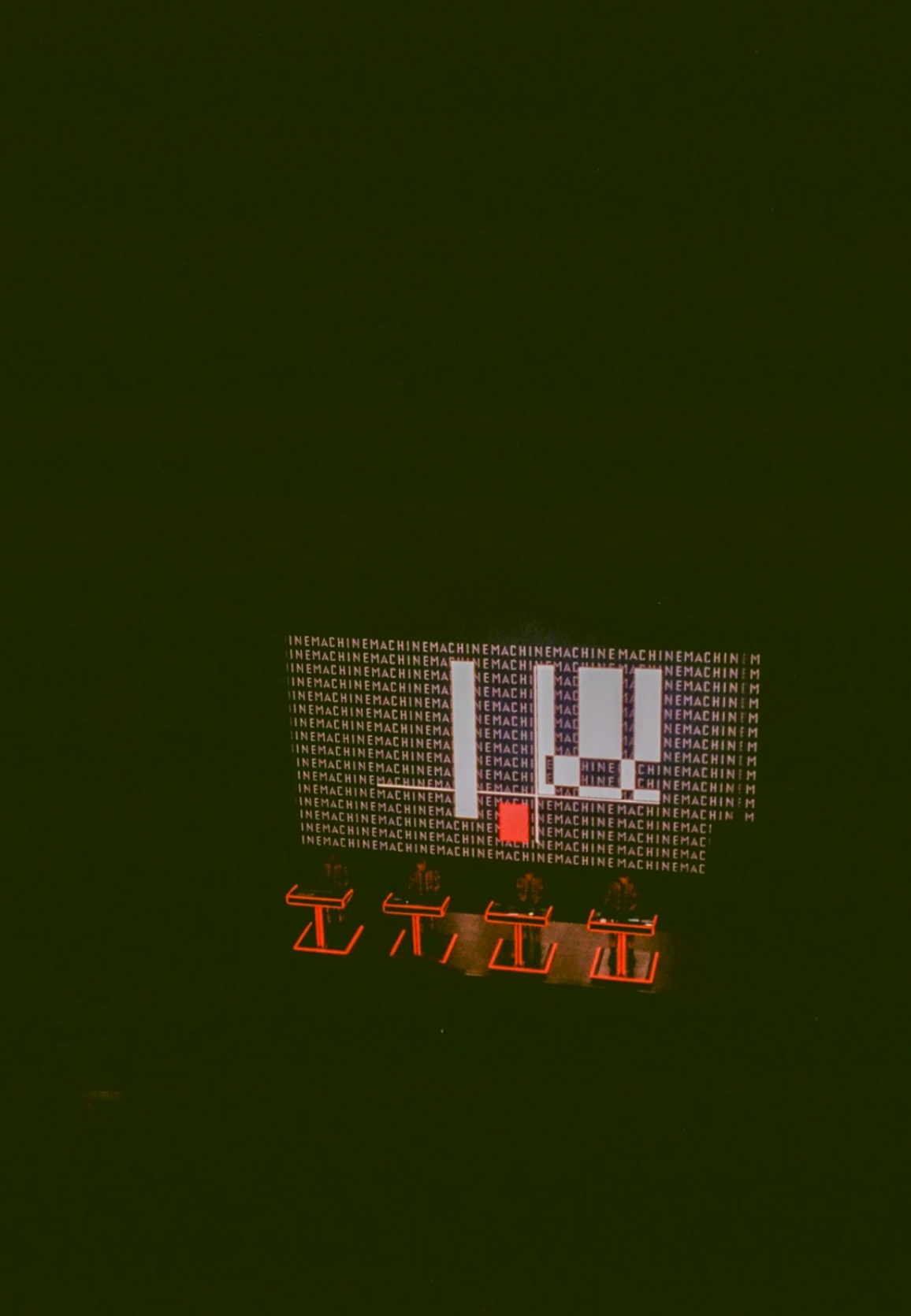
- Program Slow-Speed for Ambient Light: To improve photos taken in low-light scenes such as sunrise and sunset without a flash, use Program Slow-Speed Mode along with your desired zone focus. Program Slow-Speed Mode allows the shutter to remain open for up to 4 seconds. That length of exposure is perfect for capturing the mood and ambient light of the scene. See my concert photo for an example. I steadied the camera body against the seat in front of me.
- Program Slow-Speed Sync for Mixed Lighting: To improve photos taken in low-light scenes such as dusk, dawn, and twilight, use Program Slow-Speed sync mode along with your desired zone focus. The program Slow-Speed Sync Mode allows the shutter to remain open for up to 4 seconds and fires the flash. The flash illuminates the foreground subject, while the slow shutter speed captures the ambient light of the scene.
- Bulb Mode for Extended Exposures: Enhance your photos and unleash creativity with long exposures that extend beyond 4 seconds. Use (B) “bulb mode” with a tripod, your desired zone focus, and the Pentax CS-205 cable release. B “bulb mode” allows the camera shutter to remain open indefinitely. This is perfect for capturing pictures of waterfalls, city lights, and star trails. When shooting in bulb mode with the Pentax 17, the aperture is fixed at f/3.5. This makes it easy to use a light meter or a digital camera with manual settings to calculate the required exposure time. Add a 40.5mm neutral density filter and use an exposure chart or an app to determine the exposure time. If the exposure is 1/30th of a second at f/3.5, ISO 100, adding a 10-stop ND will increase the exposure time to 32 seconds.
Image Quality Assessment
Reviewers, including me, consistently praise the PENTAX 17’s image quality, noting that its lens delivers crisp, contrast-rich results uncommon in half-frame compacts. The camera demonstrates excellent color reproduction with minimal vignetting, though the color reproduction requires vibrant film. The electronically controlled shutter ensures consistent exposure accuracy across various lighting conditions. As is the case in general with film, i good light, photos have outstanding resolution and fine detail.
For optimal results with the half-frame format, lower ISO films (100, 160, 200) tend to produce the finest grain structure.
Pentax 17 User Experience and Market Position
Target Audience and Learning Curve
Photographers switching from smartphones or digital point-and-shoots will appreciate the vertical orientation, which feels intuitive. Ricoh said it deliberately designed the camera with programmed exposure modes rather than complete manual control to keep the learning curve manageable for first-time film shooters.
Film winding and zone focusing naturally slow down the process. I use this time to contemplate my subsequent 72 frames and how I’ll be framing them, which seems to be all the rage in the high-performance-digital-camera era. It’s like putting a record on instead of downloading a song.
Conclusion
Whether you’re a curious smartphone shooter eager to explore analog or an experienced photographer seeking a compact companion, the PENTAX 17 invites you to slow down, frame deliberately, and rediscover film. In an era where Canon and Nikon have abandoned film cameras, Pentax’s commitment to keeping both DSLR and analog film markets alive represents a brave gamble that has already shown promising returns.