
Best Travel Lenses for Canon 2026: Ultimate Buyer’s Guide


Table of Contents
 Canon RF 24-105mm f/4L IS USM
Travel photography is all about balance. You want lenses that are versatile enough to handle everything from wide cityscapes to street scenes, but light and compact enough that you don’t dread carrying your camera all day and leave it in your hotel room.
Canon’s mirrorless-era RF lens mount is a big upgrade over its DSLR-era EF mount, and there are a lot of great lenses for the photographer looking for the best travel lenses for Canon full-frame cameras.
There were hundreds of lenses for the EF mount, but as the mirrorless R-series hasn’t been around nearly as long as DSLRs were, there are fewer available in the new system.
The good news is that while there are fewer lenses to choose from, they are all better than their EF counterparts, and we haven’t seen a bad Canon lens. The bad news is that you have to be more careful in your selection because the features are limited, and you want to get the most for your money. That’s why we’re here to help.
Why Trust Us?
I’ve been testing Canon lenses since 2002 and have used or tested almost every lens in this guide. As a travel photographer myself, I understand the real-world compromises between image quality, weight, and versatility.
At Imaging Resource, we never accept payment for placement, and even though our articles contain affiliate links, they do not influence our editorial rankings.
Our Picks at a Glance
Canon’s RF travel lens lineup covers a wide range of shooting styles and priorities. The RF 24-105mm f/4L IS USM is our favorite all-around travel zoom, offering the best balance of reach, image quality, and portability for most trips. If you want professional optics and low-light performance in a single lens, the RF 24-70mm f/2.8L IS USM is the premium do-it-all choice (just be prepared for the added size and weight).
For travelers who need extra reach, the RF 100-400mm f/5.6–8 IS USM delivers impressive telephoto capability in a surprisingly lightweight package. Prime shooters have excellent options as well: the RF 35mm f/1.8 Macro IS STM is the most versatile travel prime thanks to its low-light performance and macro capability, while the RF 24mm f/1.8 Macro IS STM is ideal for landscapes, architecture, and street photography. And for those who love shooting in available light, the RF 45mm f/1.2 STM stands out as the most dramatic low-light prime you can realistically travel with.
-
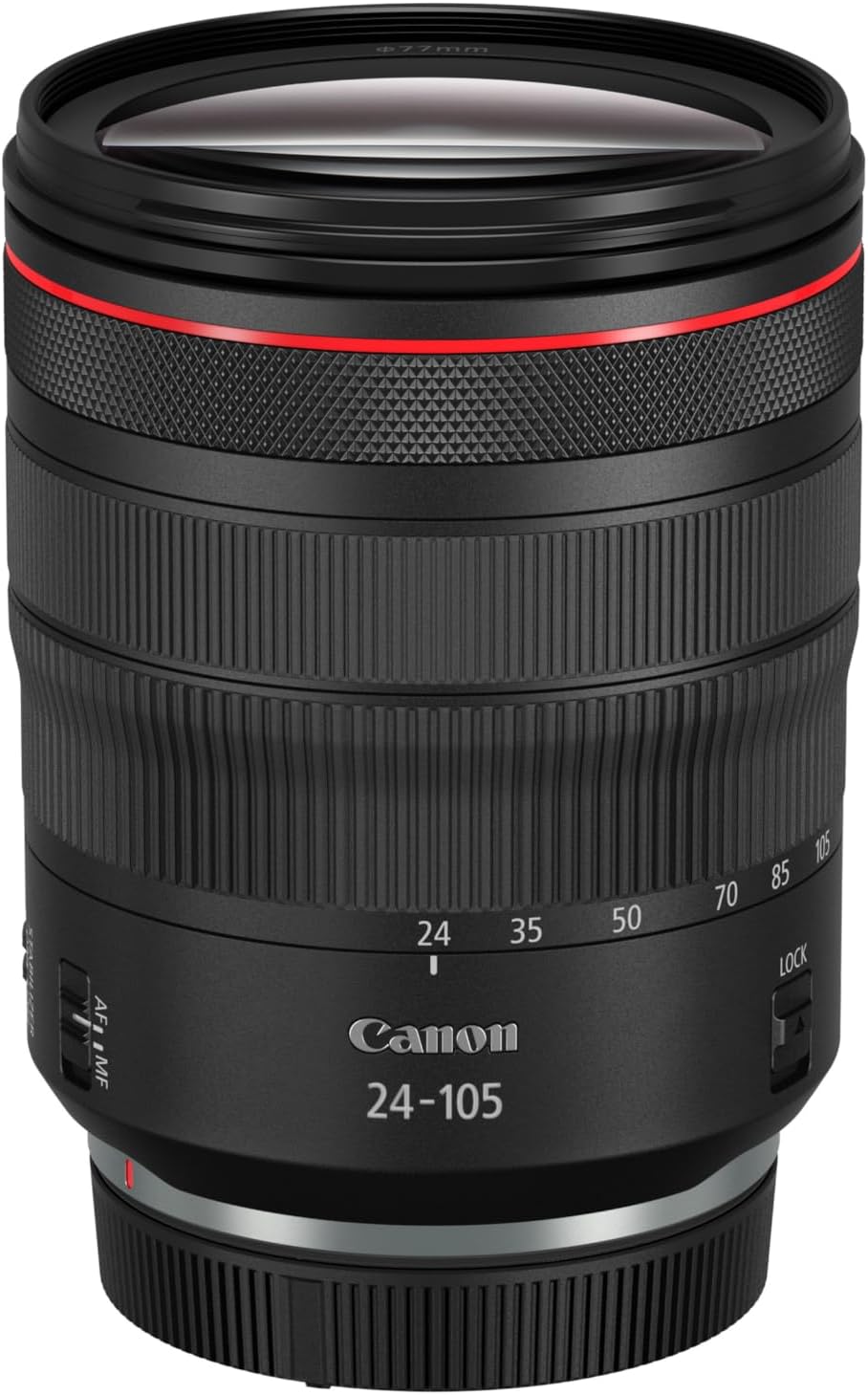 Best All Around Travel Lens
Canon RF 24-105mm f/4L IS USM
- Focal Length: 24-105mm
- Maximum Aperture: f/4 (constant)
- Optical image stabilization : At up to 5 Stops* of shake Correction
- Autofocus Motor: USM
-
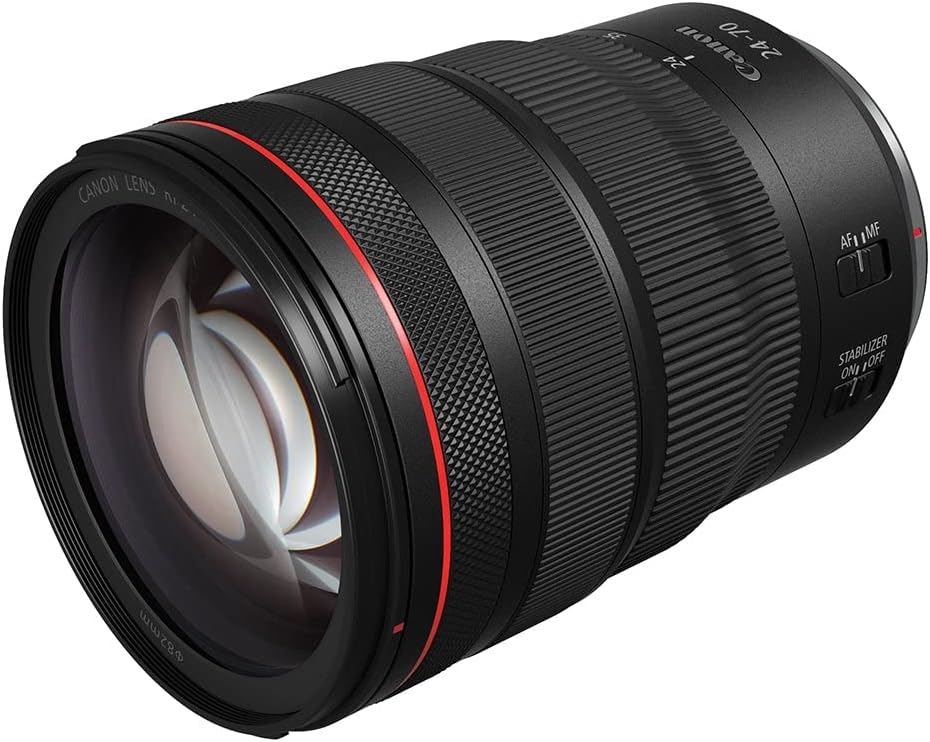 Best Pro Travel Zoom
Canon RF 24-70mm f/2.8L IS USM
- Focal Length: 24-70mm
- Maximum Aperture: f/2.8 (constant)
- Stabilization: Yes (coordinates with IBIS for ~8 stops)
- Autofocus Motor: USM
-
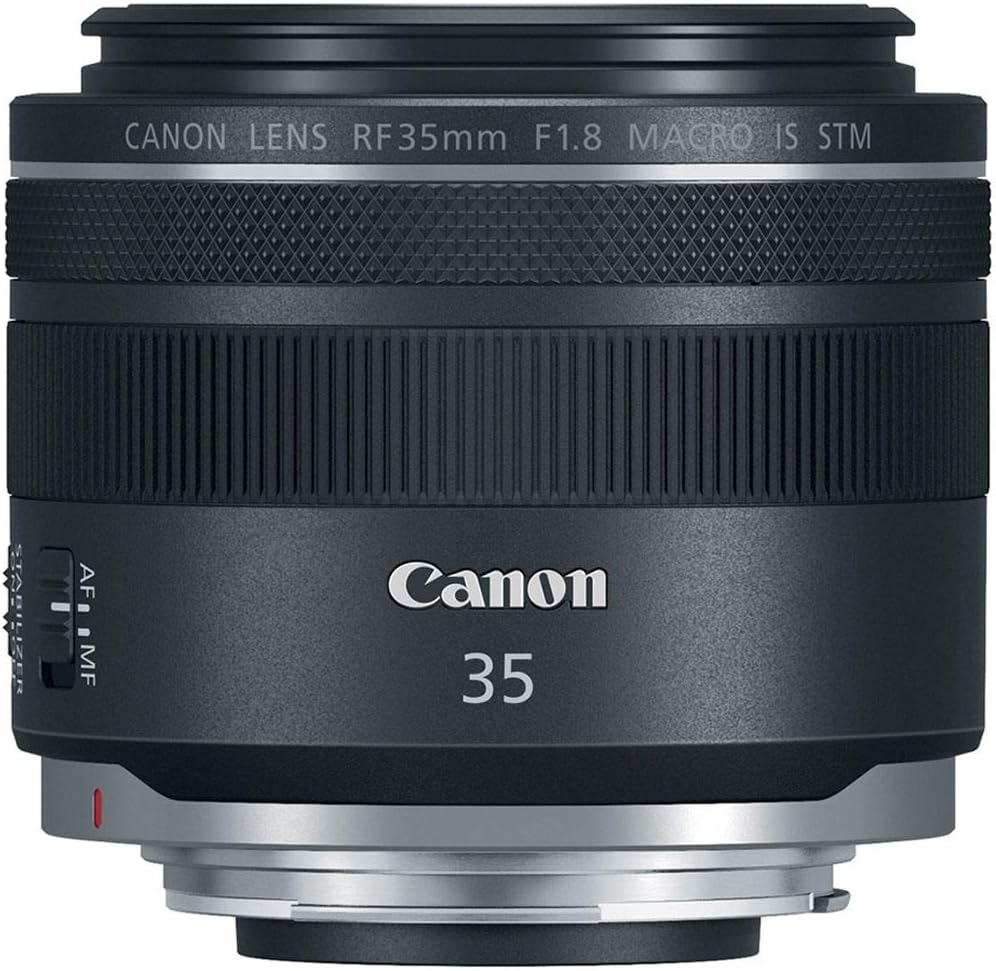 Best Travel Prime
Canon RF 35mm f/1.8 Macro IS STM
- Focal Length: 35mm
- Aperture: f/1.8
- Stabilization: 5 stops
- Weight: 305 g (0.67 lbs)
-
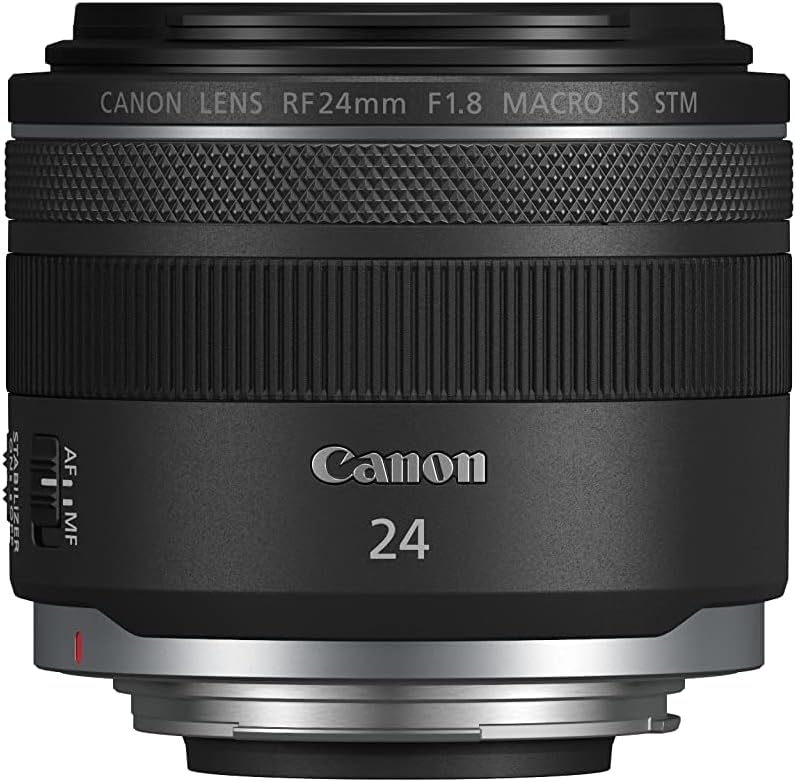 Best Wide Prime
Canon RF 24mm f/1.8 Macro IS STM
- Focal Length: 24mm
- Maximum Aperture: f/1.8
- Stabilization: Yes
- Autofocus Motor: STM
-
 Best Portrait Prime
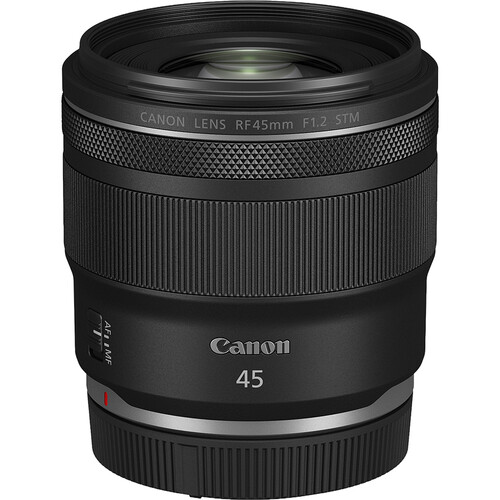
Canon RF 45mm f/1.2 STM
- Focal Length: 45mm
- Aperture Range: f/1.2 to f/16
- Optical Construction: 9 elements in 7 groups (including 1 PMo aspherical element)
- Minimum Focus Distance: 0.45m (17.7 inches)
Zoom Lenses
Zoom lenses are the most common type of lens used for travel photgraphy. With the variety of focal lengths they offer, it’s easier to compose a scene than it is with a fixed focal length (prime) lens. Canon’s zoom ranges go from high-end pro glass, to compact and affodable consumer lenses.
Canon RF 24-105mm f/4L IS USM
This is my favorite “all-around” lens in the Canon system. I’ve taken this lens on family vacations, and for walks around town too.
This is my go-to recommendation for Canon RF shooters who want one lens for travel. The extra 35mm of reach compared to a 24-70mm makes a real difference—105mm is long enough for tighter portraits, architectural details, and subjects you can’t get close to. Y
Canon’s all-purpose L-series zoom extends the standard range to 105mm, providing additional reach for portraits, architectural details, and distant subjects. The constant f/4 aperture offers a practical balance between speed and portability, while the optical stabilization ensures sharp handheld shooting across the focal range. The lens maintains L-series build quality with weather sealing and professional-grade optics.
- The 24-105mm focal range provides greater versatility than 24-70mm alternatives, with 105mm proving useful for tighter compositions and distant subjects.
- The constant f/4 aperture delivers a practical balance between optical performance, physical size, and weight for extended shooting sessions.
- The L-series construction includes weather sealing and professional build quality suitable for varied shooting environments.
- The f/4 maximum aperture provides one stop less light-gathering capability than f/2.8 professional zooms.
- The physical size and weight exceed ultra-compact travel zoom specifications despite being lighter than f/2.8 alternatives.
- The 24mm wide end may prove limiting for expansive landscape and interior architectural photography.
- Focal Length: 24-105mm
- Maximum Aperture: f/4 (constant)
- Optical image stabilization : At up to 5 Stops* of shake Correction
- Autofocus Motor: USM
- Weight: 1.54 pounds
Canon RF 24-70mm f/2.8L IS USM
This is Canon’s top-tier travel zoom for the RF system, and it’s one of Canon’s best lenses. But it’s not a small lens. This is a “pro-sized” zoom that will be more difficult to lug around on a vacation than lower-quality lenses, but if you want a single lens to cover any travel situation and stay your primary lens when you get home, this is it.
The constant f/2.8 aperture makes it a true professional lens. You can shoot in museums, cafes, and evening cityscapes without worrying about hitting your camera’s ISO limits. The image stabilization works with Canon’s newer IBIS-equipped bodies, giving you around eight stops of vibration compensation.
The main question is whether you need f/2.8 for travel. If you’re primarily shooting landscapes and city scenes in good light, the 24-105mm f/4L (reviewed next) might be a better choice. It’s lighter and has more reach.
Canon’s professional-grade standard zoom for the RF system delivers constant f/2.8 aperture across the entire zoom range. The lens features optical image stabilization that coordinates with Canon’s in-body stabilization systems to provide approximately eight stops of shake reduction. Build quality meets L-series standards with weather sealing and professional-grade construction, though the lens maintains a larger physical profile than consumer alternatives.
- The constant f/2.8 maximum aperture maintains consistent exposure and depth-of-field control throughout the entire zoom range.
- The optical stabilization system coordinates with camera IBIS to deliver approximately eight stops of vibration reduction.
- The professional L-series construction includes weather sealing and durable build quality suitable for demanding shooting conditions.
- The professional-sized barrel and weight make it less compact than f/4 alternatives for travel photography.
- The premium pricing reflects L-series construction and may exceed budgets for casual travel shooters.
- The lens may be excessive for photographers primarily shooting landscapes and cityscapes in good lighting conditions.
- Focal Length: 24-70mm
- Maximum Aperture: f/2.8 (constant)
- Stabilization: Yes (coordinates with IBIS for ~8 stops)
- Autofocus Motor: USM
- Min. Focusing distance: 0.69 ft by 0.21M (wide), 1.25 ft. by 0.38M (tele)
- Compatibility : Canon Mirorrless Cameras (EOS RP, EOS R, EOS R5, EOS R6)
Canon RF 100-400mm f/5.6-8 IS USM
This lens fills a specific niche for travelers. It’s a true telephoto lens, and so it’s great for safaris, or even trips to the zoo.
At 635 grams, it weighs less than most 70-200mm lenses while reaching twice as far. The trade-off is that variable aperture, which hits f/8 at 400mm.
The f/8 maximum aperture at 400mm means you’ll need good light for best results. On bright days, the lens is a great performer, but when the sun starts to set, the f/8 aperture becomes more of a problem.
Luckily, the lens has image stabilization, which works in conjunction with camera In Body Image Stabilization (IBIS), so you can shoot slower expsoures to make up for the apreture without getting motion blur.
This lens is also in our guide to Best Budget Lenses for Canon.
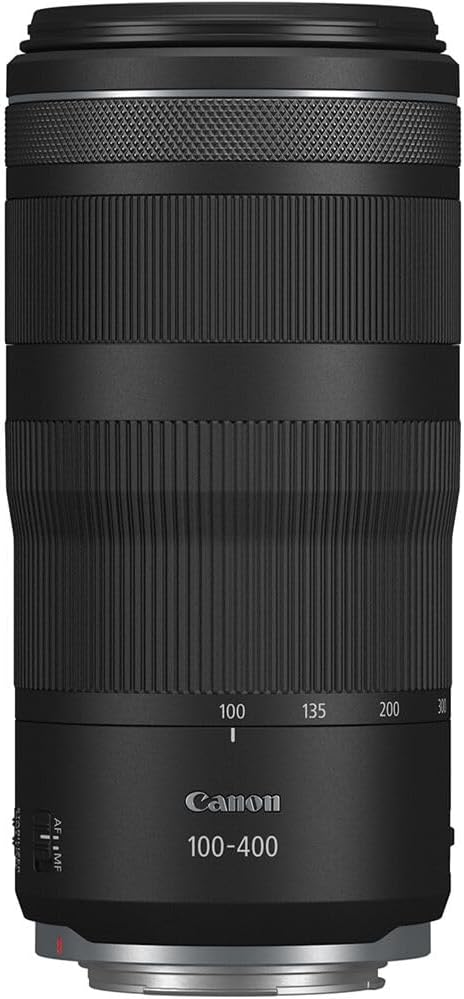
Canon’s compact telephoto zoom delivers true 400mm reach while weighing significantly less than traditional 70-200mm lenses. The variable aperture design enables the reduced weight and compact form factor, though the f/8 maximum at 400mm requires adequate lighting for optimal results. The 5.5-stop image stabilization system works with camera IBIS to compensate for the narrower maximum aperture.
- The 100-400mm focal range delivers genuine telephoto capability while weighing less than most 70-200mm alternatives.
- The 5.5-stop optical stabilization coordinates with camera IBIS to enable slower shutter speeds despite the variable aperture.
- The compact design makes true telephoto photography practical for travel situations including wildlife, safaris, and distant subjects.
- The variable f/5.6-8 aperture reaches f/8 at 400mm, requiring bright lighting conditions for optimal autofocus and shutter speeds.
- The autofocus system performs slower than professional L-series telephotos, potentially limiting action and wildlife photography.
- The build quality lacks the weather sealing and durability of professional-grade telephoto lenses.
- Focal Length: 100–400mm
- Aperture: f/5.6–8
- Stabilization: 5.5 stops
- Weight: 635 g (1.40 lbs)
- Compatible Mountings: Canon RF
Travel Prime Lenses
Prime lenses offer faster apertures (allowing for photography in lower light) and smaller sizes than zooms, making them ideal for low-light shooting and situations where you want to travel as light as possible. Canon’s RF prime lineup includes several lenses specifically designed for travel photographers.
Canon RF 35mm f/1.8 IS Macro STM
This lens has become one of my favorite Canon primes for travel because it does so many things well. It’s designed to be a macro lens, and it does a great job at that. The 35mm focal length is a typical focal length used by photographers, even when they’re not travelling. There’s always a 35mm prime in my bag when I go to shoot for a client.
It’s not too wide, not too tight, and works for everything from street photography to environmental portraits. The f/1.8 aperture lets in plenty of light for evening shooting, and the image stabilization means you can shoot handheld in really dim conditions.
What makes this lens special is the macro capability. At 0.5x magnification, you can fill the frame with small details—food, flowers, architectural elements, jewelry, and more. This eliminates the need to carry a separate macro lens on trips, which is a big weight savings. The close-focusing ability also gives you creative options most lenses do not.
This lens is also in our guide to Best Budget Lenses for Canon.
Canon’s versatile 35mm prime combines traditional focal length with true 0.5x macro magnification capability. The f/1.8 maximum aperture provides good low-light performance, while the 5-stop optical stabilization enables sharp handheld shooting in challenging conditions. The STM autofocus motor delivers smooth, quiet focusing for both stills and video applications.
- The 0.5x macro magnification capability eliminates the need for separate macro lenses when photographing small subjects and details.
- The 5-stop optical image stabilization enables sharp handheld shooting in low-light conditions and at slower shutter speeds.
- The 35mm focal length provides versatile framing for street photography, environmental portraits, and general travel shooting.
- The pricing exceeds basic 35mm prime alternatives that lack macro capability and image stabilization features.
- The lens lacks weather sealing protection for shooting in challenging environmental conditions.
- The autofocus performance slows when operating in the macro focus range compared to standard focusing distances.
- Focal Length: 35mm
- Aperture: f/1.8
- Stabilization: 5 stops
- Weight: 305 g (0.67 lbs)
- Compatible Mountings: Canon RF
- Optical Construction: 9 rounded aperture blades
Canon RF 24mm f/1.8 Macro IS STM
I sometimes choose this lens over the 35mm version for travel when I know I’ll be shooting mostly landscapes, street photography, or environmental portraits. The 24mm focal length is wide enough to capture landscape and cityscapes without too much distortion.
I think the macro is terrific, which is not surprising since this is a macro-first lens. You might not think of macro when you think of travel, but you get the ability with this lens to focus in on objects ike jewerly, food, flowers, plants, artwork, and more.
The image stabilization works well, though the wider focal length means camera shake is less of an issue than with longer lenses. If your travel photography leans toward landscapes and architecture, this lens is probably a better choice than the 35mm.
Canon’s wide-angle macro prime delivers true close-focusing capability in a lens designed primarily for landscape and architectural photography. The 24mm focal length captures expansive scenes with minimal distortion, while the macro capability enables detailed photography of small subjects. The f/1.8 maximum aperture provides good low-light performance despite the wide focal length.
- The 24mm focal length captures landscapes and cityscapes with wide perspective while maintaining relatively low distortion levels.
- The macro capability enables close-focusing on small subjects including jewelry, food, flowers, and architectural details.
- The optical image stabilization provides additional versatility despite the wide focal length being less susceptible to camera shake.
- The 24mm focal length may prove too wide for portrait and some general photography applications.
• The lens lacks weather sealing protection required for challenging shooting environments.
• The pricing exceeds basic wide-angle primes without macro capability or image stabilization features.
- Focal Length: 24mm
- Maximum Aperture: f/1.8
- Stabilization: Yes
- Autofocus Motor: STM
- Minimum focus distance : approx. 5.5 In./0.14 m
Canon RF 45mm f/1.2 STM
The RF 45mm f/1.2 STM proves you can deliver that ultra-wide aperture in a package that’s actually reasonable to travel with, at a price that won’t destroy your trip budget. I’ve used this lens mostly as a substitute for a 50mm, and the f/1.2 aperture makes it an amazing travel lens.
The f/1.2 aperture creates genuinely dramatic depth-of-field. You can shoot street portraits with backgrounds that have great bokeh, photograph evening scenes without pushing ISO to high, and shoot in museums and restaurants where flash isn’t permitted.
For travelers who love shooting in available light, especially very low light, and want really shallow, creamy background defocus,, this lens delivers.


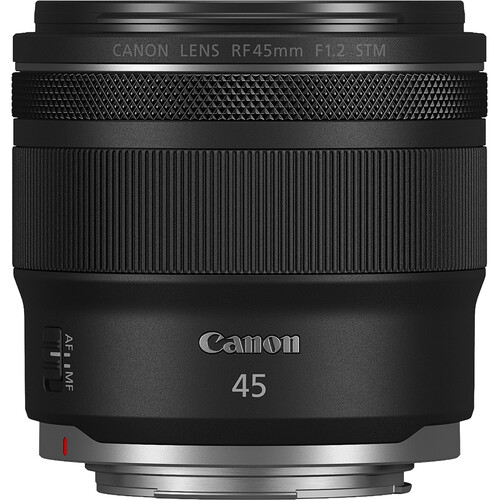
Canon’s ultra-fast normal prime delivers f/1.2 maximum aperture in an unusually compact and lightweight package. The optical design uses 9 elements in 7 groups, including one plastic-molded aspherical element that enables the reduced size while maintaining the wide aperture. The gear-type STM motor with magnetic detection provides smooth autofocus operation, while the fixed-length barrel design minimizes size changes during focusing.
- The ultra-wide f/1.2 maximum aperture enables exceptional low-light shooting and dramatic background separation for creative depth-of-field control.
- The compact design weighs only 346 grams, making it one of the lightest autofocus f/1.2 lenses available.
- The affordable pricing makes ultra-fast aperture photography accessible to budget-conscious photographers.
- The optical design shows some softness that may be noticeable in critical applications requiring maximum sharpness.
- The lens lacks optical image stabilization, requiring cameras with in-body stabilization systems for optimal handheld performance.
- The absence of weather sealing requires careful handling in challenging environmental conditions.
- Focal Length: 45mm
- Aperture Range: f/1.2 to f/16
- Optical Construction: 9 elements in 7 groups (including 1 PMo aspherical element)
- Minimum Focus Distance: 0.45m (17.7 inches)
- Filter Size: 67mm
- Weight: 346g (0.76 lbs)
- Stabilization: None
- Dimensions: 78mm × 75mm (3.07in × 2.95in)
See our Complete List of Other Buyer’s Guides
Frequently Asked Questions (FAQs)
Is the RF mount a good choice for travel photography?
The RF mount is excellent for travel. Canon has developed a range of lenses from ultra-wide to super-telephoto, with many options specifically designed for travel use. The mount’s large diameter enables smaller, lighter designs than previous Canon systems while maintaining image quality.
Do I need L-series lenses for travel, or are the non-L options good enough?
Non-L lenses like the RF 24mm f/1.8 and RF 35mm f/1.8 deliver excellent image quality for travel at much lower prices and weights than L-series glass. The L lenses offer better weather sealing, faster autofocus, and slightly better optics, but the non-L options are perfectly capable for most travel photography.
How important is image stabilization for Canon RF travel lenses?
Image stabilization is valuable but not essential. Newer R-series cameras include in-body stabilization that works with any lens. However, lenses with optical IS provide better stabilization performance, especially at longer focal lengths, and when coupled with cameras that have In Body Image Stabilization (IBIS). For travel where you often shoot handheld, stabilization significantly increases your keeper rate.
Can I adapt EF lenses to the RF mount for travel?
Yes, Canon’s EF-RF adapters work excellently and maintain autofocus and image quality. However, adapted lenses lose the size and weight advantages of native RF glass. The RF mount was designed partly to enable more compact lenses, so native RF lenses are generally better for travel.