
Nikon Z6 Review

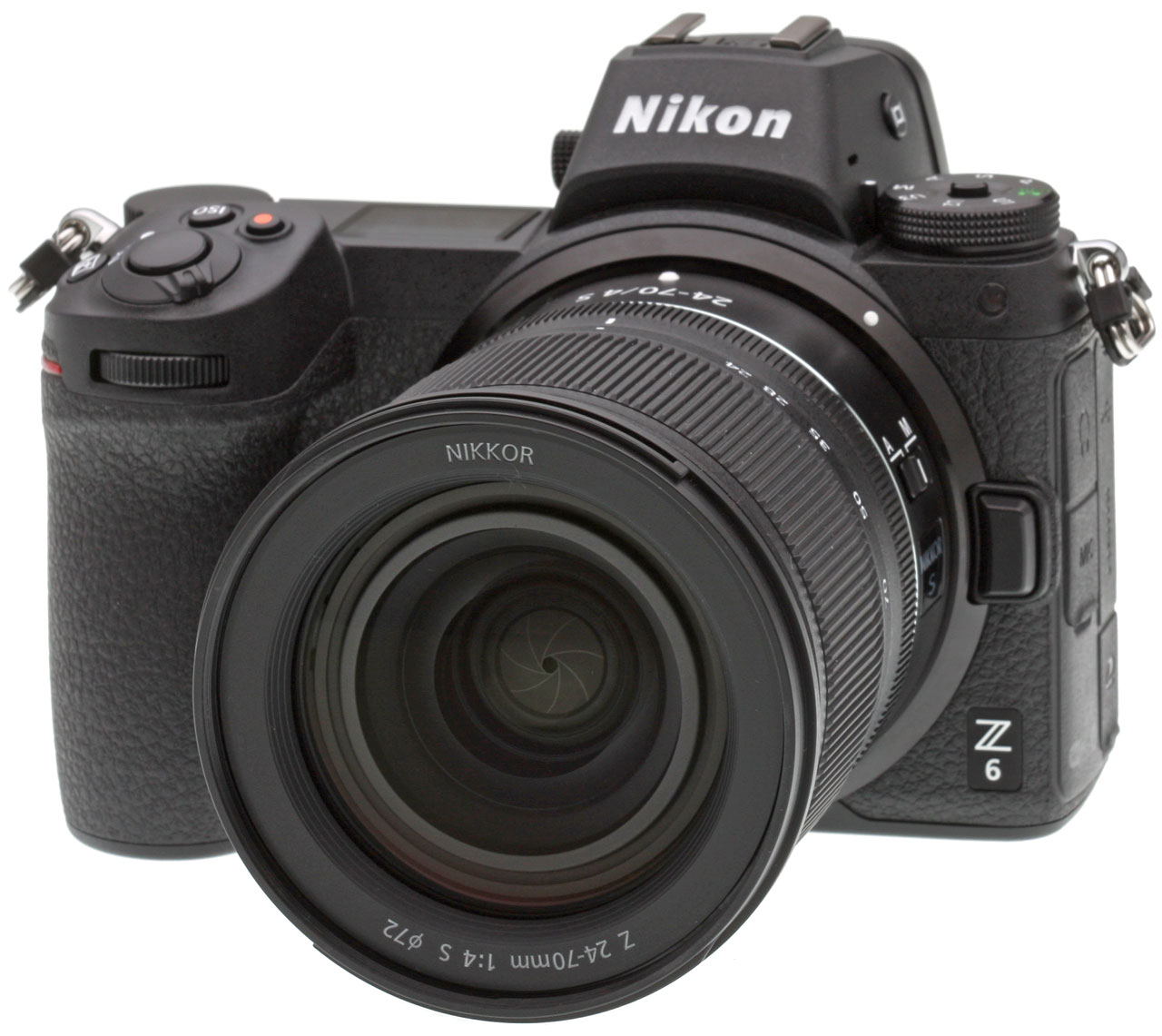
Nikon Z6 Overview
by Jeremy Gray
Nikon made a big splash with respect to its centennial celebration from July of 2017 into 2018. Making it to 100 years is a huge deal for any company, but it’s a particularly impressive accomplishment when you consider a camera company achieving the feat. The photography industry has changed radically over the past 100-plus years and Nikon was able to successfully push evolution and survive the advancements of others. Many cameras in its immense catalog continue to tug on the heartstrings of countless photographers and their DSLRs are in the kits of innumerable enthusiasts and professionals. However, times change, and more and more photographers have eschewed DSLRs in favor of mirrorless cameras.
When digital began to gain a foothold, Nikon was there, changing with the times. When mirrorless stormed onto the scene in the last few years, Nikon continued to develop very capable DSLR cameras and had only a very short-lived entry into consumer-grade mirrorless cameras with their Nikon 1 system.
Now, over 100 years into their existence, Nikon is changing with the times yet again, hoping to deliver photographers something rooted in their illustrious past yet very much a camera not only of the mirrorless present, but also of the mirrorless future. Enter the Nikon Z6 and Nikon Z7, Nikon’s first cameras in their full-frame mirrorless system.
Nikon Z6 Key Features and Specs
- Smaller and lighter camera body
- New larger Z mount with shorter flange distance
- 3.6M-dot electronic viewfinder
- 3.2-inch tilting touchscreen display
- 24.5-megapixel full-frame backside-illuminated sensor
- 5-axis in-camera image stabilization
- 12 frames per second continuous shooting
- 273 phase-detect autofocus points on sensor
- Low-light autofocus down to -6 EV (with firmware v2.00)
- Native ISO range of 100-51,200 (50-204,800 expanded)
- Full width 4K/30p video with full pixel readout
- Built-in Bluetooth and Wi-Fi
Camera Design and Body: Losing a mirror and gaining versatility
The first thing you notice with the new Z6 (or Nikon Z 6 as it is officially named), other than it looking identical to the higher-megapixel Z7 (Nikon Z 7), is that it is considerably smaller and more compact than a full-frame Nikon DSLR. The Z6 is 5.3 inches (134 millimeters) wide, 4 inches (100.5 millimeters) tall and 2.7 inches (67.5 millimeters) thick. With a battery and memory card inserted, the camera body weighs one pound, 7.9 ounces (675 grams).

This image shows the Nikon Z7, which shares the same camera body as the Nikon Z6, save for the logo to the left of the lens mount, next to the Nikon D850. As we can see, the Z6/Z7 is quite a bit smaller than the Nikon D850. Precisely, the Z6/Z7 is 0.4 inches (12 millimeters) narrower, 0.9 inches (23.5 millimeters) shorter and 0.4 inches (11.5 millimeters) thinner.
Nikon has established a style, control layout and overall design language over the years and they are not abandoning it. They have taken advantage of the opportunity of a new system to streamline aspects of the camera’s design, but they are not reinventing the wheel when it comes to ergonomics, which this longtime Nikon shooter is very thankful for. The Z6 has been designed to be smaller and lighter and yet at the same time very familiar. If you have shot with enthusiast and professional Nikon DSLRs, the Z6 will offer a similar layout. For example, you will still find the ISO button on the top of the camera near the shutter release, you will find the AF-ON button in a similar location and the Z6 continues to rely on the tried-and-true dual command dial interface.

It is sometimes the case that a smaller body can become less comfortable to hold and use. This is not the case with the Z6, it has a thin, but deep, grip which allows even larger hands to comfortably hold the camera. The Z6 also has two front function buttons, like the Nikon D850, between the front grip and the lens mount. The Fn2 button has a raised line to help you distinguish between the two buttons while shooting.
On the back of the camera, there continues to be familiarity. To the left of the viewfinder are playback and delete buttons. To the right of the viewfinder there is a display button surrounded by a switch for toggling between still and video shooting, and an AF-ON button. There is a rear command dial above the thumb grip, although you’ll notice that the dial is exposed at the top, which is different from Nikon’s higher-end DSLR cameras, as they often have the rear dial recessed. Beneath the AF-ON button is a subselector joystick for focus point selection, menu navigation and more. Further down, there is an information button, which will bring up a user-customizable menu, from which you can arrange custom functions from a list of over 30. Further down, there is a traditional OK button surrounded by a directional pad. Finally, there are four buttons at the bottom to the right of the large touchscreen display: zoom in, zoom out, menu and drive mode (burst and self-timer functionality is accessed via this button).
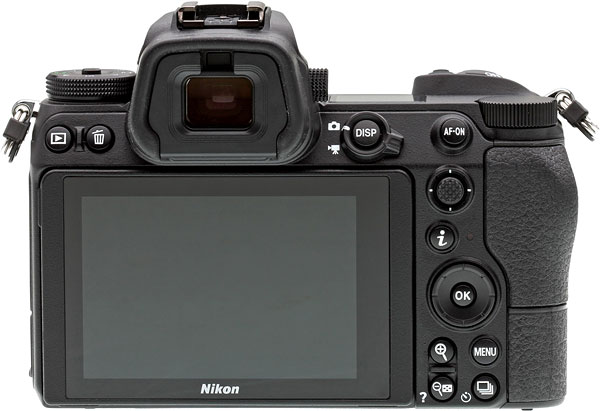
The top of the camera features a locking mode dial to the left of the viewfinder, a standard hot shoe on top of the viewfinder, an OLED top status display, shutter release and a trio of buttons: movie record, ISO and exposure compensation. The Z6 utilizes the same layout as the D500/D5/D850 DSLR cameras, which places all exposure-related controls within reach of your right hand. Regarding the camera’s mode dial, it offers a relatively sparse, but pro-oriented, modes. P, A, S and M modes are present, there are three user-customized modes and finally an Auto mode. You won’t find any scene modes or special modes on the dial.
A difficulty with electronic viewfinders, particularly for photographers moving from a DSLR, has been that it can feel like an unnatural experience. However, in our opinion the Z6’s electronic viewfinder is excellent and certainly one of the best we have used. Nikon has invested extensive engineering and development in their new electronic viewfinder, including high-end Nikkor optics, complete with aspherical lens elements. The result of the engineering is a 0.5-inch 3.69-million dot electronic viewfinder with 100 percent frame coverage, 0.8x magnification, a 37-degree viewing angle and OLED display technology. The EVF also features a 21mm eyepoint, a -4 to +2m-1 diopter adjustment, an eye sensor, and includes color balance and 11-level manual brightness controls.

Whereas a DSLR camera offers an optical viewfinder, which allows a photographer to always look through the viewfinder and see the frame, a mirrorless camera must instead use an electronic viewfinder. An electronic viewfinder needs to read from the image sensor to deliver a real-time view of a scene. While this results in lower battery life than a DSLR, the EVF offers distinct advantages over an optical viewfinder, including real-time preview of picture and exposure settings. You can also view the user-customizable “i” menu through the electronic viewfinder, allowing quick access and changing of settings including ISO, AF-area mode, Picture Control and more.
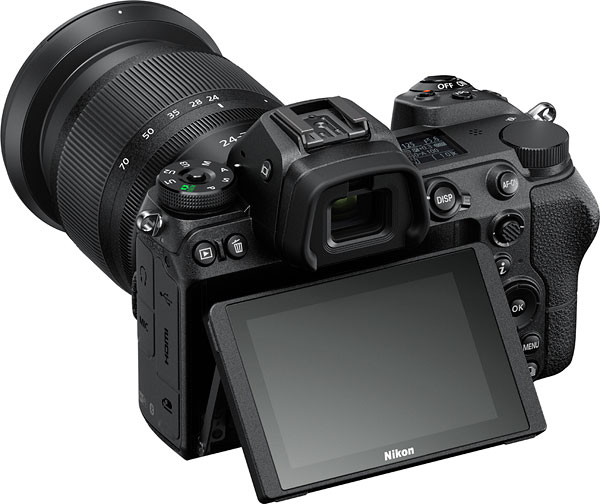
The rear display on the Z6 is a 3.2-inch tilting TFT touch-sensitive LCD with 2,100K dots and a 170-degree viewing angle. The LCD offers 100 percentage frame coverage, 11-level manual brightness and color balance controls.
Despite the more compact and lightweight design of the Z6, it maintains Nikon’s rugged magnesium alloy design and weather sealing. In fact, the Nikon Z6 features the same level of water and dust resistance as the Nikon D850, and it performed incredibly well during our own weather testing.
Nikon focused heavily on the ergonomics and control layout of their new mirrorless Z cameras and based on our extensive time with them, we can say that the Z6/Z7 is comfortable to hold and feels very well-built.

On the top of the camera, the Z6 includes an OLED status display, showing important shooting settings similar to the LCD display found on their high-end DSLR cameras. You can change the brightness of the top OLED display as well.
New Z lens mount and adapter pave the way for flexibility, versatility and improved optics
One of the biggest (literally) aspects of the new Z mirrorless system is its new lens mount. It’s an important part of not only the Z6, but the future of Nikon’s new camera system. First, let’s alleviate a worry many Nikon shooters are likely to have about a new mirrorless camera. You will be able to use your existing F-mount lenses on the new mirrorless cameras. This is achieved via an FTZ adapter, which was made available alongside the camera. Every F-mount lens can be adapted for use with the Z6, and the adapter allows for full AF and AE compatibility with over 90 existing Nikkor lenses. Further, for all adapted lenses, the Z6’s in-camera image stabilization allows for image stabilization. VR lenses are able to utilize their own stabilization and be further aided by the in-camera stabilization of the Z6 for roll axis correction. Nikon notes that Nikkor F-mount lenses may not offer the same level of stability as native Nikkor Z lenses, though.
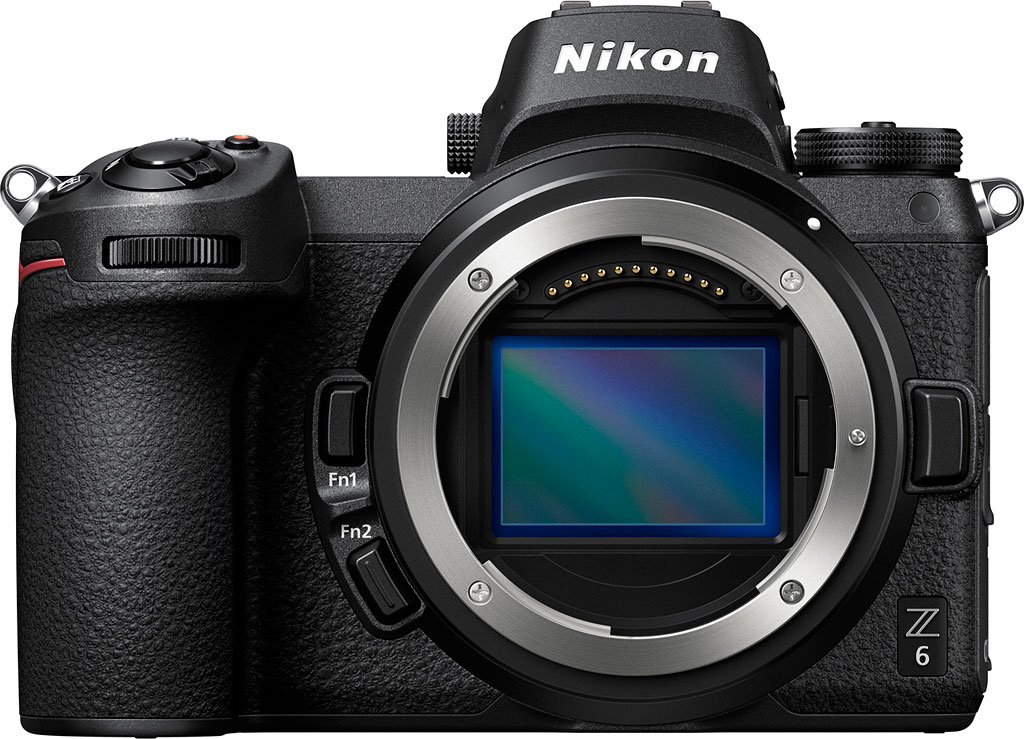
To help appreciate the new mount, consider that the F mount, which is found on Nikon’s latest DSLR cameras, was created in 1959. A lot has changed in camera and lens technology since 1959. The new Z mount is noticeably larger, especially when seen on the smaller Z6 camera body. Precisely, the mount has a 55mm diameter, a full 11mm more than the F mount. Further, the flange distance is a very short 16mm. The F mount’s flange distance is 46.5mm. Nikon tells us that with the larger opening and shorter flange distance, the Z mount lets in 100 percent more light than the F mount.
The considerable differences in the mount dimensions and design has multiple effects. As we will discuss further later, the Z mount allows lenses as fast as f/0.95 (and even faster), which is notably faster than any Nikkor F-mount lens. Another important result is that Nikon has been able to engineer lenses with optimized central and peripheral luminous flux, which is important to image quality, usability and improving control of chromatic aberrations. You’re used to having to stop down lenses to get the best sharpness, right? Nikon assures us — and showed us examples — of how this is not the case with Nikkor S-Line lenses (the new Z mount lenses exist within the newly-dubbed S-Line); they will be at or near their best wide open! When you consider that Nikkor S-Line lenses can be designed with faster maximum apertures but also will be sharp wide open, that opens up many new possibilities.
First batch of Nikkor S lenses
A camera is only as good as the lens you use. Fortunately for Nikon, some of the initial pressure to create new lenses is relieved by their FT-Z adapter, allowing existing Nikon shooters to fully utilize the lenses they already own (although autofocus is not supported with older screw-drive AF Nikkors). For new shooters or for those wanting the latest and greatest for the Nikon Z6, there were a trio of lenses when it launched: the Nikon Z 35mm f/1.8 S, the Nikon Z 50mm f/1.8 S, and the Nikon Z 24-70mm f/4 S which is the new kit lens. These native lenses are smaller, lighter and deliver higher overall performance. The S-Line of lenses are designed for both stills and video recording and include compensation for focus breathing, quiet operation, smooth exposure control and a new control ring. The lenses all feature weather sealing as well.

Using the FTZ adapter, you can attach any Nikon F mount lens to the Z6 (Z7 is shown here). Over 90 lenses have full AF/AE capabilities and can utilize the camera’s in-body sensor shift image stabilization.
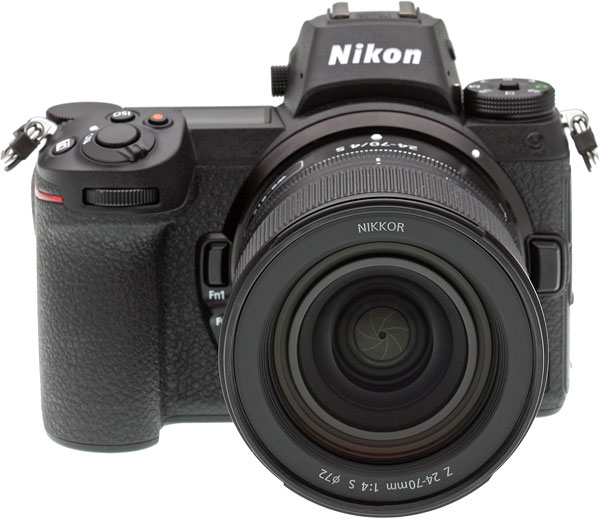
The new kit lens, the 24-70mm f/4 S, features a compact and lightweight design. When not in use, you can retract the lens to make it more compact. A neat aspect of the retractable design is that unlike many retractable lenses, you don’t need to press a button to extend it. The weather-sealed lens features 14 elements across 11 groups and includes an aspherical ED element, a trio of aspherical elements and Nikon’s Nano Crystal coating. The front lens element also has a fluorine coating. The lens has an impressive close-focus distance of 0.3 meters across the entire focal length range. Sold separately, it costs about US$999.
When the Z7 launched in September 2018 — the Z6 launched two months later in November — the Nikkor Z 35mm f/1.8 S also launched for US$849.95. This prime lens has been designed to offer sharpness across the frame and deliver consistent, pleasing bokeh. The lens features a new multi-focusing system which includes a pair of autofocus drive units for fast and accurate focusing. The lens has a pair of ED glass elements and three aspherical elements in addition to Nano Crystal Coating.

The first three S-Line lenses. From left to right, the new 24-70mm f/4 S kit lens, the 35mm f/1.8 S and the 50mm f/1.8 S. As you can see, the three lenses share the same styling and design and are very similar in overall size.
In October 2018, the Nikkor Z 50mm f/1.8 S became available. This standard prime lens has been designed for high-resolution imaging and soft bokeh. The lens has a pair of ED elements and two aspherical elements. The lens features a new powerful stepping motor (STM) for quiet and accurate autofocus during still and motion photography. The lens costs just under US$600.
As of this writing (August 2019), Nikon has released three additional S-Line lenses:
- Nikkor Z 14-30mm f/4 S for ~US$1,300
- Nikkor Z 24-70mm f/2.8 S for ~US$2,300
- Nikkor Z 85mm f/1.8 S for ~US$800
.
And Nikon expects to release another three S-Line lenses in 2019: The Nikkor Z 58mm f/0.95 S Noct, 20mm f/1.8 and 70-200mm f/2.8. In 2020, Nikon has an additional three lenses planned, although of course more could be added to their roadmap later. These three lenses are the 50mm f/1.2 (a lens Nikon F mount users have longed for), 24mm f/1.8 and 14-24mm f/2.8. While product names and specifications have not all been finalized, it’s a versatile assortment of lenses covering 14mm to 200mm focal lengths.
Image sensor: New 24.5-megapixel backside-illuminated full-frame sensor
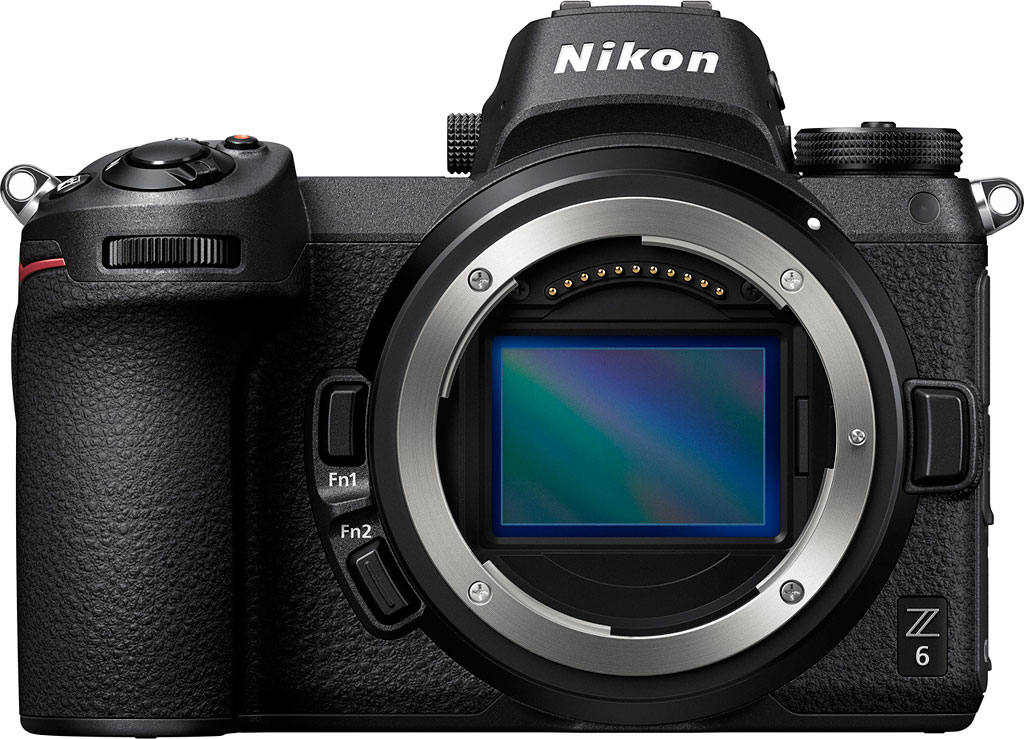
The Z6’s imaging pipeline is centered around a new backside-illuminated 24.5-megapixel CMOS full-frame image sensor. The sensor features built-in focal-plane phase-detection autofocus pixels, and is equipped with an optical low-pass filter (unlike the higher-resolution Z7). The Z6 is designed as an all-purpose FX-format camera compared to the Z7 in part thanks to the Z6’s superior high ISO performance and full-width 4K UHD video recording capabilities. Specifically, the Z6 has a native ISO range of 100 to 51,200 and can be extended to ISO 50 to 204,800.
An image sensor is only one part of the image quality equation. Alongside the new sensor, there’s a new EXPEED 6 image processor. Further, Nikon has added a mid-range sharpening option to its Picture Control sharpness parameters in addition to the existing sharpening and clarity settings users can adjust. There are 20 options for Creative Picture Control in total and image quality settings can be adjusted on a scale from 0 to 100.
Autofocus and Performance: 273 on-sensor autofocus points and fast continuous shooting
273-point autofocus system covers much more of the image area than Nikon’s full-frame DSLRs

The Nikon Z6’s image sensor includes 273 on-chip autofocus points. The hybrid phase-detection/contrast-detection autofocus system covers about 90 percent of the imaging area both horizontally and vertically. The autofocus system has been designed to perform well in low light in particular, as detection is rated down to -4 EV (ISO 100, f/2.0 lens, AF-S mode) in low-light AF mode which prioritizes the use of slower contrast-detect autofocus; the Z6 is rated down to -2 EV without low-light AF mode. (Note that version 2.00 firmware improves the Z6’s low-light AF rating to -6 and -3.5 EV respectively.)
The camera includes AF-S, AF-C and AF-F (this mode is only available during movie recording) autofocus drive modes and includes the following AF-area modes: pinpoint, single-point, dynamic-area AF, wide-area AF (small), wide-area AF (large) and auto-area AF. You can lock focus by either pressing the shutter release halfway or by pressing the center of the subselector joystick. With the conveniently-located AF-ON button you should also be able to use back button autofocus, although that has not been verified. Face detection AF is supported, and touch AF & touch shutter functions (via the touchscreen display) are provided. (Note that firmware version 2.00 adds eye detection AF.)
To ensure fast and accurate autofocus, the Z6 uses an optimized algorithm for full-frame image sensors to automatically switch between focal-plane phase detect autofocus and contrast-detect autofocus. This system is fully-utilized by the new Nikkor Z lenses. Nikon promises fast, quiet and reliable autofocus, which not only benefits stills shooters, but also helps make the Z6 a versatile hybrid camera.
High-speed shooting powered by new EXPEED 6 image processor
As we have mentioned, the Nikon Z6 comes with a new processor to help provide it with high-speed imaging performance. The EXPEED 6-driven Z6 can shoot full-resolution images at up to 12 frames per second with continuous autofocus (and continuous autoexposure with firmware v2.00) in Continuous H (extended) mode. There is a catch, however, as these speeds do not apply when shooting 14-bit RAW files. When recording 14-bit files, the camera tops out at 9 frames per second. Buffer depths are pretty good, and buffer clearing is quick. See our Performance test results for details.
Metering and shooting modes
The Z6 utilizes a TTL metering system using the camera’s image sensor. Metering modes include matrix metering, center-weighted metering, spot metering and highlight-weighted metering. Regarding center-weighted metering, this utilizes a 75 percent weighting toward a 12mm circle in the center of the frame, although you can also set the camera to meter based on an average of the entire frame. The spot metering is tied to the selected focus point and relies upon 1.4 percent of the frame. The camera offers plus/minus 5.0 EV of exposure compensation as well.
Mechanical shutter speed range is 30s to 1/8,000s, plus there are bulb and time modes. A Silent Photography mode uses an electronic shutter to eliminate shake and noise caused by shutter release, however the top speed remains 1/8,000s. An electronic front-curtain shutter (EFCS) option is also available, which tops out at 1/2,000s. Firmware version 2.00 adds an Auto shutter mode, which will switch between EFCS and fully mechanical shutter to avoid the effects of shutter shock.
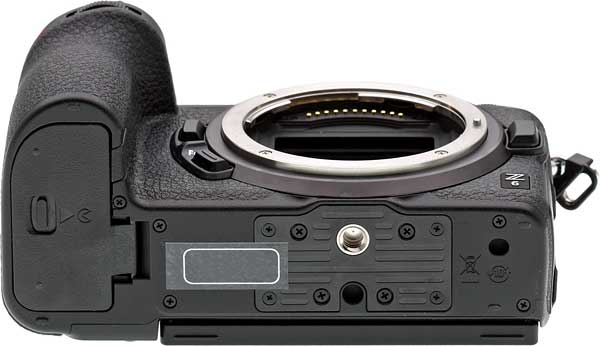
For increasing the dynamic range of JPEG images, the camera offers Nikon’s Active D-Lighting. The available settings include auto, extra high, high, normal, low and off. You can also record HDR images in camera.
The Z6 includes a new 16:9 crop for recording still images, which Nikon states will make it easier to drop still images into a video workflow. In addition to the new 16:9 and standard 3:2 aspect ratios, the camera also offers a 1:1 aspect ratio and a DX crop mode which produces up to a 10.3-megapixel image file, though oddly it doesn’t support the Z7’s 5:4 mode. The Z6 records .NEF raw files in 12 or 14-bit color depth and can record large (24.3MP), medium (13.7MP) and small (6.1MP) .NEF files.
Regarding flash, the Z6 includes a standard ISO 518 hot-shoe with sync and data contacts and the camera offers a 1/200s flash sync speed. The camera can utilize Nikon’s Advanced Wireless Lighting technology and take advantage of the wireless tech in the company’s latest speedlights. The camera offers TTL and i-TTL flash control and -3 to +1 EV flash compensation.

The Nikon Z6 is compatible with Nikon’s latest wireless lighting products. The Z6 is shown here with the SB-5000 Speedlight and WR-1 wireless communicator.
Built-in image stabilization delivers up to five stops of correction
The Nikon Z6 features built-in sensor shift image stabilization which can deliver up to five stops of stabilization. The system relies on a dedicated VR microcomputer and operates via a movable magnesium frame. The camera has detection for pitch, yaw, rotational and translation shake. It is a closed-loop system and has a trio of Hall-effect sensors which provide positional feedback.
Video: A powerful multimedia camera with 4K/30p video
Video has not always been a strong suit for Nikon DSLR cameras. For a while, features and specifications lagged behind the competition. Autofocus performance has long been a weak area as well because of the lack of phase-detect AF during video recording and video-optimized lenses, as we have noted in our numerous Nikon DSLR Field Tests. Nikon bucks the trend with their new mirrorless system.
The Z6 records 3840 x 2160 (4K UHD) video at up to 30 frames per second (progressive) and can also record at 25p and 24p frame rates. 1920 x 1080 (Full HD) video can be recorded at 120p, 100p, 60p, 50p, 30p, 25p and 24p frame rates. There is also a Full HD slow-motion video recording feature, which allows for 4x slow-motion video at 25p and 30p and 5x slow-motion video played back at 24p. The camera records in MOV and MP4 formats and utilizes H.264/MPEG-4 video coding. Maximum clip length is 29 minutes and 59 seconds.
For serious videographers, the camera offers audio input and output jacks, timecode functionality, 10-bit N-Log recording and more. Regarding 10-bit N-Log, you can record 4:2:2 video to an HDMI recorder and view the footage with a normal look while recording, instead of the flat look typical of log video. The N-Log format features a 12-stop dynamic range according to Nikon. In addition to recording 10-bit video externally, you can also simultaneously record 8-bit video to the camera’s memory card.

Via its audio input and hot shoe, the Z6 can use microphones, such as the Nikon ME-1 shown here.
The camera offers numerous usability improvements over previous Nikon cameras as well, including focus peaking during 4K video recording, organic exposure levels through the electronic viewfinder and quiet adjustments using the Nikkor S-Line lenses’ new control ring. You can also adjust the autofocus tracking speeds across five different levels. Further, autofocus can be controlled via the subselector joystick while recording. During video recording, the Z6 has 231 PDAF points available because of the shorter 16:9 aspect ratio, and 91 in DX crop mode.
Unlike the Z7, the Nikon Z6 performs full-pixel readout for full sensor width 4K UHD video recording and thus does not perform pixel binning or cropping. It reads 6K video and then resamples to 4K output, like some Sony cameras do, which yields very high image quality. And a future firmware update is slated to add 12-bit ProRes RAW video out support.
Additional features include Active D-lighting during video recording and the ability to capture in-camera timelapse videos. All in all, the Nikon Z6 is a much better video camera than Nikon’s recent DSLRs.
Storage, power and connectivity
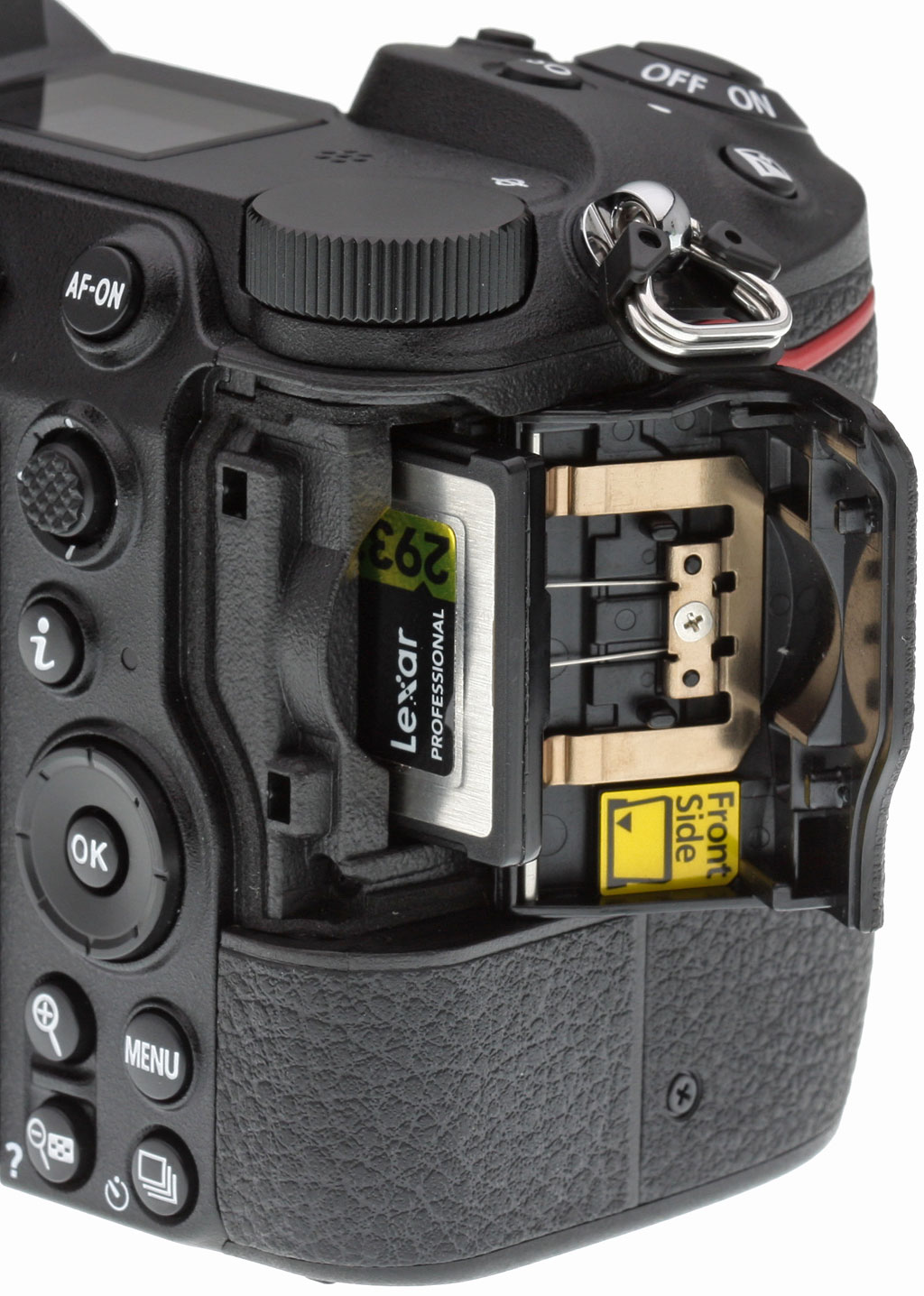
The Nikon Z6 writes files to a single XQD card slot. While it’s disappointing that there’s not a second card slot, Nikon tells us that the camera will be able to use faster CFexpress cards via a future firmware update. It’s certainly utilizing very fast storage even if there’s not a second slot.
With respect to power, the camera uses a new EN-EL15b battery. Interestingly, the camera is compatible with the EN-EL15a battery used in the recent Nikon D850 camera and even older EN-EL15 batteries, which will be appreciated by Nikon DSLR shooters that have them. The EN-EL15b version of the battery features new components which allow the Z6 to be charged via USB with the battery in the camera. You cannot charge the older ones in-camera.
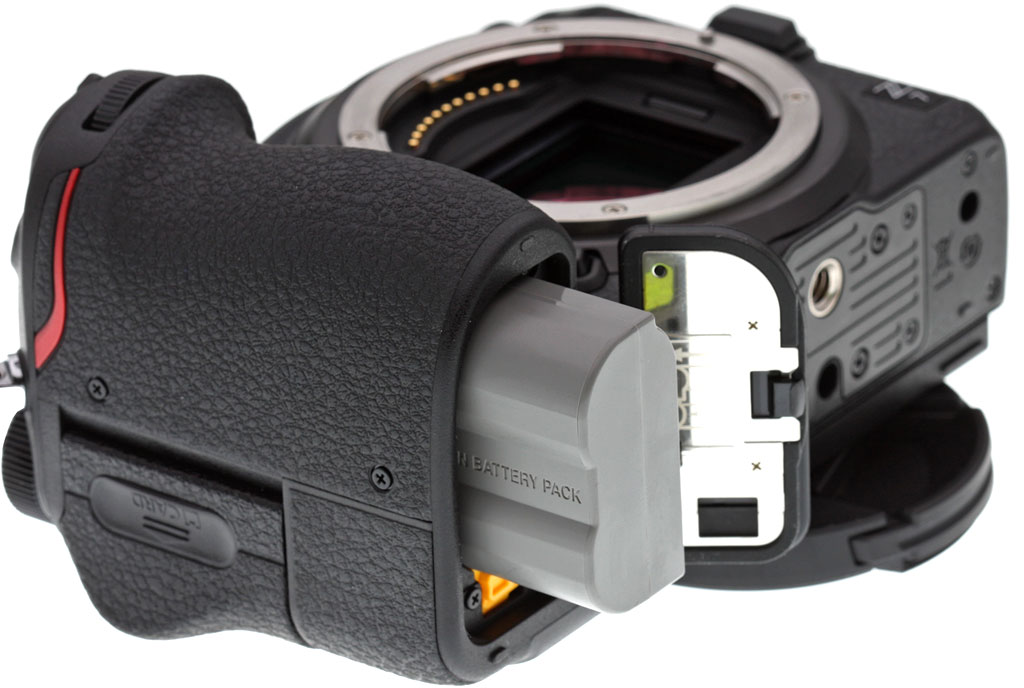
As we touched on earlier, battery life is often a disadvantage of a mirrorless camera compared to a DSLR and that remains the case here. The CIPA standard battery life rating for the Z6 is only about 310 shots per charge when using the EVF and 380 shots with the LCD monitor, however real-world battery life far exceeds the CIPA figures. To help maintain good battery life out in the field, you can press a button on the side of the viewfinder which kills all LCD functions and the EVF will only turn on when you bring it up to your eye. The LCD will light up when you press buttons but will otherwise remain off. It’s a neat power-saving feature. A further note, the Z7 comes with a charging AC adapter but the Z6 does not, it will need to be purchased separately if you would like this accessory.

The MB-N10 Multi-Power Battery Pack has no controls for portrait-oriented shooting.
Nikon has also developed the MB-N10 Multi-Power Battery Pack, which holds two EN-EL15b batteries, effectively increasing the number of shots possible and/or movie recording time by approximately 1.8 times, and the dual battery slot design allows hot swapping of batteries while the camera is in use, eliminating downtime. It provides the same level of weather resistance as the Z6/Z7, and supports USB charging using the EH-7P Charging AC Adapter. Sadly, it has no controls for improved portrait-oriented shooting. Pricing for the MB-N10 is set at around US$200, with availability from November 2019.
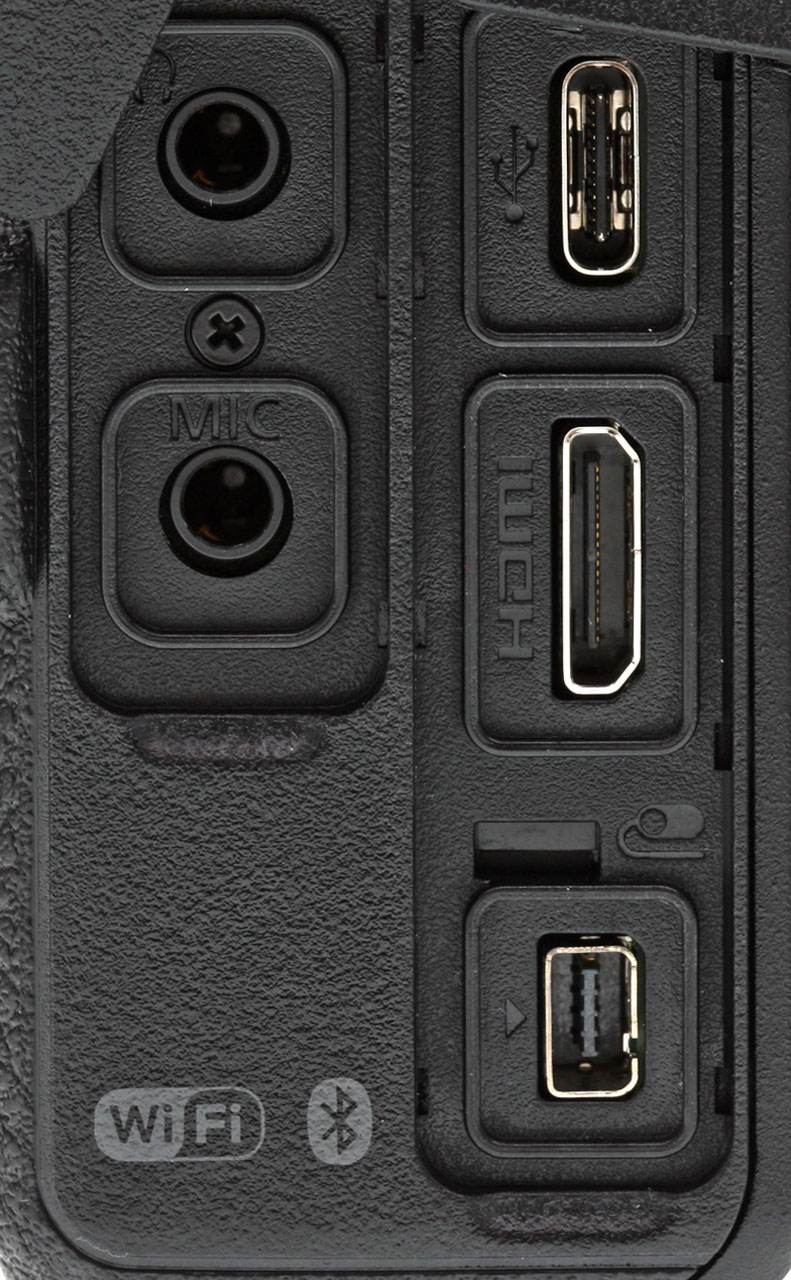
The Z6 is a connected camera. It offers built-in Wi-Fi and Bluetooth and SnapBridge 2.5 functionality. Via SnapBridge, you can add location data to image files on the camera. The built-in Wi-Fi supports both 2.4 and 5 GHz wireless. Further, the camera offers a direct PC connection and allows for JPEG and RAW transfer directly to a connected computer. The Z6 is also compatible with the Nikon WT-7, allowing for FTP functionality.
On the left side of the camera, there are an array of ports, which are covered with rubber flaps and sealed against weather. There are 3.5mm stereo headphone and microphone jacks closer to the front of the camera, and USB, HDMI and accessory ports closer to the rear of the camera. The USB 3.0 and HDMI ports are Type C and the accessory terminal can be used with the optional MC-DC2 remote in addition to other accessories.
Nikon Z6 Price and Availability
The Nikon Z6 began shipping in late November 2018 for a suggested retail price of US$1,995.95 in a body-only configuration. The Z6 is also available in a kit with the new Nikkor Z 24-70mm f/4 S lens for a list price of US$2,599.95. Street prices have since dropped by about $200, to just under US$1,800 for the body and US$2,400 for the 24-70 f/4 kit.
In the Box
The retail Nikon Z6 24-70mm f/4 kit contains the following items:
- Nikon Z6 camera body
- Nikkor Z 24-70mm f/4 S lens
- LC-7B 72mm front lens cap
- LF-N1 rear lens cap
- HB-85 lens hood
- EN-EL15b lithium-ion battery
- MH-25A battery charger
- BF-N1 body cap
- DK-29 finder eyepiece
- BS-S1 accessory shoe cover
- UC-E24 USB cable
- HDMI/USB cable clip
- AN-DC19 camera strap
- Warranty cards