
DJI Mic Mini Review: The Best Budget Wireless Microphone for Creators?

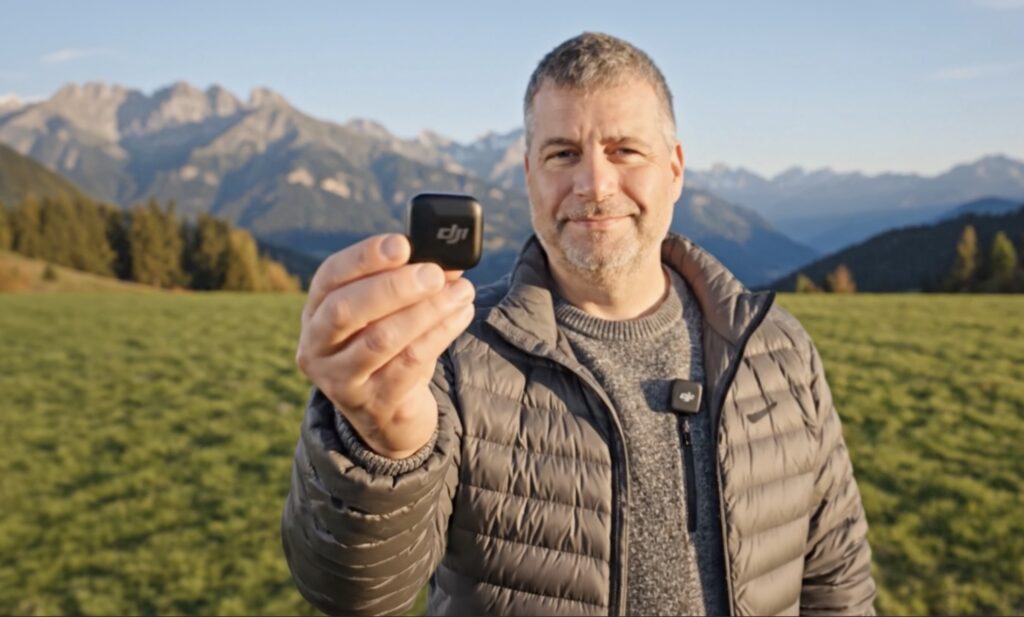
Table of Contents
 DJI Mic Mini Audio Quality
The DJI Mic Mini has become one of the most popular wireless microphones for video creators since it launched at the end of 2024. Thanks to the launch of new mics, especially the DJI Mic 3, the price of the Mic Mini has plummeted, making it not only one of the best compact wireless mics but one of the cheapest.
At $79 for the two-transmitter and one receiver version, it’s hard (maybe impossible) to find a wireless microphone system that does this much for this little.
This mic can be found in our Ultimate Mic Buyer’s Guide, along with some other microphones we love.
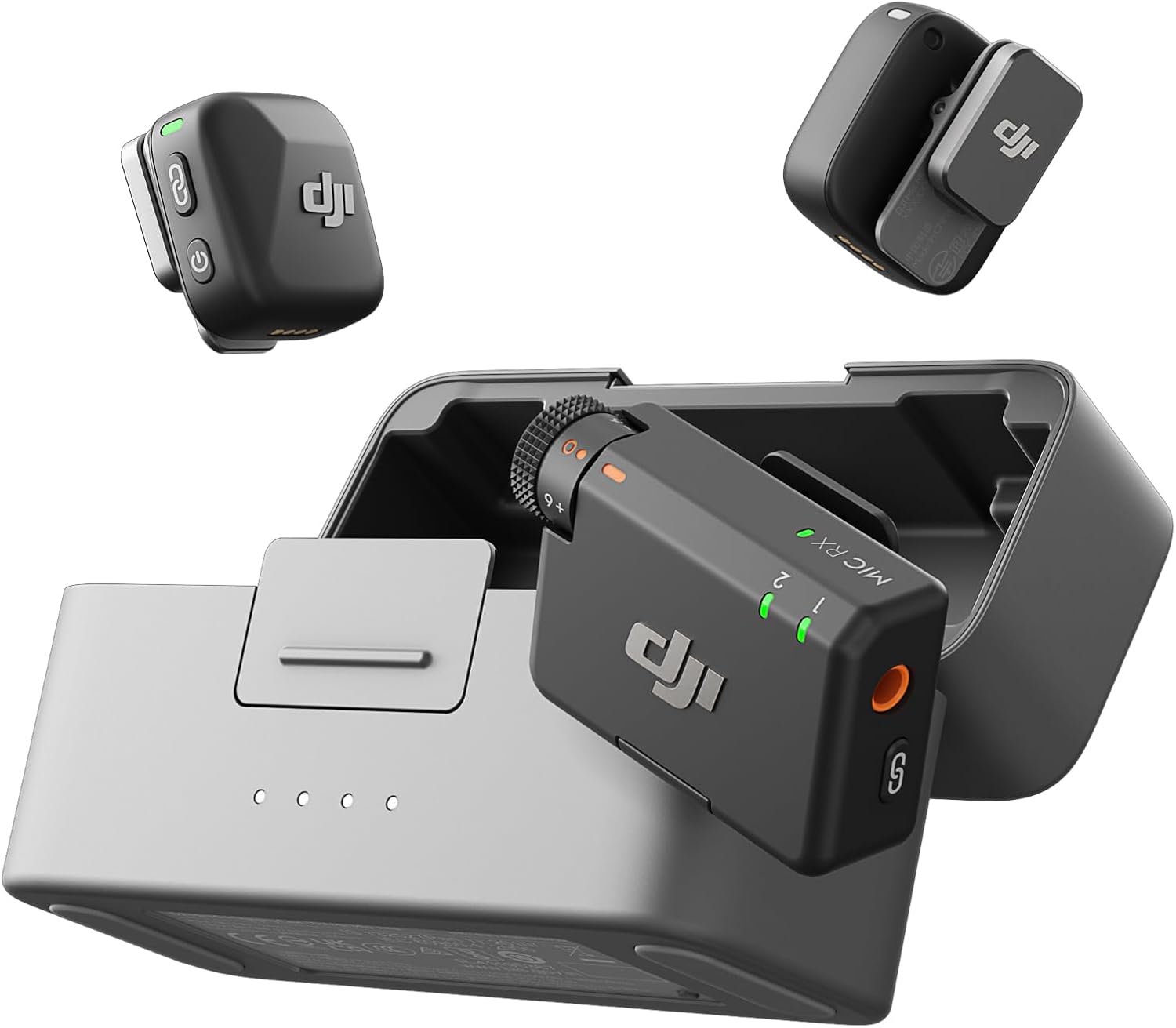
The DJI Mic Mini is a compact wireless microphone system that records 24-bit digital audio and transmits over 2.4GHz with a range of up to 150 meters (line of sight). It features a clip-on transmitter with built-in mic, a USB-C receiver for direct camera and smartphone use, and a charging case that extends its 5–6 hour operating time. Designed for plug-and-play use, it delivers clean, low-latency audio in an ultra-portable form for vlogging and interviews.
- Compact and ultralight — easy to clip on and go.
- Dual transmitters for two-person recording.
- Up to 48 hours total use with charging case.
- Noise-canceling and automatic limiting to keep audio clean.
- No built-in screen like the larger DJI Mic 2.
- Range is best in line-of-sight shooting environments.
- Battery Life: 48 hours (with charging case)
- Compatibility: iPhone, Android, cameras, and laptops
- Audio Features: Noise-canceling, automatic gain limiting, low-latency transmission
- Range: 400m
- Charging Case: Recharge both transmitters and receiver simultaneously
DJI Mic Mini Audio Quality
In tests against several XLR studio microphones, the Mic Mini holds up well, though it’s not nearly on par with a high-end studio mic. Audio quality is genuinely good in most outdoor conditions, where I would never bring a studio mic.
The one consistent sound issue is that the treble can come across as flat, giving the audio a slightly less bright character than a dedicated studio mic. Without 32-bit float recording, there’s limited room to correct for mediocre audio in post-production.
That said, for $79, the audio quality is hard to beat. I have several mics at a similar price point that I use on my personal YouTube channel, and compared to the Mic Mini, they are, in a word, bad.
The Mic Mini uses an omnidirectional pickup pattern, meaning it captures sound from all directions. Omnidirectional mics work well for direct speech in controlled environments, but in noisier situations, most places you’d use a wireless mic, you’ll hear the environment alongside your voice. The system does include two levels of active noise cancellation (ANC), triggered with a single press of the power button, which helps in moderate noise environments.
Wireless range is rated at 400 meters with a clear line of sight. In practice, I haven’t hit that number — real-world range in open environments is excellent but falls short of the claimed spec. In cities or areas with significant radio frequency interference, like trade shows, range drops noticeably, and audio dropouts become a real possibility.
DJI Mic Mini vs. DJI Mic 3: What’s the Difference?
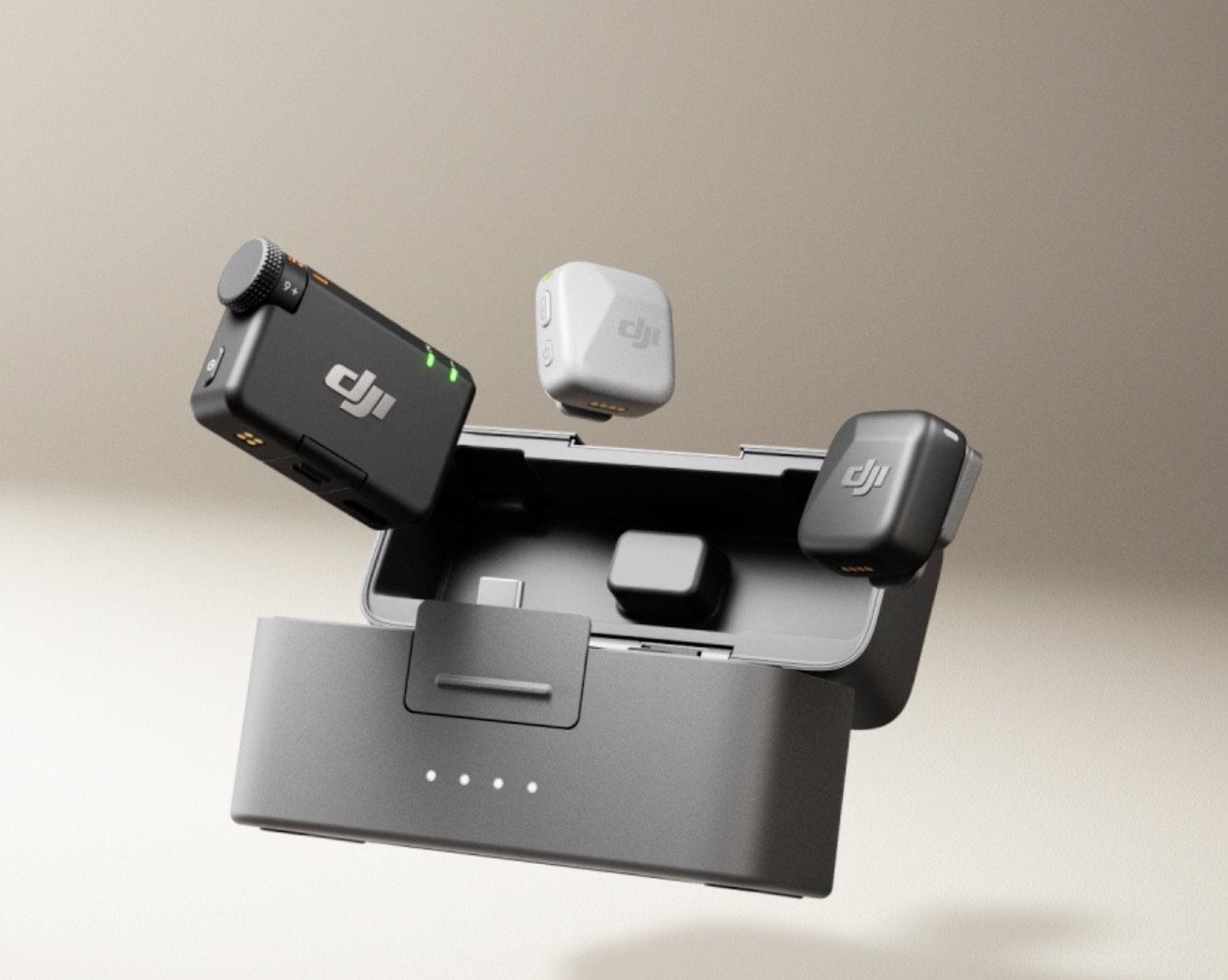
The DJI Mic 3 is a more capable system, and depending on what you’re shooting, it may be worth the extra cost. The Mic 3 includes internal recording, 32-bit float audio, timecode support, and the ability to run up to more transmitters and receivers simultaneously. The internal recording alone will be worth the (considerably more) money. With the Mic Mini, if the wireless connection drops, the audio is gone; there’s no local backup on the transmitter. That’s a risk that’s easy to overlook until it happens.
The more advanced 32-bit float audio works like shooting raw files versus JPEGs. With a standard audio recording, clipping destroys that audio permanently. With 32-bit float, the dynamic range is wide enough that you can bring a clipped file into your editor, reduce the gain, and recover audio that would otherwise be unusable. For outdoor shooting, live events, or any situation with unpredictable audio levels, that’s a significant safety net.
The Mic Mini does include a safety track mode, accessible through the DJI Mimo app, that records a second channel at -6 dB. It’s not a 32-bit float system, but it does provide some protection against severe clipping in loud environments. For multicam productions, interviews, or panel discussions, the Mic 3 is the stronger choice. For a solo creator running a single camera (especially one made by DJI), the Mic Mini is almost always enough.

DJI Mic Mini Battery Life
Battery life is one area where the Mic Mini actually outperforms the Mic 3. The transmitter delivers approximately 11.5 hours of use, and the receiver runs for about 10.5 hours — both longer than the eight hours DJI rates for the Mic 3’s transmitter. With the charging case factored in, DJI rates the total system runtime at around 48 hours.
Should You Buy the DJI Mic Mini?
If you’re a solo creator shooting vlogs, product reviews, or run-and-gun content, the DJI Mic Mini is one of the easiest recommendations in portable audio right now. The weight and size advantages over larger lavalier systems are real and noticeable in day-to-day use, the setup is genuinely effortless, and the audio quality is solid for the price. At $79 for the full kit, it’s the kind of purchase you can make without overthinking it.
If your shooting involves unpredictable audio environments, outdoor locations, live events, or any situation where a dropped signal could ruin a take, the lack of internal recording is riskier. The same goes for anyone who needs to mic multiple subjects. In those cases, the DJI Mic 3 is worth the additional investment.
But for most creators shooting everyday content, the Mic Mini does the job well and costs less than some dinners out. The Mic Mini is affordable enough that even if you opt for the Mic 3, you might consider getting a Mic Mini setup as a backup.