
Best Travel Lenses for Nikon Z Cameras 2026


Table of Contents
-
 Why Nikon Z Mount Is a Great Choice for Travel Photographers
 -
Tamron 16–30mm f/2.8 Di III VXD G2 (Nikon Z)
-
Watch Our Review of the Tamron 16-30mm f/2.8 Di III VXD G2 Lens
-
Nikon Z 24-70mm f/2.8 S
-
Nikon Z 24-120mm f/4 S
-
Tamron 28-75mm f/2.8 Di III VXD G2 (Nikon Z)
-
Nikon Z 35mm f/1.8 S
-
Nikon Z 24mm f/1.8 S
-
Viltrox 24mm f/1.8 Z
-
Nikon Z 70-200mm f/2.8 VR S
-
Nikon Z 100-400mm f/4.5-5.6 VR S
-
Tamron 70-300mm f/4.5-6.3 Di III RXD (Nikon Z)
-
Travel and photography go hand in hand. There is nothing more suited for photography than capturing the memories of a trip. It doesn’t have to be a trip to a distant country or an African safari; even a quick day trip will have something new to encounter. Many of the lenses a photographer might want to use are perfect for travel photography, but there are some unique demands when it comes to more exciting locations.
This guide contains our favorite travel lenses for the Nikon and its mirrorless Z-Mount. From ultra wide to super-telephoto, we break down the best lenses for every travel situation.
Why Nikon Z Mount Is a Great Choice for Travel Photographers
Nikon’s Z-mount system offers a well-rounded lens lineup that works particularly well for travel photography. The combination of modern optical designs and in-body image stabilization allows Nikon Z shooters to build kits without relying on overly large or heavy lenses.
There aren’t as many third-party options for lenses in the Nikon system as in some others, but that’s changing.
The Nikon lenses selected here are our picks because they balance image quality with the things you need when you’re traveling. These choices emphasize flexibility, manageable size, and consistent performance across a wide range of shooting situations.
Imaging Resource has been reviewing cameras and lenses for decades, with an emphasis on real-world performance rather than isolated lab results. Travel photography is one of the clearest tests of lens design, combining long shooting days, unpredictable conditions, and limited chances to reshoot.
I have tested and shot with almost every lens in this guide, and between myself and the Imaging Resource staff, we have tested and shot with all of them. These are all lenses we would buy with our own money.
Ultra-Wide Lenses
Ultra-wide lenses are designed to capture a much wider field of view than the human eye naturally sees, making them ideal for landscapes, urban architecture, tight interiors, and travel scenes where stepping back isn’t possible. When you’re navigating crowded streets, historic buildings, or the Magic Kingdom, an ultra-wide lens lets you capture everything in a single image.
For photographers who are newer to interchangeable-lens cameras, ultra-wide lenses can take some getting used to. Perspective becomes exaggerated, foreground objects appear larger, and tilting the camera can distort the edges of a frame. But ultra-wide lenses create a look that no other lens can.
Tamron 16–30mm f/2.8 Di III VXD G2 (Nikon Z)
A compact ultra-wide zoom that balances speed, size, and, thanks to the 16mm to 30mm focal length, is good for more than just wide-angle shots. At 30mm, you can capture some portraits (albeit with some distortion) and the latte art at the small cafe you found.
I tested this lens for the Sony platform, and it was one of my favorite wide-angle zoom lenses of all time.
The constant f/2.8 aperture makes it useful for low-light interiors and early-morning landscapes, and lets in plenty of light.
Overall, for Nikon Z shooters who want a bright, travel-friendly ultra-wide that’s sharp, quick to focus, and easy to tote, the Tamron 16–30mm f/2.8 G2 is a smart, practical choice.
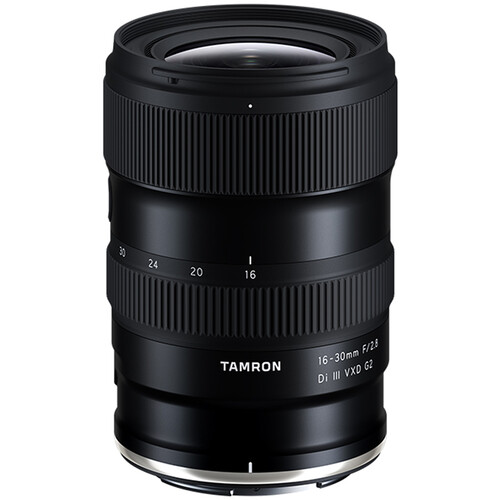
Ultra-wide zoom lens designed for Nikon Z-mount full-frame mirrorless cameras with a 16–30mm focal length range and constant f/2.8 maximum aperture. Uses Tamron’s VXD linear autofocus motor and relies on in-body image stabilization for shake reduction.
- Constant f/2.8 aperture
- Compact for an ultra-wide zoom
- Fast, quiet autofocus
- No optical image stabilization
- Large front element limits filter options
- Focal Length: 16–30mm
- Maximum Aperture: f/2.8
- Minimum Aperture: f/16
- Mount: Nikon Z
- Format Coverage: Full Frame
- Autofocus: VXD Linear Motor
Watch Our Review of the Tamron 16-30mm f/2.8 Di III VXD G2 Lens
Read our review of the Tamron 16-30mm lens.
General-Purpose Zooms
A general-purpose zoom is often the backbone of a travel photography kit. These lenses are designed to handle a wide range of everyday shooting situations, from street performers to portraits to food photography and casual landscapes, without requiring frequent lens changes. For many trips, this is the lens that stays on the camera most of the day.
It’s also a category of lens that most photographers should have as one of their first lenses. Getting a great general-purpose zoom lens will have the biggest impact on your everyday shooting.
Nikon Z 24-70mm f/2.8 S
A flagship zoom that delivers excellent sharpness across the frame. While not the lightest option, its reliability makes it a solid choice for demanding trips. This is one of my favorite 24–70mm lenses. It’s fast, built like a tank, and makes amazing images. I currently have this lens on our test Nikon Z5 II, and it’s a nearly perfect combination.
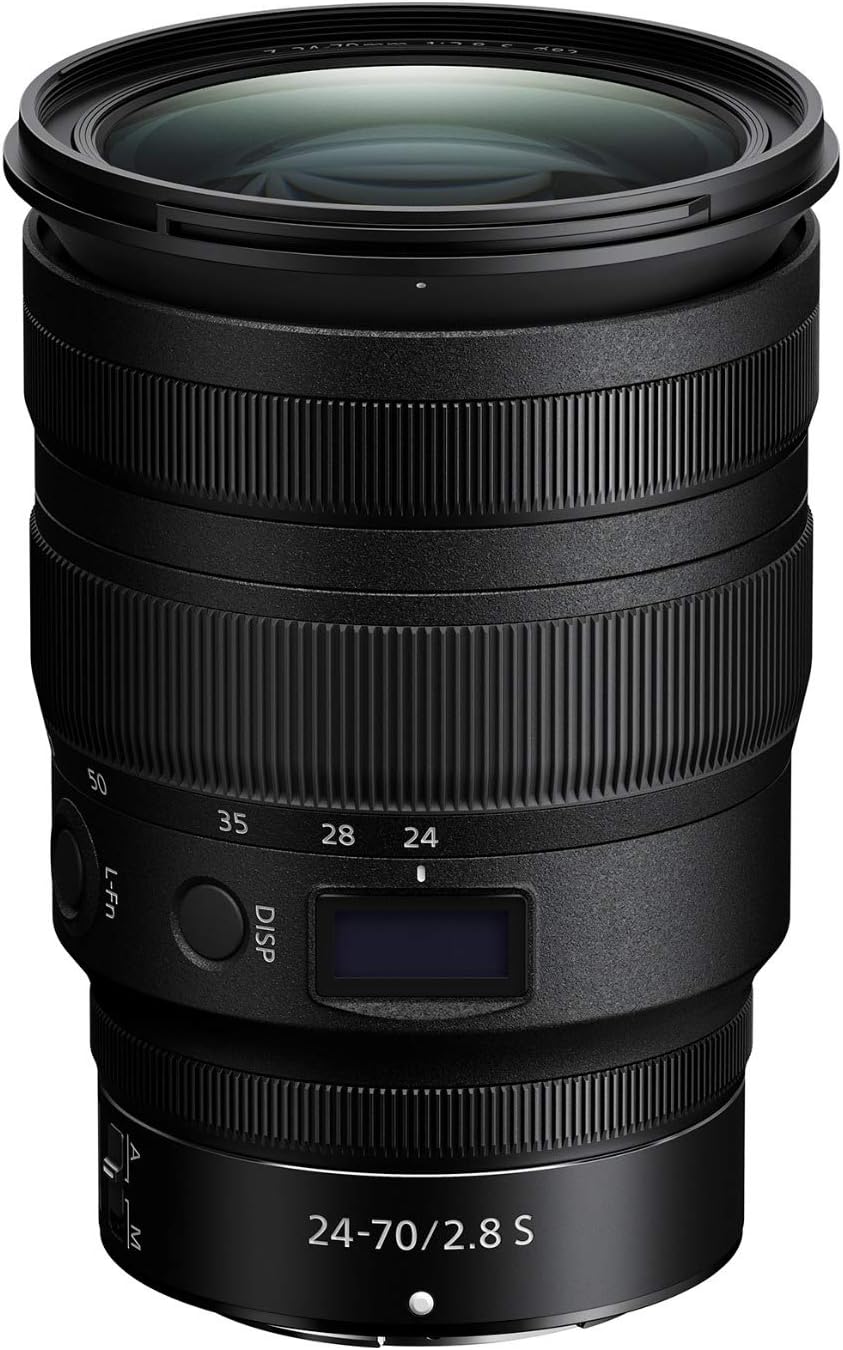
This lens covers a 24–70mm focal length range, with a f/2.8 constant aperture, stabilization is listed as Via IBIS (no optical VR), autofocus is specified as Multi-Focus STM system, and weighs 805 g (1.77 lbs), weather sealing is noted as Yes, dimensions are 126 mm × 89 mm (4.96 in × 3.5 in).
- Outstanding sharpness
- Fast aperture
- Rugged build
- Larger/heavier than f/4 options
- Expensive
- Focal Length: 24–70mm
- Aperture: f/2.8 constant
- Aperture Blades: 9 (rounded)
- Image Stabilization: Via IBIS (no optical VR)
- AF Motor: Multi-Focus STM system
- Weather Sealing: Yes
Nikon Z 24-120mm f/4 S
This versatile zoom gives extra reach while remaining relatively compact. For many types of travel, this lens is more versatile than a 24-70 or 28-75, but at f/4 it doesn’t let in quite as much light as the f/2.8 lenses in this section.
The constant f/4 aperture makes it a smart choice for travel photographers who want one lens to do it all, and do it on a budget, without giving up too much light-gathering ability. It won’t provide as soft a background defocus as a f/2.8 lens, but this “bokeh” isn’t a necessity for most travel shots.
If you want versatility, go with this lens; if you want the best light performance, the Nikon and Tamron lenses in this section are a better choice.
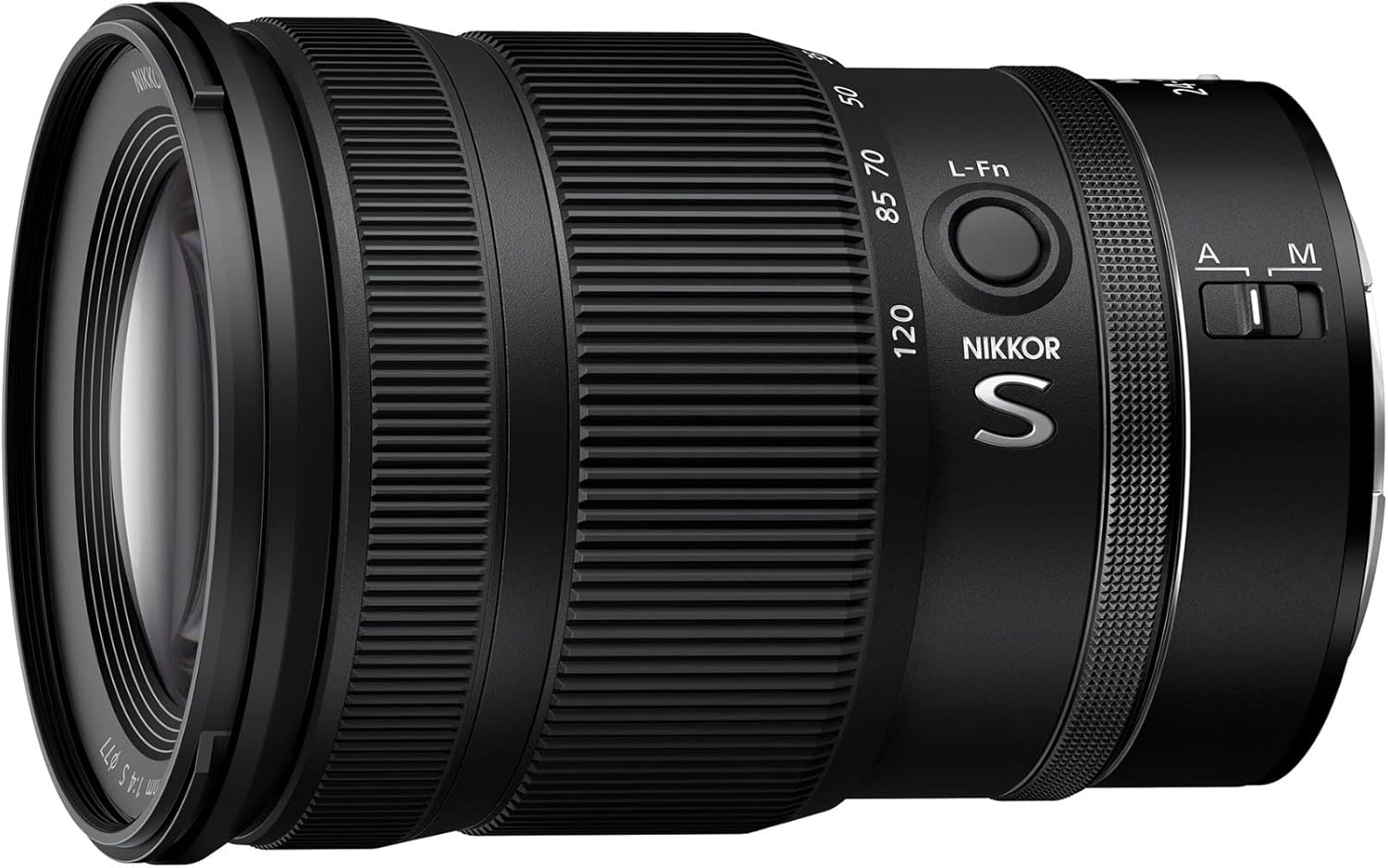
This lens covers a 24–120mm focal length range, with a f/4 constant aperture, stabilization is listed as Via IBIS (no optical VR), autofocus is specified as STM stepping motor, and weighs 630 g (1.39 lbs), weather sealing is noted as Yes, dimensions are 118 mm × 84 mm (4.65 in × 3.3 in).
- Sharp throughout the entire zoom range with strong corner-to-corner performance
- 0.39x magnification at 120mm lets you get close for detail shots
- Lightweight at 630g—lightest lens in its class
- Noticeable barrel distortion at 24mm (though auto-corrected in camera)
- No built-in VR (relies on in-body stabilization)
- Zoom ring feels stiff when going from 24mm all the way to 120mm
- Focal Length: 24-120mm (5x zoom range)
- Aperture: Constant f/4, minimum f/22
- Optical Design: 16 elements in 13 groups
- Focus: Multi-focusing system with dual STM motors, 0.35m minimum focus
- Weight: 630g (1.4 lbs)
Tamron 28-75mm f/2.8 Di III VXD G2 (Nikon Z)
Another great lens that I tested that I love to shoot with. It’s a lighter and more affordable alternative to Nikon’s pro zooms. Its compact design and strong optical quality make it ideal for travel, where portability is a priority. While neither company will confirm this, this is likely the same lens as the Nikon-branded 28-75mm. This lens is also available on Sony E-Mount, and I’ve spent many trips shooting the Sony version.
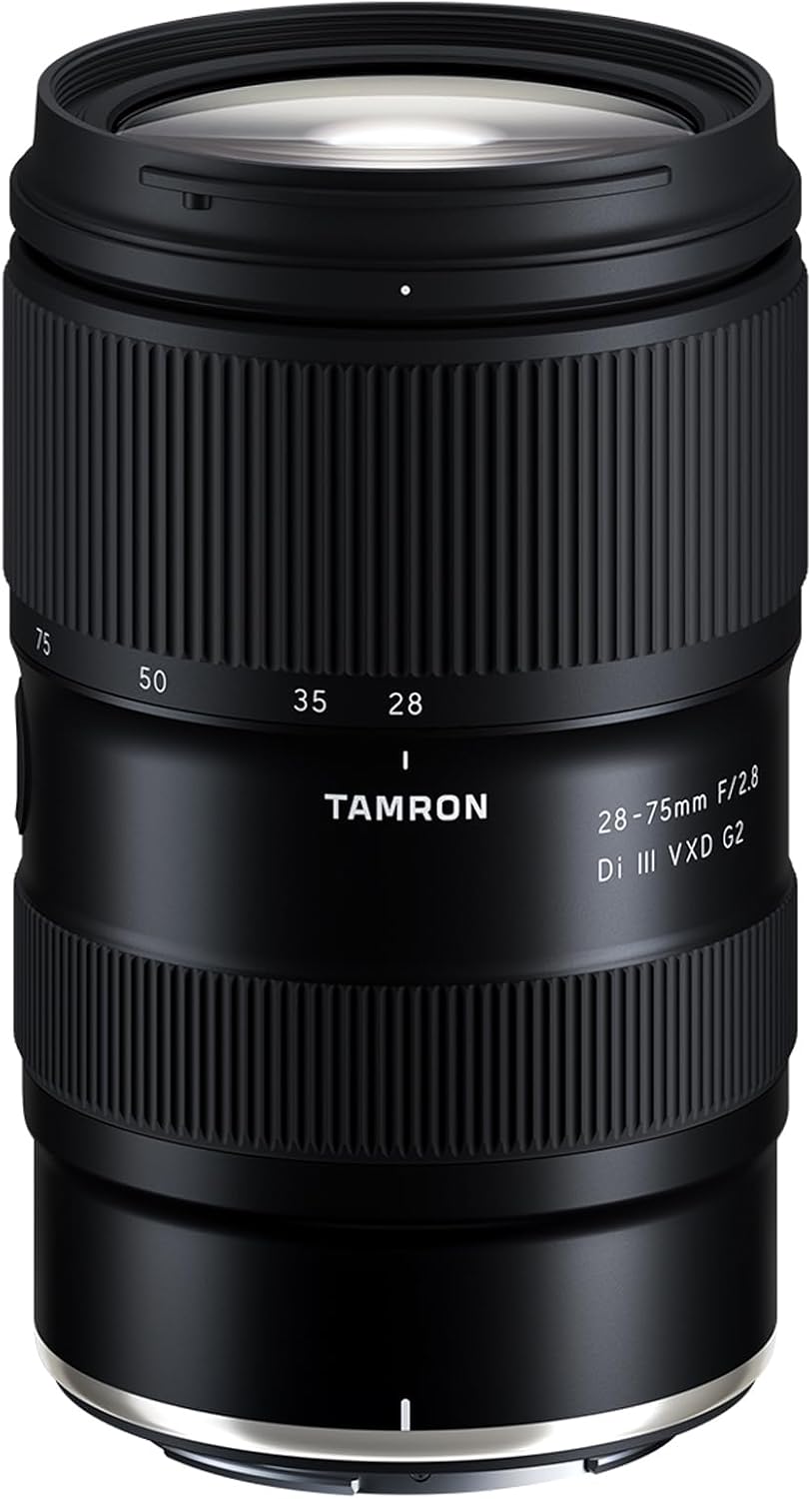
This lens covers a 28–75mm focal length range, with a f/2.8 constant aperture, stabilization is listed as None (relies on IBIS), autofocus is specified as VXD (Voice-coil eXtreme-torque Drive) linear motor, and weighs 550 g (1.21 lbs), weather sealing is noted as Yes (basic), dimensions are 119.8 mm × 75.8 mm (4.72 in × 2.98 in).
- Affordable
- Lightweight
- Sharp images
- Starts at 28mm (less wide than 24mm)
- Weather sealing is not on the S-line level
- Focal Length: 28–75mm
- Aperture: f/2.8 constant
- Aperture Blades: 9 (rounded)
- Image Stabilization: None (relies on IBIS)
- AF Motor: VXD (Voice-coil eXtreme-torque Drive) linear motor
- Weather Sealing: Yes (basic)
Wide and Standard Primes
Prime lenses are great for photographers who want the best light gathering and excellent image quality, and can give up the flexibility of a zoom to get it.
Wide and standard prime lenses appeal to travel photographers who value simplicity, compact size, and strong low-light performance. Because these lenses use a fixed focal length, they’re often smaller and lighter than zooms, making them easy to carry all day and less conspicuous when shooting in busy locations. There are prime telephoto lenses, but they’re usually prohibitively expensive, and not particularly well-suited to travel because of their relatively large size and massive prices.
Nikon Z 35mm f/1.8 S
A classic focal length for street and travel photography, offering excellent sharpness and low-light ability. Its natural perspective makes it versatile for many scenes. This is one of my favorite Nikon primes, and I’ve used it as a daily shooter when shooting Nikon’s mirrorless system. I think it’s one of the best 35mm lenses Nikon has ever made. This is another lens we keep on hand in our collection to test new Nikon bodies, and it’s a top pick for a first prime lens for most photographers.
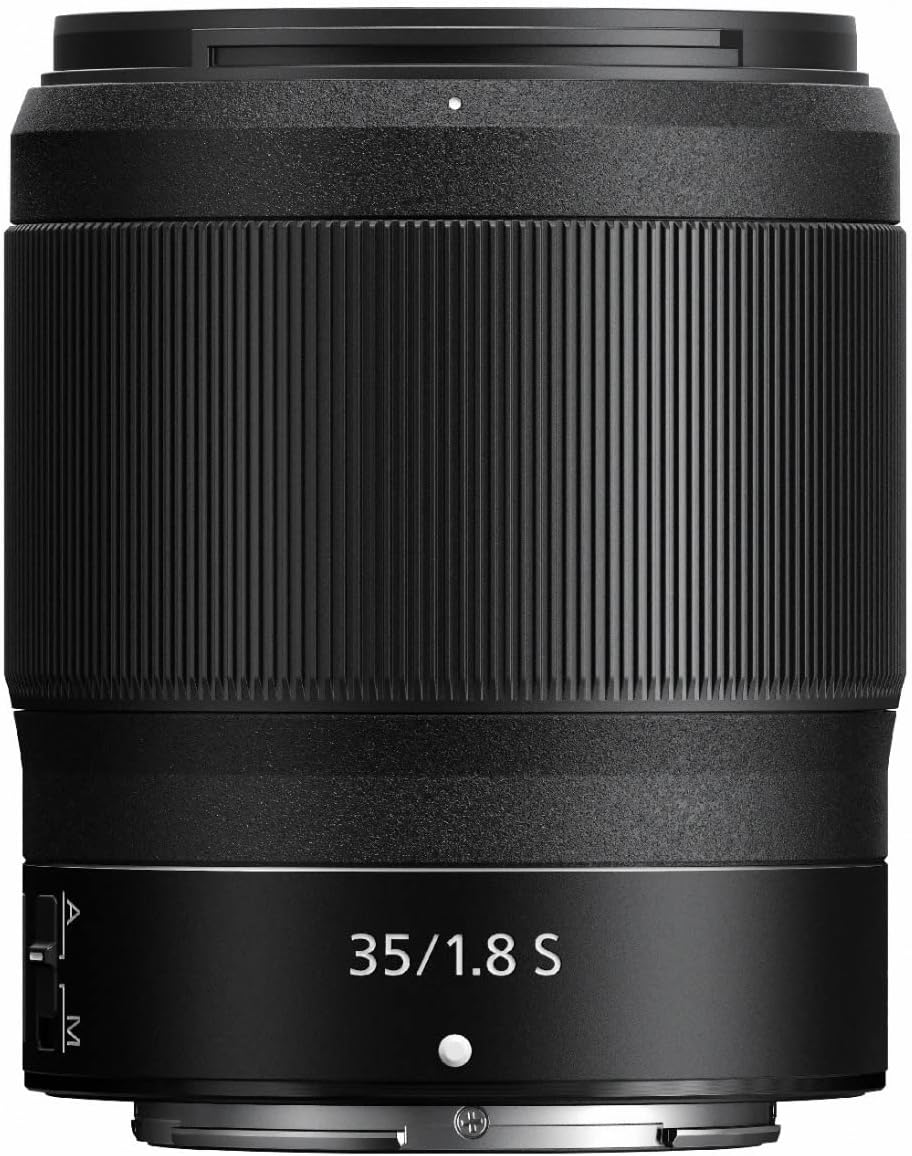
This lens covers a 35mm focal length range and weighs 370 g (0.82 lbs), with a f/1.8 aperture, Stepping motor, and weather sealing, but doesn’t have stabilization (relies on IBIS).
- Excellent sharpness
- Strong low-light performance
- Weather sealed
- Larger than some third-party 35mm options
- Expensive for an f/1.8 lens
- Focal Length: 35mm
- Aperture: f/1.8
- Aperture Blades: 9 (rounded)
- Image Stabilization: No (relies on IBIS)
- AF Motor: Stepping motor
- Weather Sealing: Yes
Nikon Z 24mm f/1.8 S
Nikon’s wide-angle prime balances sharpness with portability. It’s great for architecture, capturing the feeling of a scene. It’s weather-sealed, which is great for travel. It’s the same build and image quality as the 35mm f/1.8 S, just in a wider focal length. I’ve used this for astrophotography too, and it produces fantastic images.
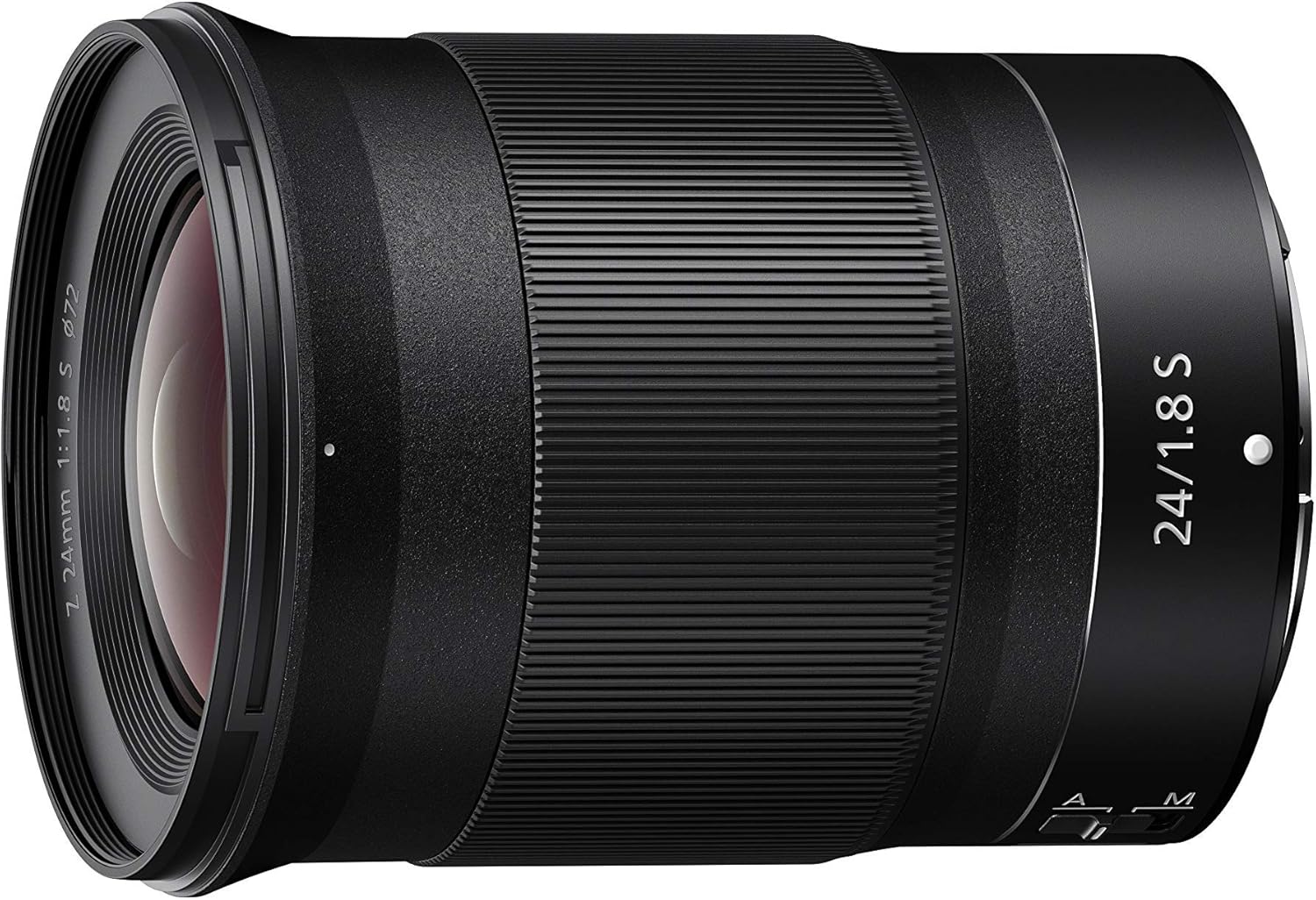
This lens covers a 24mm focal length range, with a f/1.8 aperture, stabilization is listed as No (relies on IBIS), autofocus is specified as Stepping motor, and weighs 450 g (0.99 lbs), weather sealing is noted as Yes, dimensions are 96.5 mm × 78 mm (3.8 in × 3.07 in).
- Excellent optical performance
- Weather-sealed
- Versatile for architectural photography
- Pricier than third-party alternatives
- Slightly bulky
- Focal Length: 24mm
- Aperture: f/1.8
- Aperture Blades: 9 (rounded)
- Image Stabilization: No (relies on IBIS)
- AF Motor: Stepping motor
- Weather Sealing: Yes
Viltrox 24mm f/1.8 Z
A third-party option that delivers strong image quality at a much lower price. It’s compact, affordable, and a solid pick for travel shooters who don’t need pro-level glass. Viltrox isn’t as well-known as third-party lenses from Tamron or Sigma, but it offers an excellent performance-to-price ratio. Viltrox lenses usually suprise me with their image quality for such a low price.
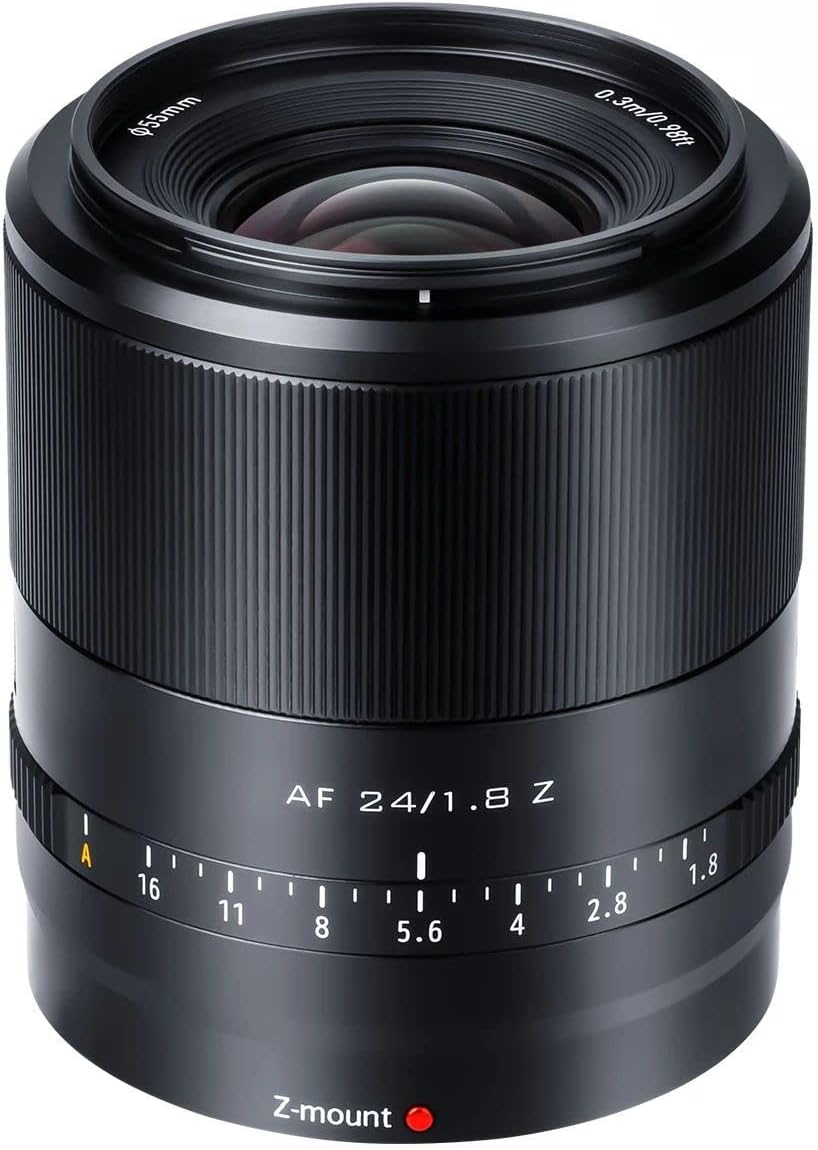
This lens with a f/1.8 aperture, and weighs 340 g (0.75 lbs), dimensions are 92 mm × 70 mm (3.62 in × 2.76 in). If you want to shoot wide-angle occasionally and don’t want to spend a fortune for a lens you might not use daily, this is a great choice.
- Affordable
- Lightweight
- Bright aperture
- Autofocus is less refined than Nikon’s S-line
- Limited weather sealing
- Focal length: 24mm
- Aperture: f/1.8
- Aperture blades: 9 (rounded)
- Image stabilization: No
- AF motor: STM stepping motor
- Weather sealing: Basic (not fully sealed)
Telephoto Zooms
Telephoto zoom lenses are all about reach. They allow travel photographers to capture distant subjects such as wildlife, sports, and landscapes that would otherwise be out of reach. Telephoto zooms also make for great portrait lenses, as their longer focal lengths are perfect for a portrait with a sharp foreground and background blur.
The trade-off is size and weight, as telephoto lenses tend to be larger and heavier than other lenses. For travelers focused mainly on cities or street photography, a telephoto may see limited use. But when your itinerary includes distant or hard-to-access subjects, the added reach can be well worth carrying.
Nikon Z 70-200mm f/2.8 VR S
A pro-level lens with exceptional sharpness and a fast aperture. Though heavier, it’s reliable for travel shooters who want uncompromising results. The built-in optical stabilization (Nikon calls it Vibration Reduction, and it’s the “VR” in the name) works in conjunction with in-camera stabilization for low-shake images even at the long focal length end. I think this is one of the best lenses Nikon has in its lineup today. Our review called it a “classic performer” with good resolution at all focal lengths.
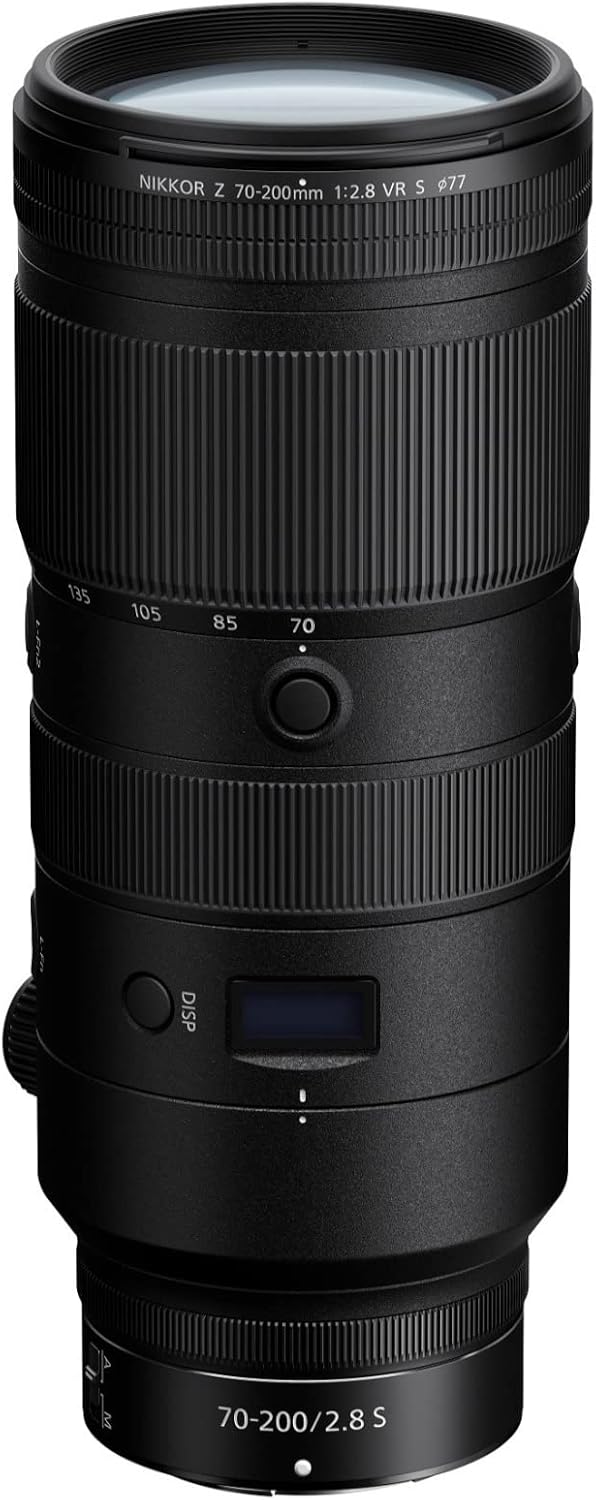
This lens with a f/2.8 constant aperture, and weighs 1360 g (3.0 lbs), dimensions are 220 mm × 89 mm (8.66 in × 3.5 in). It’s a staple lens for every type of photography, and this is a dream come true. It’s relatively lightweight, the image stabilization is excellent, and the image quality is unrivaled for Nikon shooters.
- Outstanding sharpness
- Bright f/2.8 aperture
- Pro build quality
- Large
- Heavy
- Expensive
- Focal length: 70–200mm
- Aperture: f/2.8 constant
- Aperture blades: 9 (rounded)
- Image stabilization: Yes (VR, + IBIS on compatible bodies)
- AF motor: Multi-Focus STM system
- Weather sealing: Yes
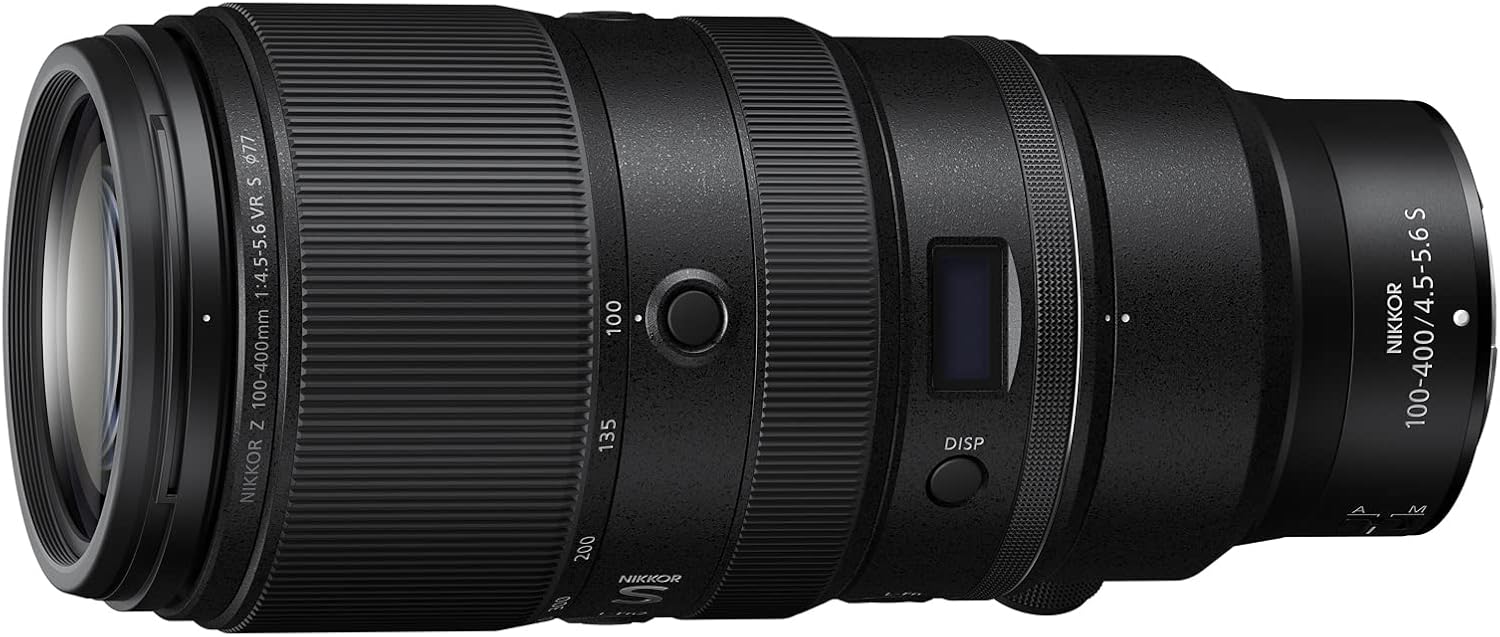
Nikon Z 100-400mm f/4.5-5.6 VR S
A longer zoom that’s still travel-friendly, given its reach. It pairs well with Nikon’s mirrorless bodies for distant action and wildlife shots. It’s definitely not a typical lens for travel, but it gives you great reach. I’ve recommended this lens to Nikon shooters who are going on a photo safari or visiting a National Park, and they’ve come back with exceptional images.
We praised its image quality and versatility and were impressed by its overall sharpness and fast autofocus in our review.
p
This lens with a f/4.5–5.6 variable aperture, and weighs 1435 g (3.16 lbs), dimensions are 222 mm × 98 mm (8.74 in × 3.86 in).
- Excellent reach
- Weather-sealed
- Relatively light for focal range
- More expensive than third-party options
- Not as bright as 70–200mm f/2.8
- Focal length: 100–400mm
- Aperture: f/4.5–5.6 variable
- Aperture blades: 9 (rounded)
- Image stabilization: Yes (VR, + IBIS)
- AF motor: Dual STM stepping motors
- Weather sealing: Yes
Tamron 70-300mm f/4.5-6.3 Di III RXD (Nikon Z)
A compact, affordable telephoto zoom that’s one of the lightest options available. Its balance of reach and portability makes it perfect for travel photography. My son shot with this lens on the Sony E-mount during a photo safari in Africa when he was 11, as it was light enough for him to carry and still produced excellent images. In fact, I shot with the much more expensive Sony 100-400mm f/4.5-5.6 GM, and when we took images side by side, it was impossible to tell them apart in terms of image quality.
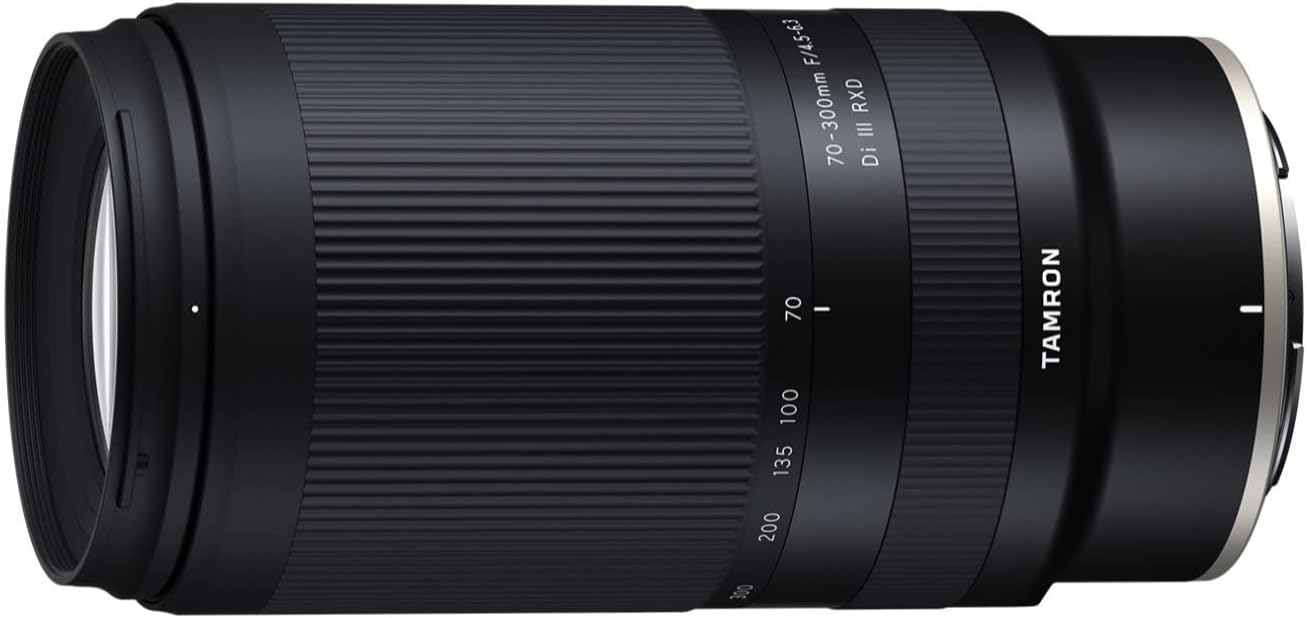
This lens has a f/4.5–6.3 variable aperture, and weighs 545 g (1.20 lbs), dimensions are 148 mm × 77 mm (5.83 in × 3.03 in).
- Lightweight
- Affordable
- Good reach for its size
- Slower aperture
- Less sharp than Nikon’s S-line
- Focal length: 70–300mm
- Aperture: f/4.5–6.3 variable
- Aperture blades: 7 (rounded)
- Image stabilization: No (relies on IBIS)
- AF motor: RXD stepping motor
- Weather sealing: Yes (basic)
What makes a lens good for travel photography?
A good travel lens balances versatility, size, and reliability. Lenses that cover useful focal lengths and remain comfortable to carry all day tend to perform best in real travel conditions.
How many lenses should I bring when traveling?
For most trips, fewer lenses is better than lots of lenses. Carrying a small, well-chosen kit makes it easier to stay mobile and focused, rather than constantly swapping lenses.
Do I need fast apertures for travel photography?
Fast apertures are helpful in low light, but they are not essential for every trip. Many travelers prefer lighter lenses and rely on stabilization and modern camera performance.
Is image stabilization important for travel lenses?
aiseImage stabilization is helpful when shooting handheld, especially in low light or when tripods aren’t allowed. While not essential, it can increase the number of sharp images you bring home from a trip.