
Why In-Body Image Stabilization (IBIS) is More Important Than You Think

I spend a ridiculous amount of time reading camera forums and falling down Reddit photography rabbit holes. The topic of In-Body Image Stabilization (IBIS) comes up constantly, and I keep reading comments from photographers who dismiss In-Body Image Stabilization as unnecessary.
“I can handhold down to 1/30th of a second just fine,” they say, as if that settles the argument. After testing roughly a hundred cameras over the years since mirrorless became mainstream, I can tell you that people who think IBIS is a useless technology because they can hold a camera relatively still are missing the point.
The “I can handhold fine” crowd isn’t wrong about their abilities. Experienced photographers absolutely can get sharp images at 1/30th or even 1/15th with good technique. But IBIS isn’t about replacing basic camera handling skills. It’s about expanding what’s possible when you’re shooting, especially in challenging conditions, using long lenses, or working in situations where a tripod or gimbal isn’t practical.
At a Glance
In-Body Image Stabilization does far more than help you handhold at slightly slower shutter speeds. It transforms telephoto photography by making tripods optional, enabling handheld video that looks gimbal-smooth, allowing lower ISOs for cleaner images, and using creative techniques that would be impossible otherwise.
While IBIS specifications from manufacturers can be misleading and hard to verify in real-world use, the practical benefits of shooting with a camera with IBIS are obvious to anyone who has moved from a camera without IBIS to one with IBIS.
That’s not to say cameras without IBIS are bad per se. I tested the Canon R8 a few years ago, and it’s a great camera, even though it doesn’t have IBIS.

What IBIS Actually Is and How It Works
Before I talk about the practical uses of IBIS (and why so many comments drive me insane), let’s look at what IBIS does and how it works.
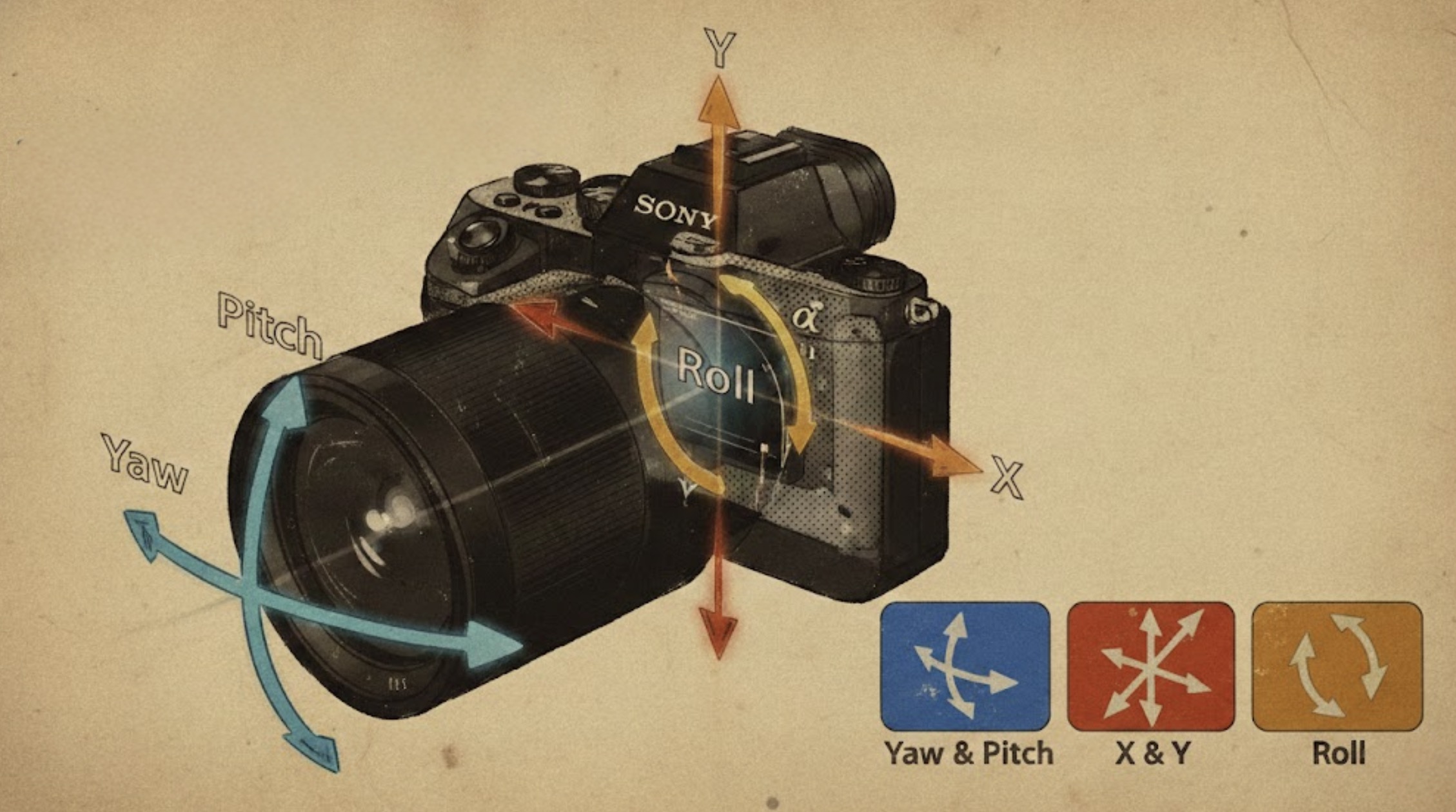
In-Body Image Stabilization moves your camera’s sensor to counteract camera shake. When you press the shutter, tiny gyroscopes detect camera movement in multiple directions. The sensor shifts in the opposite direction to compensate. This happens incredibly fast–thousands of adjustments per second.
In practice, it’s a tiny version of what a gimbal does, though a gimbal uses rotating arms to dampen the movement of the camera instead of just moving the sensor.
Sc
Most modern IBIS systems are 5-axis, meaning they correct for five types of movement: pitch (tilting up and down), yaw (panning left and right), roll (rotation), and two types of shift (horizontal and vertical movement).
Optical stabilization in lenses works differently. It moves lens elements instead of the sensor. Both approaches solve the issue that human hands aren’t perfectly steady and that photographers are often moving during shooting.
The key difference is that IBIS stabilizes every lens you mount on the camera, while optical stabilization only works in lenses that have it built in. Lenses that have optical stabilization combine that with the IBIS system for even better motion compensation.
Why IBIS is Measured in Stops
Image stabilization is measured in f-stops (or just “stops”) because it’s connected to the measurement of light entering the camera, used in ISO, aperture, and shutter speeds. It’s a measurement of how much you can lower the shutter speed or ISO in order to get the same shot with non-IBIS cameras.
For example, if you’re photographing a scene where you could shoot at 1/250th to get a sharp image, a five-stop IBIS stabilization system would theoretically allow you to shoot at 1/8th of a second with the same results.
IBIS stop performance should be taken with a grain of salt, as there’s not a practical way for photographers to measure IBIS claims between different systems and different bodies.

The Biggest Benefit of IBIS: Less Noise
To me, the most important benefit of IBIS is the one most overlooked in forum comments. Being able to shoot at lower ISO is more important in most situations than being able to shoot at slower shutter speeds, though both are directly connected.
If an IBIS system gives you three stops of stabilization, you can use a shutter speed three stops slower, which means you can also use an ISO three stops lower.
As a practical example, if a scene would normally require ISO 6400 to get a proper exposure, you can capture at ISO 800 instead at the same shutter speed that would require ISO 6400. This is especially useful for cameras with high-resolution sensors, as the more pixels on a sensor, the more noise relative to a lower-resolution sensor in the same scene.
Cleaner files also make editing easier, since a properly exposed image has more dynamic range to deal with. Images shot at lower ISO give you more room to adjust highlights and shadows without clipping your exposure.
IBIS and Telephoto Photography (And Videography)
There’s a rule of thumb that a shutter speed of one over the shutter speed to have no motion blur. A 600mm lens would need to be shot at 1/600th of a second to not have motion blur. IBIS completely changes this math. I’ve been able to handhold a 400mm lens and gotten sharp images at 1/100th of a second or even slower.
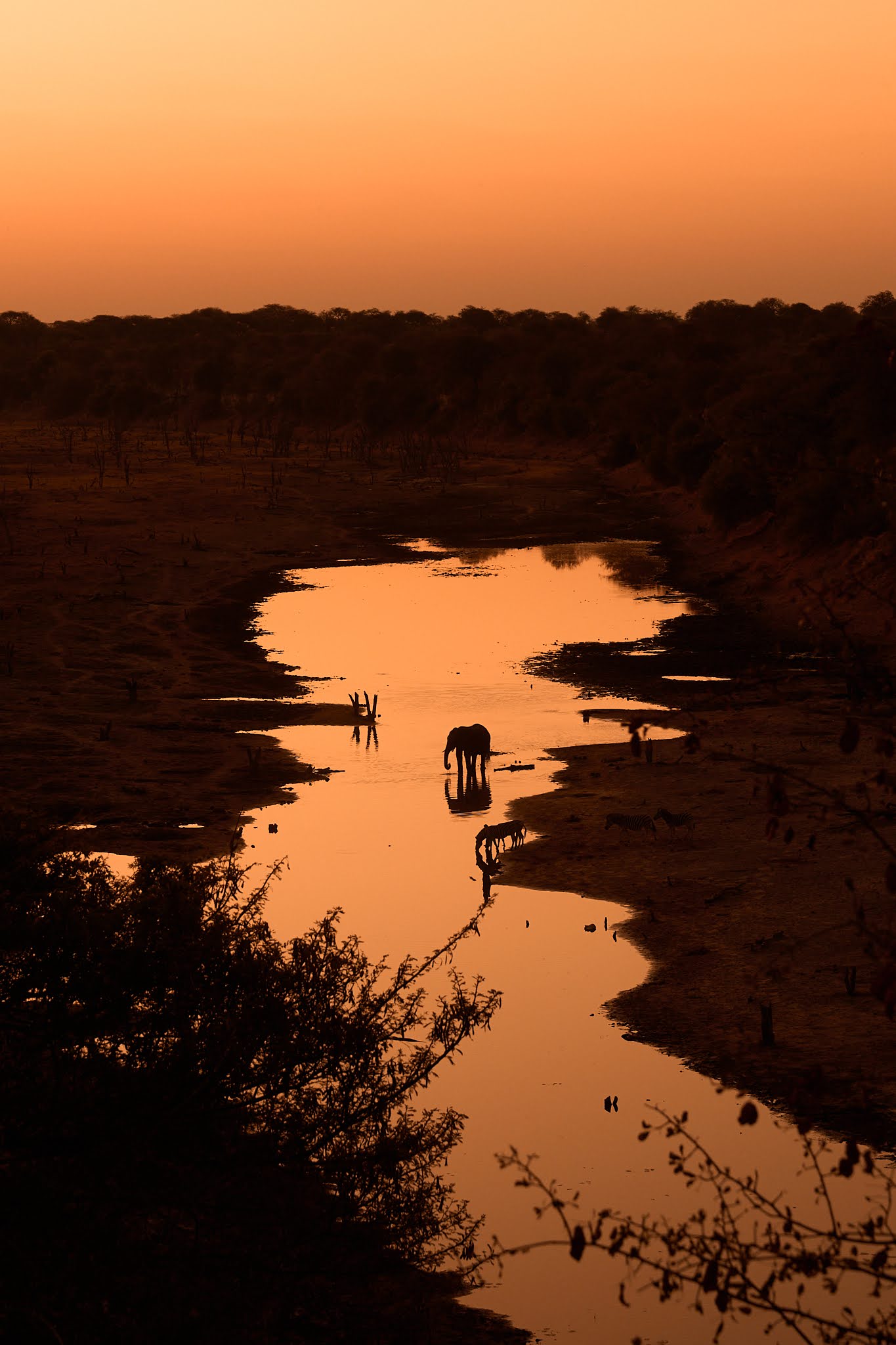
Several years ago, I was on safari in Botswana, and as the light was fading, we came across a pair of leopards in a tree. I was able to shoot the Sony 100-400mm GM at 400mm at way less than 1/400th of a second, and still crank down the ISO for less noise. I didn’t take a tripod with me, and there were no instances in which I wish I had.
We also slept out on the salt flats at night, and I was able to take a self-portrait under nothing but the moonlight just by leaving my camera on a timer while it sat on my camping bed.
Video Without a Gimbal is Possible
Handheld video is another area where IBIS really helps. I’ve shot plenty of run-and-gun footage without using a gimbal to make sharp footage. Tilts, pans, and changes in yaw are all stabilized, and I only use a gimbal for shots where I have to move quickly in several directions, or want to use the gimbal’s tracking to keep the camera pointed at the subject, no matter how I move the camera.
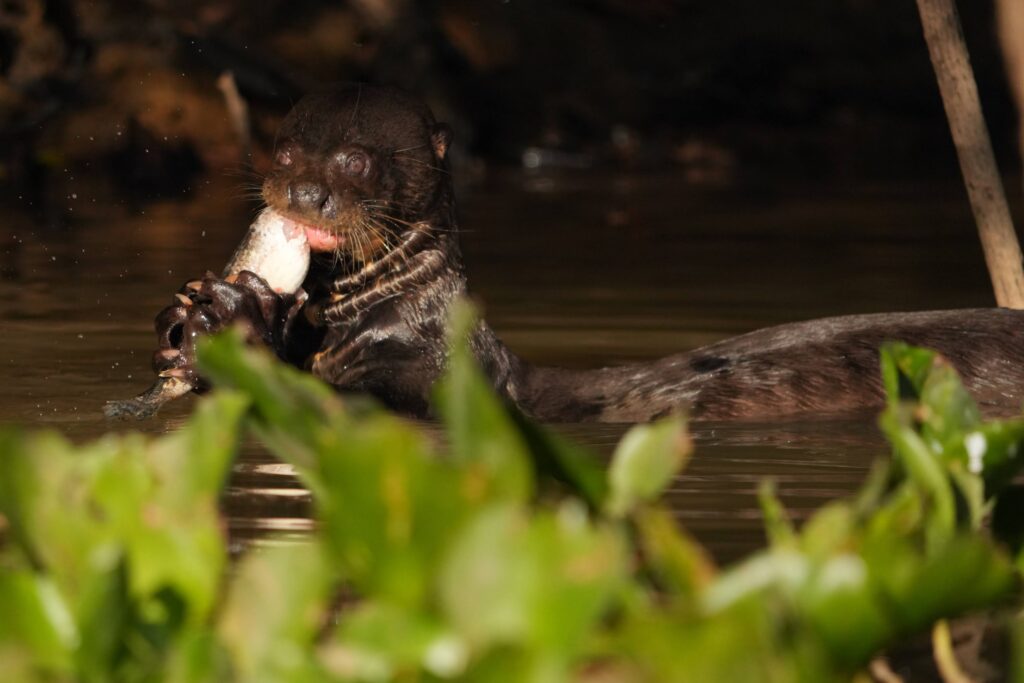
Combining IBIS and optical stabilization is particularly effective. On a trip to Brazil, I shot river otters and jaguars from a moving, bouncing boat, which resulted in very smooth footage.
In video work, IBIS is more effective with wider lenses. Telephoto lenses will have micro jitter since the field of view is so narrow, but it’s still possible to shoot video without a tripod, even at long focal lengths.
The cameras that do this best tend to be the ones designed with video in mind. Panasonic’s cameras, with their combination of 5-axis IBIS and electronic stabilization, work particularly well. Sony’s more recent bodies have strong IBIS systems for video. Canon’s R-series cameras with lens IS coordination produce smooth footage.
The key is knowing the limitations. IBIS doesn’t replace a gimbal for smooth tracking shots or when you’re using longer lenses for video. But it does eliminate theneed for a gimbal in a lot of situations where you would have needed one before.
Why IBIS Specs Are Misleading and Hard to Test
Manufacturers love to throw around numbers. You’ll hear about 7.5 stops of IBIS or even eight stops when including optical stabilization systems. These figures are difficult for photographers to verify. There are testing protocols from the standards bodies, but the performance of IBIS systems includes how steady you are, what focal length you’re shooting, and the resolution of your sensor.
This doesn’t mean the specifications are useless, but you can’t just compare numbers between cameras and assume the one with the higher rating will perform better in your specific use case. Real-world testing matters more than spec sheets.’
When IBIS Doesn’t Matter
To be fair, there are plenty of situations where IBIS provides no benefit at all.
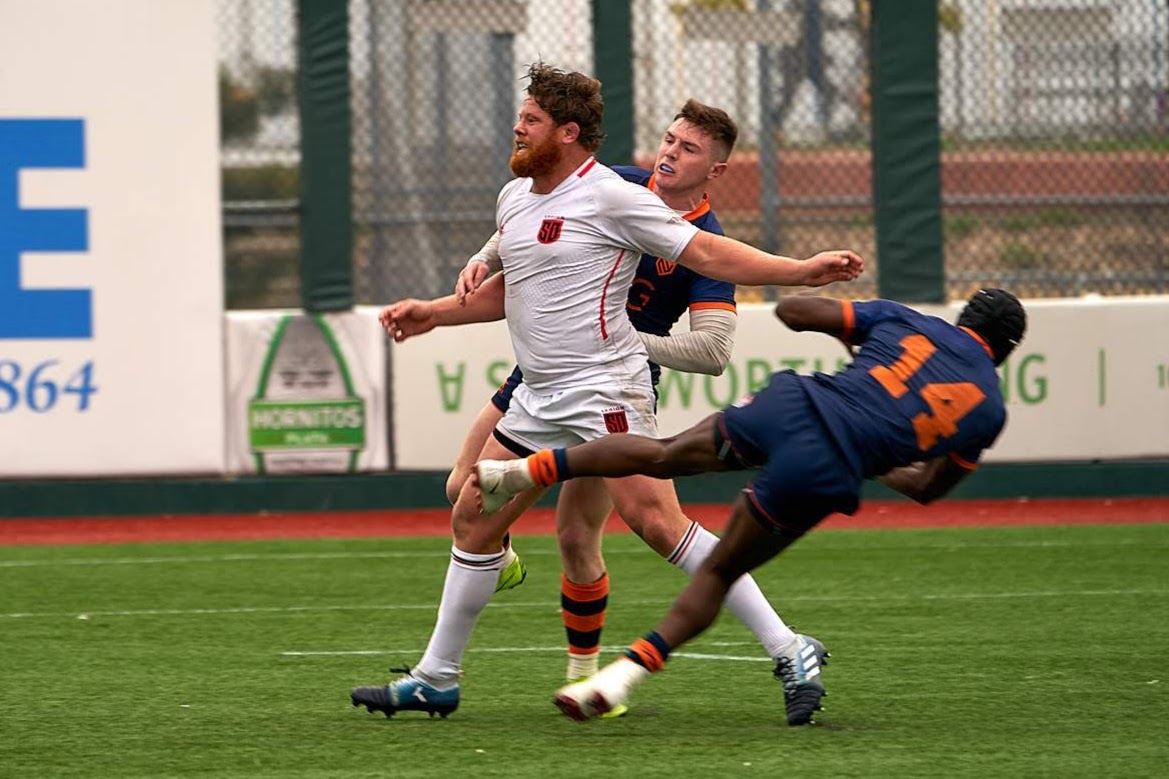
Sports and action photography at high shutter speeds doesn’t need stabilization. If you’re shooting at 1/3000th of a second to freeze motion, camera shake isn’t your problem. The fast shutter speed already eliminates any blur from handholding.
Studio work on a tripod makes IBIS irrelevant. When your camera is locked down on a stable platform, sensor-based stabilization isn’t doing anything useful. In fact, some photographers turn IBIS off when shooting on a tripod to avoid any potential interference, though modern systems are generally smart enough to detect when they’re on a stable surface and disable IBIS automatically.
Bright daylight shooting with fast shutter speeds doesn’t benefit from stabilization either. If you’re shooting daylight landscapes with plenty of light, you’re probably using shutter speeds fast enough that camera shake isn’t an issue.
The reality is that IBIS is a tool for specific situations, not a universal feature that improves every image. Understanding when it matters and, more particularly, when it doesn’t helps you make better decisions about what gear you need.
The photographers who say IBIS isunnecessary are often the ones who haven’t actually used a camera with IBIS, or don’t use it correctly. If you largely shoot landscapes out in bright daylight, you easily think IBIS isn’t worth having, because in that instance IBIS isn’t doing anything.
Likewise, if you’re satisfied with the look of your images at sunset while handholding a 1/10th of a second, and aren’t thinking about the noise benefits of IBIS, there’s no way to tell what IBIS has added to the shots.
Once you’ve shot in low light with a long lens and gotten sharp images that would have been impossible without stabilization, the value becomes obvious.
IBIS isn’t about replacing good technique or good camera handling. It’s about expanding what’s possible creatively. Despite what comments say, it’s not a crutch. It’s a tool that you can use to shoot in conditions and with gear combinations that otherwise wouldn’t give you the results you want.