
Best Film Cameras: Perfect Cameras for Every Type of Photographer

Table of Contents
 Comparison Table
Film photography nearly died with the advent of digital cameras. In 1888, the first Kodak camera was released, and it used a canister of film instead of a glass plate coated with chemicals. For more than a century, photography meant film photography.
A handful of companies made consumer-level digital cameras, and there were some custom professional digital camera systems in the early 1990s, but the photography world turned upside down when Nikon released its first pro digital, the D1 in 1999. It felt like overnight film all but vanished.
Thanks perhaps to the same millennials who are embracing vinyl, film has made a comeback. Much of the focus on film is in the instant camera segment, where Fujifilm and Panasonic dominate.
Whether you’re a beginner, a pro photographer, or someone who wants a reliable film body without gambling on decades-old electronics, this guide walks you through the best new film cameras still being made in 2025. We also cover key features, formats, and what to expect before you buy.
Looking for Instant Cameras? Check out our Instant Film Camera Buyer’s Guide
Why Trust Us
At Imaging Resource, we’ve tested film cameras from brands like Pentax, Kodak, Lomography, and Leica in real shooting conditions: street photography, travel, portraits, low-light scenes, you name it. For cameras that aren’t widely available yet or are still in pre-order, we rely on trusted feedback from experienced film shooters and long-time industry reviewers.
We never take payment for placement, and while our guides use affiliate links, they never influence our rankings or the models we choose to highlight. Our goal is simple: give you clear, honest guidance so you can pick the right film camera with confidence.se
Best Film Cameras: our Picks at a Glance
For beginners, the Pentax 17 is the easiest entry point thanks to its half-frame format, simple controls, and low cost per roll. The Kodak Ektar H35 is the most affordable way to start shooting film, while the Kodak Snapic A1 delivers better image quality with its full-frame format and automatic advance.
In the mid-range, the Lomography MC-A offers the most creative control with full manual options and a sharp f/2.8 lens, while the Rollei 35AF gives you premium optics and modern autofocus in a classic body. The Analogue aF-1 adds LiDAR focusing and auto loading for a beginner-friendly but advanced setup.
For simplicity and durability, the Film Never Die NANA brings disposable-camera ease in a metal body. And if you want the best film camera available new today, the Leica M6 remains the ultimate premium choice with its fully mechanical design and legendary build quality.
Consumer/Entry Level
Pentax 17
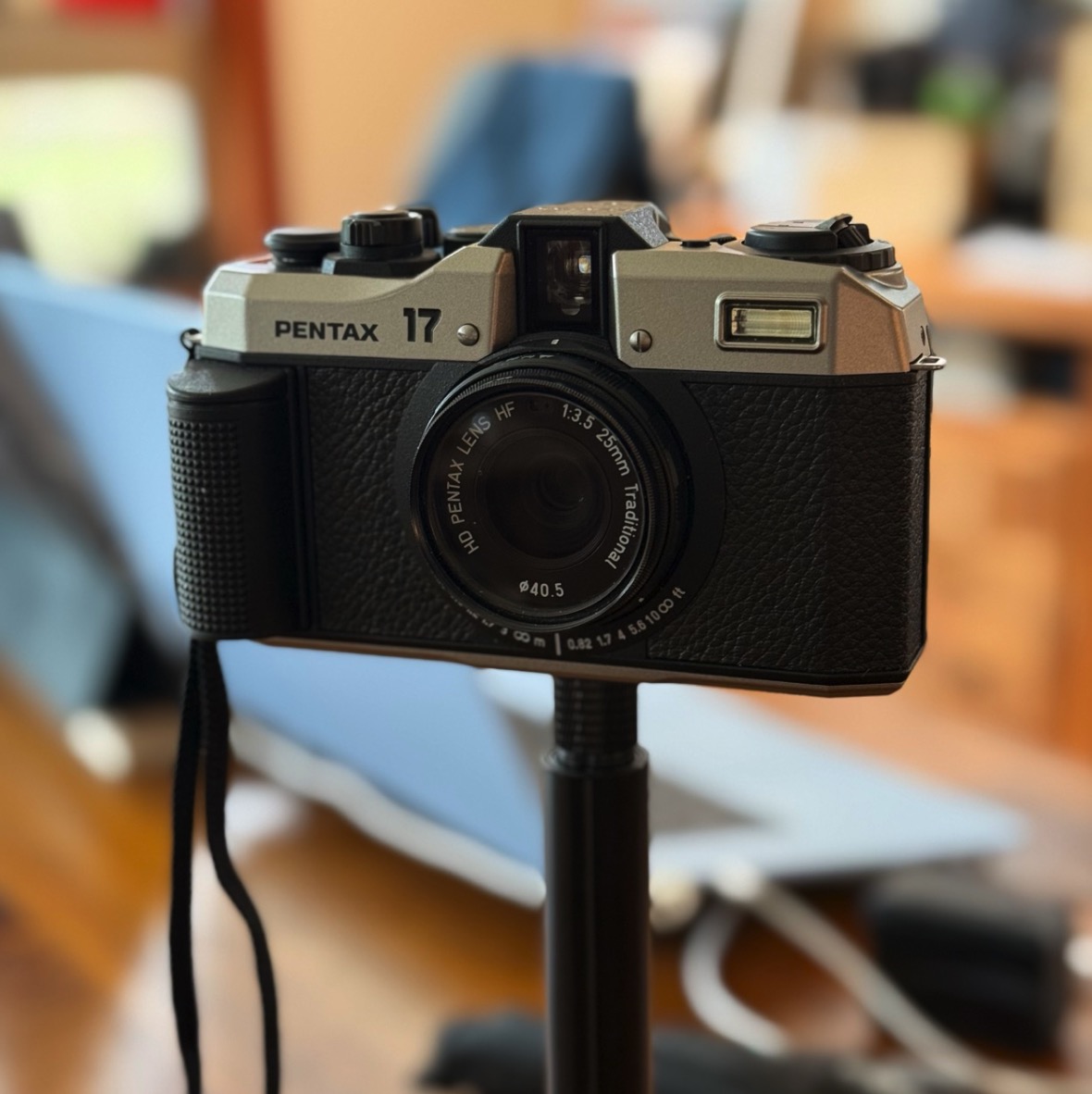
Half-frame 35mm camera with zone focusing system and automatic exposure with compensation controls. Features DX code reading for automatic ISO detection with manual override capability. Plastic body construction with built-in light meter requiring battery power. Produces 72 vertical images on a standard 36-exposure roll due to the half-frame format. Includes creative shooting modes and an exposure compensation dial.
- Doubles shot count per roll with half-frame format, reducing film costs.
- Reliable build quality from one of the biggest names in film photography.
- Warranty support and service network.
- Simple operation makes it accessible for beginners while offering creative control for more experienced shooters.
- Half-frame format means smaller negative size, which results in reduced image quality compared to full 35mm.
- Limited manual controls compared to traditional film cameras it comes from.
- Prominent screw placement on the grip is uncomfortable.
- Format: 35mm half-frame (18x24mm)
- Lens: Fixed focal length
- Focusing: Zone focus system
- Exposure:: Automatic with compensation
- ISO Range: DX code reading with manual override
- Metering: Built-in light meter (battery powered)
- Body Material: Plastic construction
- Power: Battery operated for meter
- Film Capacity: 72 exposures per 36-exposure roll
- Features: Exposure compensation, creative modes
Pentax’s first new film camera in decades isn’t aimed at collectors; it’s aimed at people who are used to shooting on their phones and want to try film without a learning curve. Pentax is one of the most respected names from the film era. It’s a “half-frame” camera, which takes two photos on the same amount of film that a full-frame camera uses for one shot. The result is 72 shots on a standard 36 exposure roll, and theyr’e the right size to post online, if you use one of the film developing services that scan your film and also send you prints.
The 17 feels like a modernized point-and-shoot with just enough control to keep it fun. Zone focus makes it easy to get your shots in focus, and the exposure compensation dial lets you nudge the meter when you need to. Pentax’s build quality and service network make it a safer bet than a no-name plastic camera.
Kodak Snapic A1
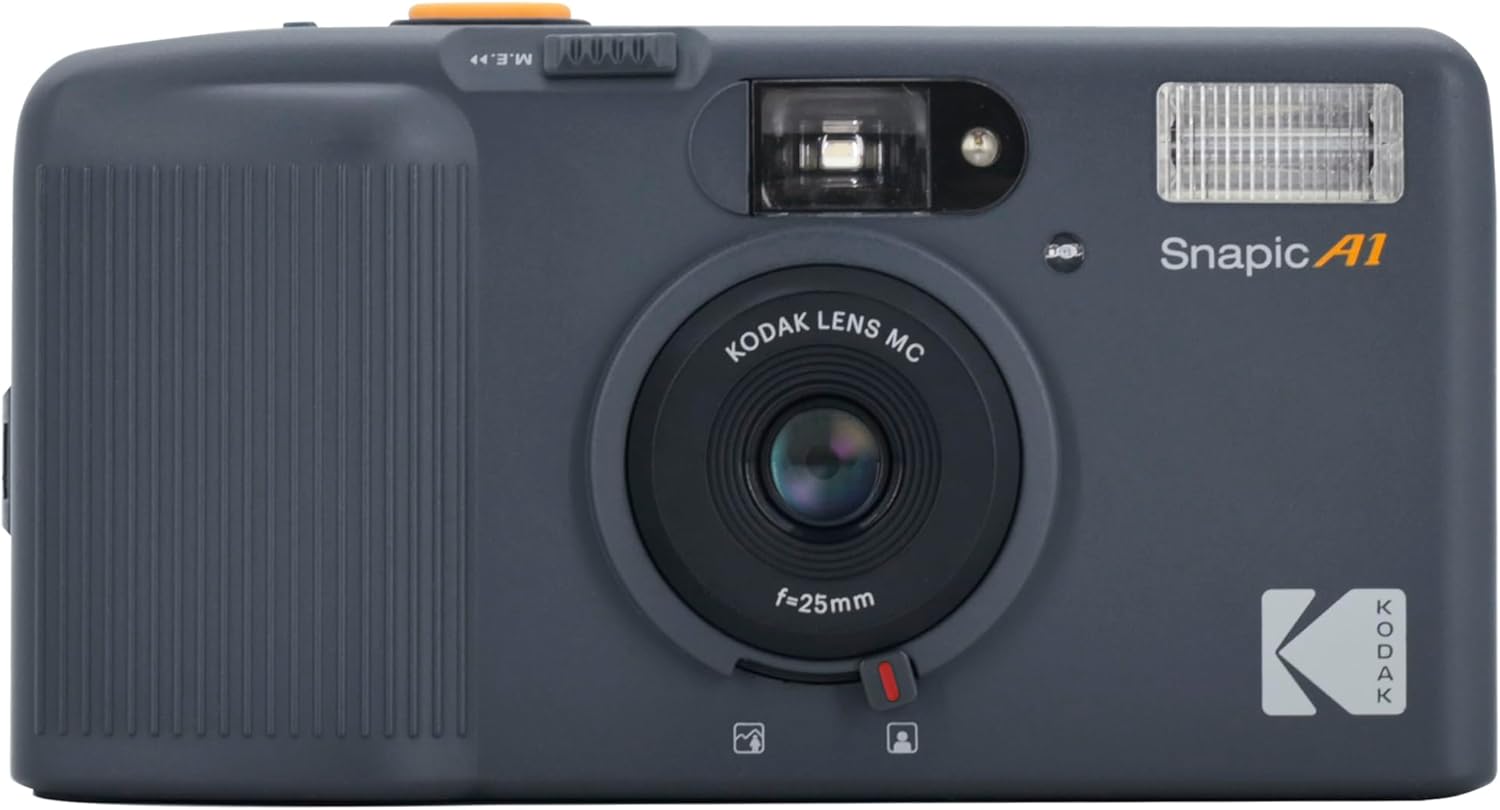
Full-frame 35mm compact with coated 25mm f/9.5 three-element lens. Two-zone focusing system switches between 0.5-1.5 meters and 1.5 meters to infinity. Automatic film advance and rewind mechanisms eliminate manual winding. Flash system offers auto, forced, off, and red-eye reduction modes controlled via LCD panel. Rear OLED display shows frame count, battery status, and current settings. DX code reading with manual ISO override. Plastic body with metal reinforcements.
- Full-frame 35mm format delivers better image quality than half-frame competitors in this price range.
- Automatic film advance and rewind eliminates manual winding mistakes.
- Coated three-element glass lens provides noticeably sharper images than single-element plastic alternatives.
- Only two zone focus settings requires guessing the subject distance for proper focus.
- Fixed aperture limits depth of field control and low-light shooting capabilities.
- Limited availability, as it was recently released.
- Format: 35mm full-frame (24x36mm)
- Lens: 25mm f/9.5, three-element coated glass
- Focusing: Two-zone manual (0.5-1.5m / 1.5m-infinity)
- Film Handling: Fully automatic advance and rewind
- Flash: Auto, forced-on, off, red-eye modes
- Display: Rear OLED (frame count, battery, settings)
- ISO Range: DX code reading with manual override
- Body Material: Plastic with metal components
- Power: Battery operated (all functions)
- Metering: Built-in exposure system
- Dimensions: Compact point-and-shoot size
- Weight: Lightweight portable design
Kodak exists today in name only, and this is one of the Kodak-branded products that’s made by another company with the Kodak logo slapped on. But the Snapic A1 is where Kodak’s branded film lineup starts to feel like a “real” camera rather than a toy. Shooting full-frame 35mm images and using a coated three-element lens makes an immediate difference in sharpness and exposure, especially if you’re used to the mushy look of ultra-cheap half-frame cameras.
Automatic film advance and rewind make it easy to use for people coming from digital compacts or smartphones—there’s no worry about misloading film or forgetting to wind on. You still have to think a little with the two-zone focus switch, but that’s a small price to pay for noticeably better images and a more grown-up shooting experience.
Kodak Ektar H35
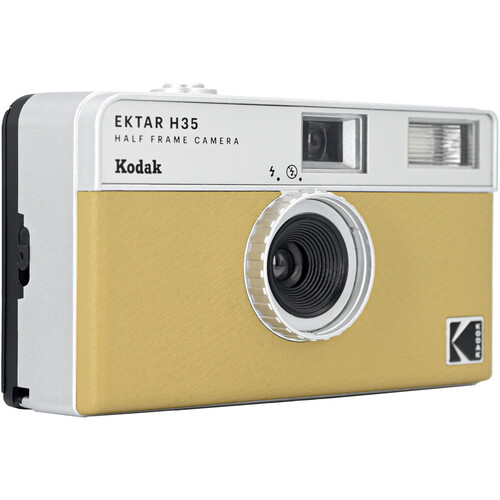
Half-frame 35mm camera with fixed plastic lens at f/9.5 aperture and a single 1/100s shutter speed. Fixed-focus optics eliminate focusing requirements. Built-in flash activated by rotating ring around lens barrel. Accepts 35mm film with manual ISO setting. Entirely plastic construction keeps the weight minimal. Available in multiple colorways, including limited edition variants. H35N model adds night mode flash capability.
- Low price makes film photography accessible to anyone curious about film.
- Half-frame format provides 72 vertical shots per roll, perfect for casual snappers.
- Available in multiple color options, including limited editions.
- Plastic construction feels fragile and requires careful handling.
- Fixed plastic lens produces soft, low-quality images, especially at a distance, with noticeable optical defects. (Some photographers might consider this a pro, however.)
- Single shutter speed and fixed aperture eliminate any creative control over exposure settings.
- Format: 35mm half-frame
- Lens: Plastic, fixed focal length
- Aperture: f/9.5 (fixed)
- Shutter Speed: 1/100s (fixed)
- Focusing: Fixed focus (no adjustment)
- ISO: Manual film speed setting
- Flash: Built-in, ring-activated
- Body Material: Plastic
- Power: Battery for flash only
- Film Capacity: 72 exposures per 36-exposure roll
- Dimensions: Pocket-sized
- Weight: Ultra-lightweight
- Available Models: H35 (standard), H35N (night flash mode)
The Kodak-branded Ektar H35 is a reusable disposable camera with a nice-looking shell. It’s tiny, colorful, and cheap enough that you can throw it in a bag without worrying about it, and the half-frame format keeps the cost per shot low for people just testing the waters with film.
Image quality is very much hipster-not-pro shooter.
The fixed plastic lens gives you soft edges, flare, and a bit of distortion that some people genuinely like and others will find frustrating. For a lot of film photographers, the random image quality flaws are the whole point.
If you just want a fun little film toy for parties, travel, or sharing scans on social, the H35 fits that niche perfectly.
Mid-Range
Lomography MC-A
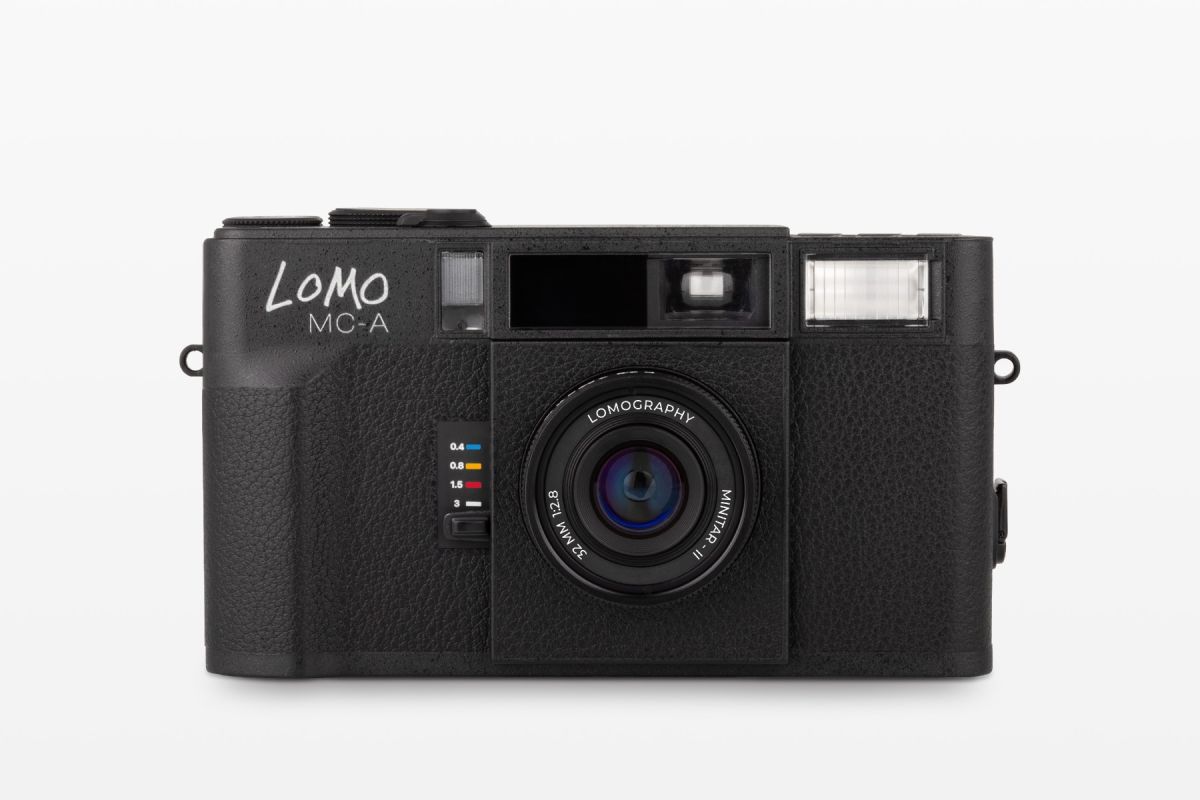
Full-frame 35mm compact with built-in 32mm f/2.8 multi-coated five-element glass lens. Autofocus system with manual zone focus override at 0.4, 0.8, 1.5, 3 meters, and infinity. Three shooting modes: full auto, aperture priority, and fully manual. Aperture range f/2.8-f/16. Shutter speeds from bulb to 1/500s. ISO settings from 12-3200 with DX code recognition and manual override. Built-in flash (GN 9) with automatic, long-exposure programmatic modes, and PC sync socket. Multiple exposure capability. LCD screen displays all camera settings. Metal body construction. Rechargeable CR2 battery via USB-C. 30.5mm filter thread. Ships with UV filter, Splitzer attachment, colored flash gels, leather hand strap, protective camera wrap, and leather lens cap.
- Metal body construction and multi-coated glass lens deliver professional build quality and optical performance.
- Three exposure modes, from full auto to manual, make it more useable than fixed exposure cameras.
- Built-in autofocus with zone focus override makes it easier to get your images right.
- Pre-order status means waiting until Q1 2026 for delivery rather than immediate availability.
- Higher price point than other cameras in this category.
- Larger and heavier than ultra-compact alternatives, though this reflects superior construction quality.
- Format: 35mm full-frame (24x36mm)
- Lens: 32mm f/2.8, five elements in five groups, multi-coated
- Focusing: Autofocus with manual zone override (0.4, 0.8, 1.5, 3m, infinity)
- Aperture: f/2.8-f/16
- Shutter Speed: Bulb to 1/500s
- Exposure Modes: Auto, aperture priority, manual
- ISO Range: 12-3200, DX code with manual override
- Flash: Built-in GN 9, auto/long-exposure modes, PC sync socket
- Display: LCD screen for settings
- Body Material: Metal construction
- Power: Rechargeable CR2 via USB-C
- Filter Thread: 30.5mm
- Dimensions: 125.8mm (W) x 69.5mm (H) x 42mm (D)
- Weight: 332g / 11.7oz
- Special Features: Multiple exposures, colored gel filters
- Included: UV filter, Splitzer, camera wrap, gels, leather strap, leather lens cap
Lomography makes more film cameras than anyone else right now, with most of them half-frame or smaller film formats. Most Lomography cameras are inexpensively fun. They make great party conversation starters.
The MC-A is Lomography stepping out of the “toy camera” market and into the space once occupied by premium 1990s compacts. You get a metal body, a genuinely good multi-coated glass lens, and a control layout that gives you either auto or full manual control.
Autofocus and aperture priority make it easier to use for newer shooters than many digital cameras, while full manual control gives experienced photographers enough flexibility for serious work. The 32mm focal length is a good focal length for everyday use. The included accessories of filters, gels, and the Splitzer let you get into creative shooting without feeling gimmicky.
Rollei 35AF
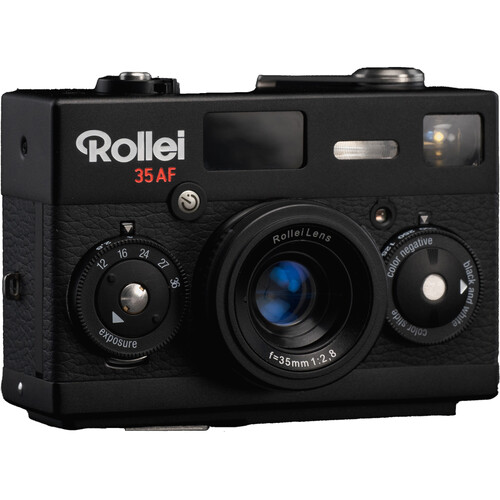
Full-frame 35mm compact with a fixed 35mm f/2.8 lens designed by retired Pentax engineers. LiDAR autofocus system with manual zone focus option ranges from 0.5 meters to infinity. Automatic exposure with manual override controls for aperture (f/2.8-f/16), shutter speed, and ISO.
Built-in flash unit. Manual film advance maintains a mechanical connection to the shooting process. Metal body construction updates classic 1960s Rollei 35 design with modern autofocus technology.
- State-of-the-art LiDAR autofocus provides reliable focusing even in low light and through glass, where contrast-detect systems struggle.
- Lens designed by retired Pentax engineers delivers Pentax’s legendary optical quality.
- Metal body construction and premium materials justify positioning as a high-end compact alternative to plastic cameras.
- Digital-camera-level pricing.
- Some early production units showed quality control issues, including film scratches and loose components.
- Format: 35mm full-frame (24x36mm)
- Lens: 35mm f/2.8 (Pentax-designed)
- Aperture: f/2.8-f/16
- Focusing: LiDAR autofocus with manual zone option (0.5m-infinity)
- Exposure: Automatic with manual overrides
- ISO Range: Film speed settings with DX code reading
- Flash: Built-in unit
- Film Advance: Manual
- Body Material: Metal construction
- Power: Battery operated
- Dimensions: Compact folding design
Rollei is another brand that was legendary in the film era, but now is largely just a brand that other companies use to sell their products. The Rollei 35AF is made by a company called MiNT, and it kept the size, the general silhouette, and the feeling of the original Rollei 35, then added a LiDAR autofocus system and a modern Pentax-designed lens to make it far more useful as a daily shooter.
On paper, it’s one of the most appealing premium compact film cameras you can buy. It captures full-frame 35mm images, has an f/2.8 lens, metal construction, and autofocus that doesn’t lose focus in low light.
In reality, the story is more complicated. Early units had some quality control issues, and the price pushes it into “serious commitment” territory. If MiNT can iron out production problems and you can actually find one in stock, it might be one of the few truly pocketable high-end film cameras being made today.
Analogue aF-1
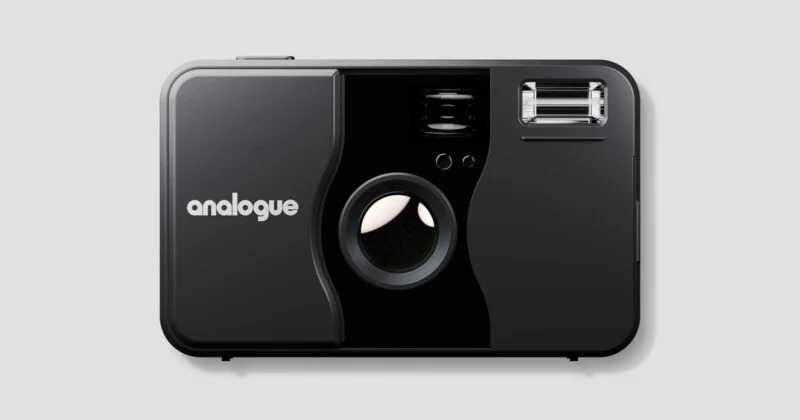
Full-frame 35mm compact with LiDAR Time-of-Flight autofocus system. Automatic film loading mechanism simplifies the film installation process. DX code reading supports ISO speeds up to 3200 with manual override capability. Clamshell design similar to Olympus XA-2 with protective cover. Automatic exposure control for aperture, shutter speed, and flash output. Metal and composite body construction. Rechargeable battery system. Manufactured by Analogue Shop in Amsterdam. Pre-orders opened in September 2025.
- LiDAR autofocus system provides fast, accurate focusing from 0.5 meters to infinity in any lighting condition.
- Automatic film loading reduces common beginner mistakes.
- Protective clamshell design keeps lens covered when not in use.
- Relatively unknown manufacturer lacks an established service network and a long-term reliability track record.
- Pre-order status means unproven real-world performance with deliveries not until early 2026.
- Limited information about lens specifications and optical quality compared to established competitors.
- Format: 35mm full-frame (24x36mm)
- Focusing: LiDAR Time-of-Flight autofocus (0.5m-infinity)
- Film Loading: Automatic
- Exposure: Fully automatic
- ISO Range: DX code reading up to 3200, manual override
- Flash: Automatic output adjustment
- Design: Clamshell protective cover
- Body Material: Metal and composite construction
- Power: Rechargeable battery
- Manufacturer: Analogue Shop, Amsterdam
The Analogue aF-1 feels like a modern version of the classic pocketable clamshell camera, updated with LiDAR autofocus and automatic, well, everything. On paper, it reads like the camera a lot of new film shooters have been asking for with full automation, reliable focusing, and a design that can live in a jacket pocket or bag without worrying about hurting it.
The catch is that Analogue Shop is moving into manufacturing, which is a big leap for them. The camera is pre-ordered as of the writing of this guide, but if they can manage to get this out the door with all the promised features, it may be the perfect film camera today.
FilmNeverDie NANA
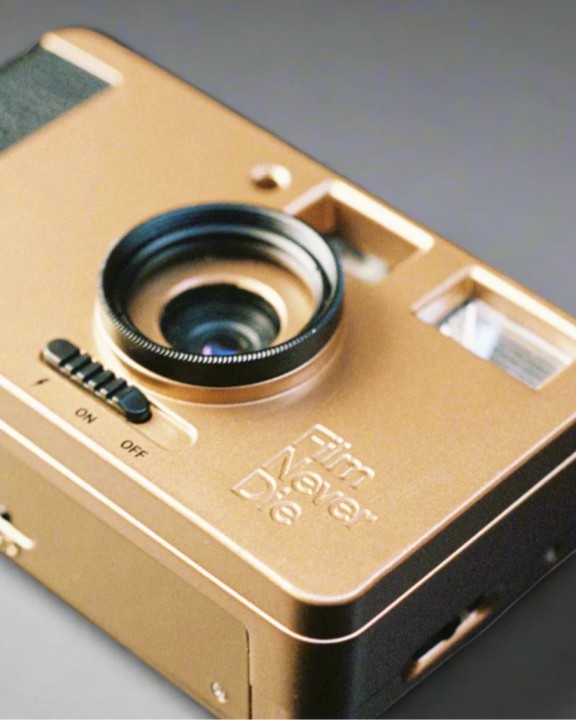
Full-frame 35mm compact with fixed lens and fixed exposure settings. Metal body housing distinguishes this from disposable camera ancestry. Pre-focused optics eliminate focusing requirements. Single shutter speed and aperture setting simplify operation. Design inspired by combining disposable camera simplicity with Contax T2 premium aesthetic. Successfully funded through a Kickstarter campaign with initial units already shipping. Additional production batches are scheduled for delivery through 2026.
- Metal housing provides durability and a premium feel compared to disposable cameras with similar functions.
- Fixed settings eliminate decision-making, allowing you to focus on composition.
- Fixed lens and exposure settings eliminate control over depth of field and motion blur.
- Limited information about optical quality and lens specifications.s
- Small-batch production froma boutique manufacturer may limit availability and service support.
- Format: 35mm full-frame (24x36mm)
- Lens: Fixed focal length (specifications not widely published)
- Aperture: Fixed (specifications not widely published)
- Shutter Speed: Fixed (specifications not widely published)
- Focusing: Pre-focused/fixed
- Exposure: Fixed automatic
- Body Material: Metal construction
- Design: Inspired by disposable cameras and Contax T2
- Manufacturer: Film Never Die (Melbourne, Australia)
- Funding: Kickstarter campaign (successfully funded)
- Availability: Currently shipping, additional batches through 2026
FilmNeverDie’s NANA is an interesting new film camera. It’s designed to have everything people like about disposable cameras, like simplicity, spontaneity, and “just press the button” shooting.
But instead of being a plastic toy, it’s a fixed-everything camera in a metal shell, designed for people who want to stop and compose a shot instead of just getting a snapshot.
That approach comes with obvious tradeoffs. With a single exposure setting and a pre-focused lens, the NANA will work well in bright, outdoor conditions but struggle as the light drops.
Premium
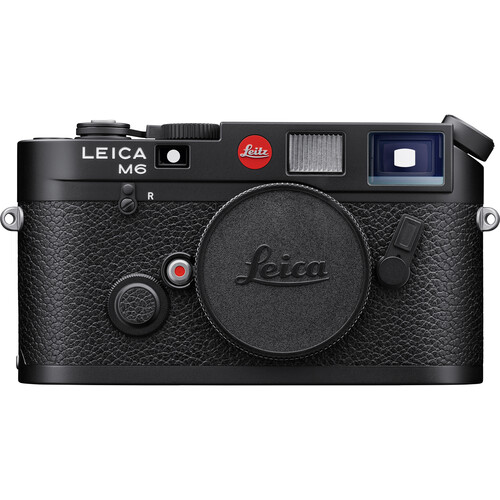
Full-frame 35mm rangefinder with 0.72x magnification viewfinder incorporating illuminated framelines for six focal lengths paired (28/90mm, 35/135mm, 50/75mm). Through-the-lens selective exposure metering displayed in the viewfinder via a three-LED system showing under, correct, and overexposure. Mechanical rangefinder system, handcrafted from over 100 individual parts enables superimposed image or split image focusing methods.
Fully mechanical shutter with speeds from 1/1000s to multiple seconds functions without battery power. Top plate milled from solid brass with abrasion-resistant black lacquer finish. Viewfinder optical surfaces are coated to reduce stray light.
Field selector allows manual frameline display for any focal length before mounting lens. Battery powers only the light meter with a dedicated “Off” position on shutter dial to disable metering and lock shutter release. PC sync socket for external flash. Compatible with the entire M-mount lens system dating to 1954.
- Fully mechanical operation ensures the camera functions perfectly even with a dead battery.
- Rangefinder viewfinder shows beyond frame edges, allowing anticipation of subjects entering composition before they appear.
- Brass construction and meticulous German manufacturing provide multi-generational durability and proven reliability.
- Not only the most expensive film camera, but it is also one of the most expensive cameras, period.
- Manual rangefinder focusing has a learning curve and slower operation compared to autofocus systems.
- Manual exposure metering requires understanding exposure rather than relying on automatic modes.
- Format: 35mm full-frame (24x36mm)
- Mount: Leica M bayonet
- Viewfinder: 0.72x magnification rangefinder
- Framelines: 28/90, 35/135, 50/75mm pairs (illuminated)
- Focusing: Manual rangefinder (superimposed/split image)
- Metering: TTL selective, center-weighted, three-LED display
- Shutter: Mechanical cloth, 1/1000s to multiple seconds
- Flash Sync: X-sync via PC socket
- Body Material: Solid brass top plate, black lacquer finish
- Power: Battery for meter only (camera fully mechanical)
- Dimensions: Classic M body dimensions
- Weight: Substantial metal construction
- Manufacturer: Leica Camera AG, Germany
- Warranty: Three-year limited warranty
Leica is the one manufacturer creating premium (well,ultra-premium) film cameras. There are currently several in the lineup. We like the Leica M6 2022 reissue because it brings back a camera that was so popular that it was one of the biggest cameras in the used market. Leica’s other film cameras are just as good, and just as expensive.
Shooting with an M6 is a mix of automation and manual composition. You meter with the LEDs, set your exposure, focus with the rangefinder, and trigger a mechanical shutter that feels the same today as it will in 30 years with proper care. The price is undeniably crazy, especially once you add lenses that are thousands of dollars. But you’re buying into a system, and a shooting experience, and the lenses work across Leica’s whole line of film and digital rangefinder cameras.
Comparison Table
| Camera | Format | Lens | Focusing | Exposure Control | Notable Features | Body / Build |
|---|---|---|---|---|---|---|
| Pentax 17 | 35mm half-frame (18×24mm) | Fixed lens (spec not published) | Zone focus | Auto exposure + compensation | 72 shots/roll, DX reading w/ manual override, creative modes | Plastic |
| Kodak Ektar H35 / H35N | 35mm half-frame | Fixed plastic lens, f/9.5 | Fixed focus | Fixed 1/100s + fixed aperture | Built-in flash (H35N adds night mode), 72 shots/roll | All-plastic |
| Kodak Snapic A1 | 35mm full-frame (24×36mm) | 25mm f/9.5 3-element coated glass | Two-zone focus | Auto exposure | Auto film advance/rewind, OLED display, multi-mode flash | Plastic w/ metal reinforcements |
| Lomography MC-A | 35mm full-frame | 32mm f/2.8 multi-coated, 5-element | Autofocus + manual zone override | Auto, Aperture Priority, Manual | Multiple exposure, included filters, PC sync, USB-C rechargeable | Metal |
| Rollei 35AF | 35mm full-frame | 35mm f/2.8 (Pentax-designed) | LiDAR AF + zone | Auto exposure + manual overrides | Classic Rollei design, manual film advance | Metal |
| Analogue aF-1 | 35mm full-frame | Fixed lens (not disclosed) | LiDAR ToF AF | Fully automatic | Auto film loading, clamshell cover | Metal + composite |
| Film Never Die NANA | 35mm full-frame | Fixed lens (not disclosed) | Fixed focus | Fixed exposure | Disposable-style simplicity, Kickstarter-built | Metal |
| Leica M6 (2022) | 35mm full-frame | Interchangeable M-mount | Manual rangefinder | Manual + TTL meter | Fully mechanical shutter, brass build, pro-grade durability | Brass & metal |
See our Complete List of Other Buyer’s Guides
FAQs
What’s the difference between full-frame 35mm and half-frame film?
Full-frame 35mm gives you the classic 24×36mm negative most people know. Half-frame splits that same frame in half, so you get two 18×24mm photos per shot. You double your shots per roll, but you also get a smaller negative, which means less detail and more visible grain when enlarged.https://www.imaging-resource.com/guides/best-instant-film-cameras/
Why are half-frame cameras making a comeback?
They’re fun, affordable, and perfect for capturing a quick moment. Because a single frame holds two shots, your images often pair up like a diptych. And with film prices rising, getting 72 shots from a 36-exposure roll is a big cost saver.
Are new film cameras reliable compared to vintage ones?
oGenerally, yes. New models from Pentax, Kodak, Lomography, Rollei, and Leica offer fresh shutters, modern materials, and manufacturer warranties. But, there are more compact and point-and-shoot cameras and fewer “traditional” cameras than there were in the days of analog film. Vintage cameras can be fantastic, but many need service, new light seals, or repairs, which can make them expensive in the long run.
Do modern film cameras still need batteries?
Most compact film cameras do. Batteries usually power the light meter, autofocus, auto exposure, or motorized film advance. Cameras like the Leica models work even with a dead battery since the shutter is fully mechanical.
Is autofocus on film cameras actually good?
Newer cameras with LiDAR autofocus—like the Rollei 35AF and Analogue aF-1—are surprisingly fast and accurate, even in low light. Traditional contrast-detect AF on older compacts can struggle, especially indoors. The Leica in our guide does not need batteries.
What type of film should beginners start with?
Color negative film like Kodak Gold, Ultramax, or Fujifilm C200 is the easiest to shoot. These films handle bright light, mixed lighting, and exposure errors better than slide film or black-and-white.
Are half-frame cameras worse in image quality?
They’re not “worse,” but they look different. Because the negatives are smaller, grain is more visible, and you get less detail. Many shooters actually like the aesthetic for its vintage look.m
Kodak exists today in name only, and this is one of the Kodak-branded products that’s made by another company with the Kodak logo slapped on. But the Snapic A1 is where Kodak’s branded film lineup starts to feel like a “real” camera rather than a toy. Shooting full-frame 35mm images and using a coated three-element lens makes an immediate difference in sharpness and exposure, especially if you’re used to the mushy look of ultra-cheap half-frame cameras.
Automatic film advance and rewind make it easy to use for people coming from digital compacts or smartphones—there’s no worry about misloading film or forgetting to wind on. You still have to think a little with the two-zone focus switch, but that’s a small price to pay for noticeably better images and a more grown-up shooting experience.
What’s the benefit of a full-frame compact?
Full-frame 35mm film gives you the best overall image quality from small point-and-shoots. Cameras like the Kodak Snapic A1 or Lomography MC-A produce sharper, cleaner results than half-frame models.