
Best Cinema Cameras – The Right Gear for any Creator

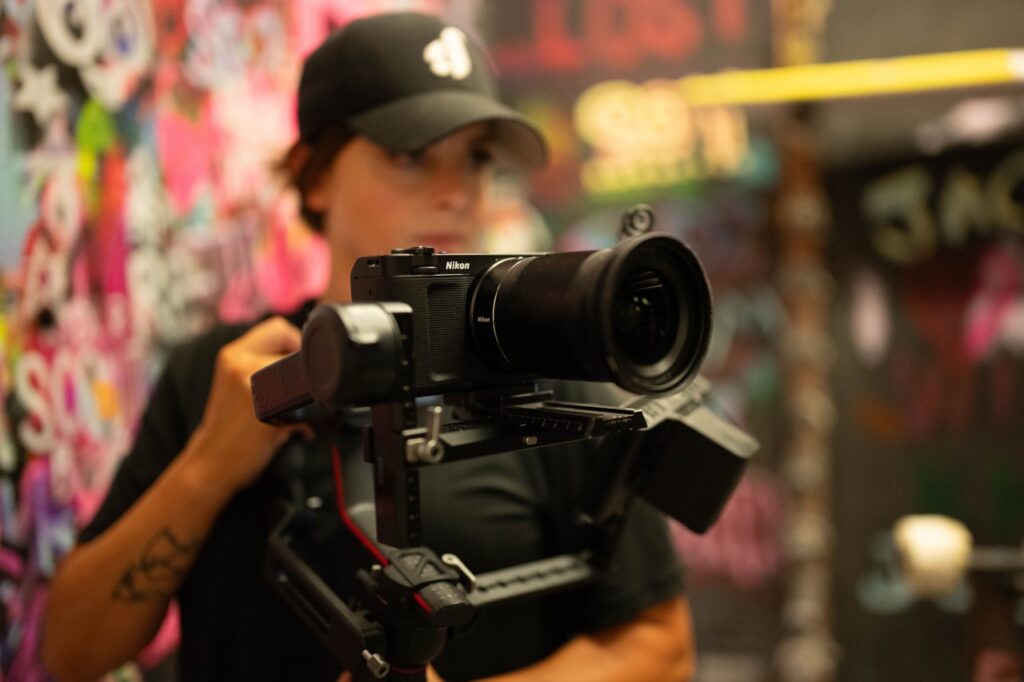
Table of Contents
 Best Cinema Cameras: Our Picks at a Glance
David Schloss, Editor-in-Chief, and the Imaging Resource Staff
The Best Cinema cameras are truly video-focused powerhouses with features and image quality that’s good enough for everything from client projects to broadcast to motion picture creation.
Unlike hybrid cameras that balance stills and video capabilities, cinema cameras focus exclusively on video. They feature professional audio inputs, built-in ND filters, unlimited recording capabilities, and form factors designed for professional production workflows.
To keep this list reasonable, we have capped the guide at $10,000, which is a point where cameras go from single-operator cameras to requiring a crew.
These cameras are a mix of APS-C and full-frame. You can find a full breakdown of what that means for your cinema camera choices at the end of the guide.
Why Trust Us
I’ve been testing video cameras and production equipment for major camera review outlets for over a decade, covering everything from smartphone videography to professional cinema cameras for major publications.
While the price and customer base haven’t let us test every camera in this list, we’ve tested several products from each manufacturer and know their feature sets, design goals, production capabilities, plus their strengths and weaknesses.
For example, I’ve tested the Sony FX2, FX3, FX30 and FX6. I have not tested the FX9, but the user interface, image quality, and shooting experience are consistent across the product line. The differences are in resolution and in body layout. While I have not done a full review of the cinema cameras, I’ve had hands-on time with each of them at media events.
We never accept payment for placement, and even though our articles contain affiliate links, they never influence our editorial rankings. Our recommendations are based on extensive testing, industry expertise, and feedback from working professionals across different video production disciplines.
Best Cinema Cameras: Our Picks at a Glance
Best Cinema Cameras – By Brand
Best Cinema Cameras – Blackmagic
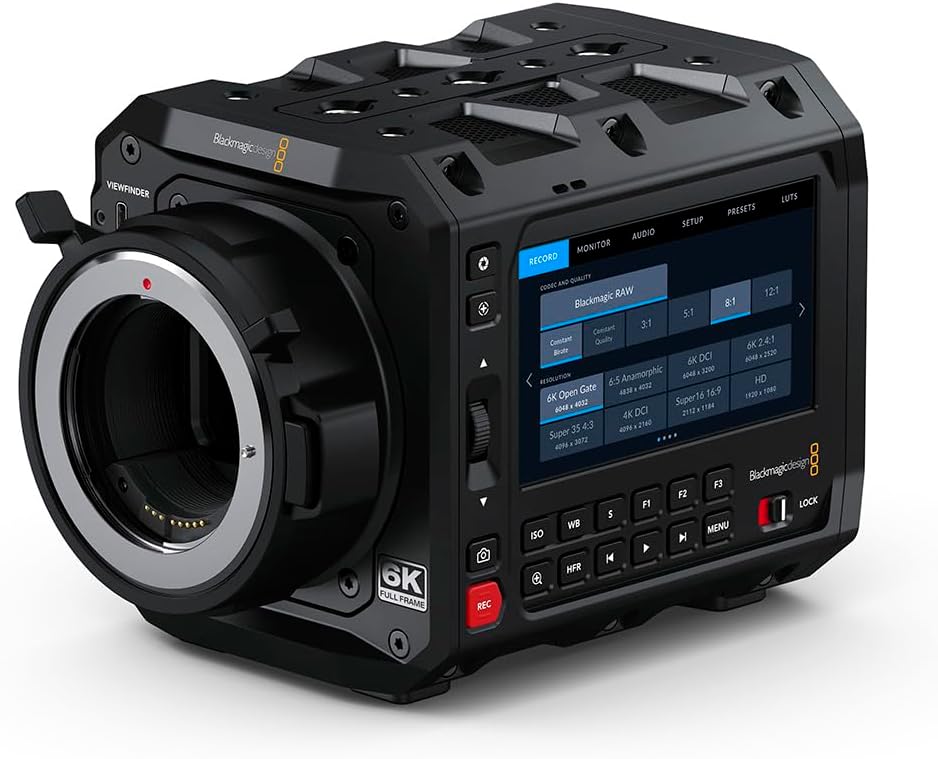
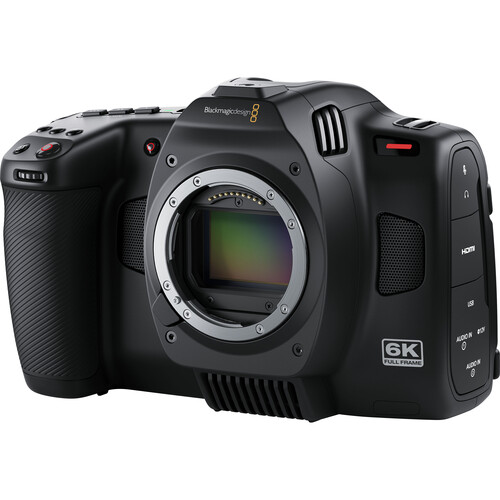
The PYXIS 6K is a modular full-frame camera designed for flexibility across production environments. Its 36×24 mm 6K sensor captures cinematic depth and color, while the compact body supports multiple mounts (L, EF, PL). Dual CFexpress slots handle high data rates, and the design allows easy rigging for professional setups. It lacks built-in NDs or advanced audio but provides exceptional value for a full-frame modular system.
- Modular body with flexible mounts
- Compact and lightweight
- Affordable full-frame 6K capture
- No internal ND filters
- Limited audio controls
- Minimal accessories included
- Sensor: Full-frame 6K HDR (36×24 mm)
- Dynamic Range: ~13 stops
- Lens Mounts: L, EF, PL
- Media: Dual CFexpress
- Weight: ≈ 1.9 lb
- Price: ~$2,995
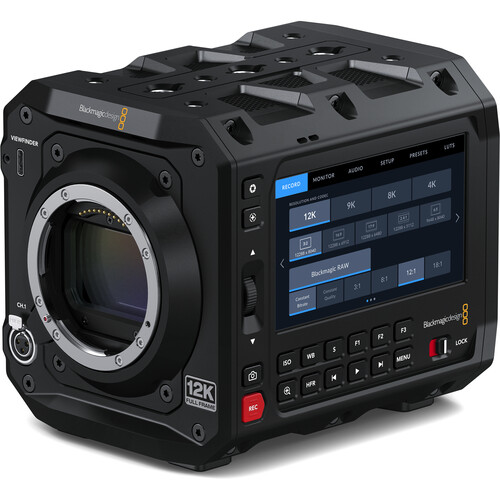
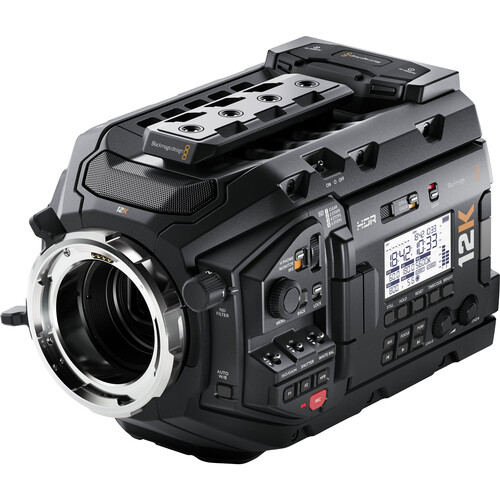
The PYXIS 12K expands on the 6K model with a full-frame RGBW sensor offering extreme detail and latitude. It supports oversampled 8K or 4K output with excellent color fidelity. The OLPF reduces moiré and aliasing for clean, post-friendly footage. It’s demanding on power and storage but ideal for high-end productions.
- 12K full-frame sensor with OLPF
- Excellent dynamic range
- Modular, upgradable design
- High storage demands
- Requires external power
- Expensive media
- Sensor: Full-frame 12K RGBW
- Dynamic Range: ~16 stops
- Lens Mounts: L, EF, PL
- Media: Dual CFexpress
- Weight: ≈ 2.1 lb
- Price: ~$6,595
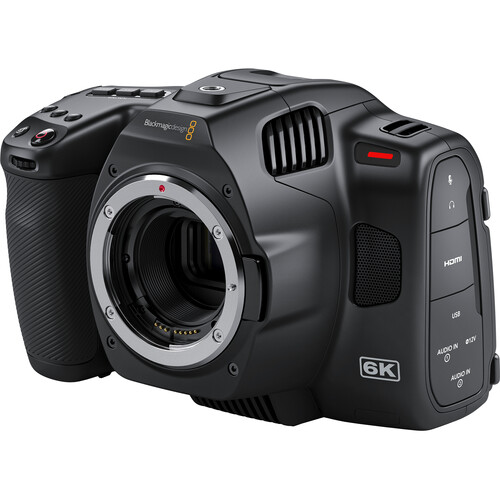
Professional compact cinema camera offering exceptional value with built-in ND filters and comprehensive recording options. Outstanding value for professional features, including built-in ND filters and comprehensive codec support that are rare at this price point. The large 5″ HDR touchscreen and professional controls provide cinema camera operation in a compact package that appeals to independent filmmakers.
- Exceptional value for professional cinema features
- Built-in motorized ND filters are rare at this price point
- Large 5″ HDR touchscreen with professional monitoring tools
- Comprehensive codec support, including Blackmagic RAW
- Requires rigging for handheld use
- Battery is life limited, external power recommended
- Learning curve for DaVinci Resolve workflow
- Sensor: Super35 6K HDR sensor
- Video: 6K/60p, 4K/120p internal recording
- Codecs: Blackmagic RAW, ProRes, extensive options
- Dynamic Range: 13+ stops
- Features: Built-in motorized ND filters (2, 4, 6 stops)
- Audio: Mini XLR inputs, phantom power
- Connectivity: 12G-SDI, HDMI, USB-C recording
- Storage: CFast 2.0 + SD UHS-II slots
- Price: $2,495
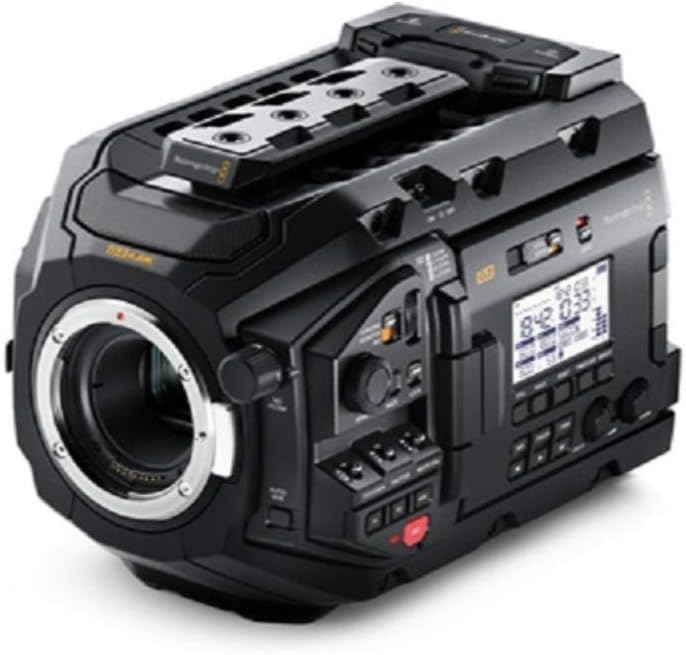
A Super 35 cinema camera built for professional workflows. It features internal ND filters, SDI outputs, and robust build quality. The 15-stop dynamic range delivers natural highlight roll-off. Ideal for small studios and commercial production.
- High dynamic range
- Internal ND filters
- SDI connectivity
- Heavy body for handheld work
- Older media format
- Requires external rigging
- Sensor: Super 35 4.6K HDR
- Dynamic Range: 15 stops
- Recording: Blackmagic RAW / ProRes
- Media: CFast 2.0 + SD UHS-II
- Weight: ≈ 5 lb
- Price: ~$5,995
Best Cinema Cameras – Canon
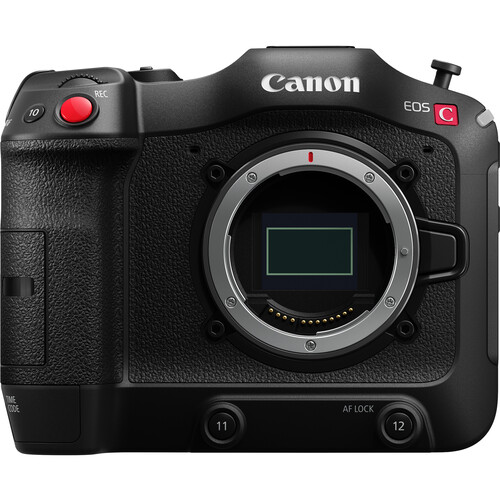
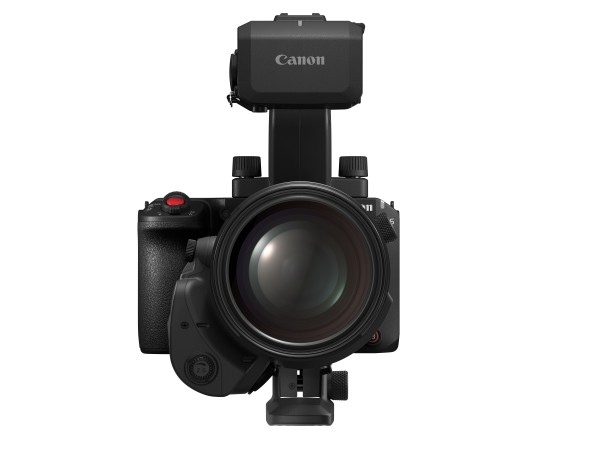
A full-frame compact cinema camera with Canon’s color science and Cinema RAW Light recording. It offers 7K capture with excellent dynamic range and easy post integration. While it omits built-in NDs, it’s light and ideal for travel and gimbal setups.
- Compact 1.5-pound form factor makes it Canon’s lightest cinema camera
- 7K full-frame sensor with 12-bit Cinema RAW Light recording up to 60P
- Full-frame 3:2 open gate recording capability (first in Cinema EOS lineup)
- Simultaneous crop recording for social media content creation
- Dual base ISO (800/6400) in Canon Log 2 for excellent low-light performance
- Native Frame.io Camera to Cloud integration for seamless workflows
- Premium $3,899 pricing places it above entry-level options
- Limited to Cinema RAW Light rather than full Cinema RAW
- Detachable handle design may be less secure than integrated solutions
- Sensor: 7K full-frame CMOS, dual base ISO 800/6400 (Canon Log 2)
- Recording Formats: Cinema RAW Light (12-bit), XF-AVC, XF-AVC S, XF-HEVC S
- Maximum Resolution: 7K at up to 60P
- Special Features: Full-frame 3:2 open gate recording, simultaneous crop recordin
- Audio: Dual XLR inputs (detachable handle), built-in microphone
- Connectivity: RF mount, Wi-Fi, USB-C Ethernet adapter support, XC protocol
- Integration: Frame.io Camera to Cloud, Multi Camera Control App compatible
- Weight: Approximately 1.5 pounds
- Availability: Late Q4 2025
- Price: $3,899 MSRP
A Super 35 camera that combines Cinema EOS image quality with RF lens support. It features internal ND filters, Canon’s reliable autofocus, and robust codec options. It’s widely used for independent production and documentary work.
- RF mount compatibility with Canon’s latest lenses
- Built-in ND filters with precise stop control
- Compact size enables handheld and gimbal operation
- Canon’s renowned Dual Pixel autofocus system
- Super35 sensor is smaller than full-frame competitors
- Limited to the RF lens ecosystem
- No internal RAW recording (requires external recorder)
- Sensor: Super35 Dual Gain Output CMOS
- Video: 4K/120p, 2K/180p internal recording
- Codecs: Cinema RAW Light, XF-AVC, Canon Log 2/3
- Dynamic Range: 16+ stops with Canon Log 3
- Features: Built-in ND filters (2, 4, 6, 8, 10 stops)
- Audio: Dual XLR inputs, 4-channel recording
- Connectivity: 12G-SDI, HDMI, timecode I/O
- Price: ~ $5,000
- Storage: CFexpress + SD slots
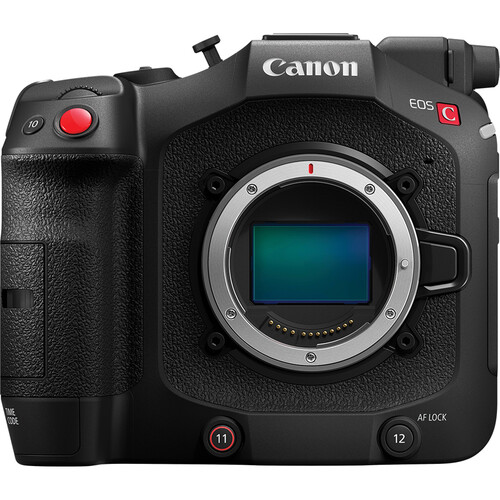
An evolution of the C70 with improved sensor performance and low-light response. Retains the Super 35 format and ND system. Designed for professional environments needing balanced size, quality, and workflow efficiency.
- Enhanced sensor performance over C70
- Improved ergonomics and professional controls
- Built-in ND filters with professional quality
- Canon’s proven cinema camera workflow integration
- Reliable ergonomics
- Higher price than C70 with dramatically new features
- Still limited to Super35 sensor format
- RF mount limits lens choices vs other cinema systems
- Sensor: Super35 CMOS with improved sensitivity
- Video: 4K/120p, enhanced recording options
- Codecs: Cinema RAW Light, XF-AVC, advanced codecs
- Features: Built-in ND filters, improved ergonomics
- Audio: Professional XLR inputs, advanced audio processing
- Connectivity: Comprehensive professional I/O
- Storage: CFexpress + SD slots
- Price: ~ $5,499
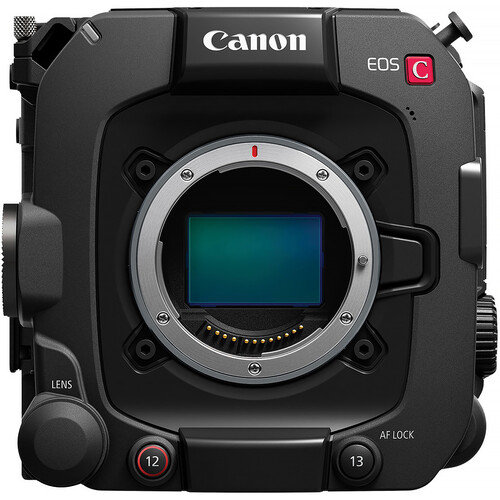
A top-tier Super 35 camera for larger productions, featuring 6K recording and full I/O. It maintains Canon’s signature color with professional audio and modular build. Heavy but versatile for studio and field use.
- Full-featured cinema camera for high-end production
- 6K internal recording provides exceptional image quality
- Professional form factor and comprehensive feature set
- Canon’s proven cinema camera reliability
- Premium pricing for full professional features
- Large form factor requires a professional setup, and a complex feature set requires significant learning investment
- Sensor: Super35 CMOS optimized for cinema
- Video: 6K internal recording, 4K/120p
- Codecs: Cinema RAW Light, comprehensive codec support
- Dynamic Range: 16+ stops
- Features: Full professional feature set, modular design
- Audio: Advanced multi-channel audio recording
- Connectivity: Professional cinema camera I/O
- Storage: Professional media slots
- Price: $11,999
Best Cinema Cameras – Nikon
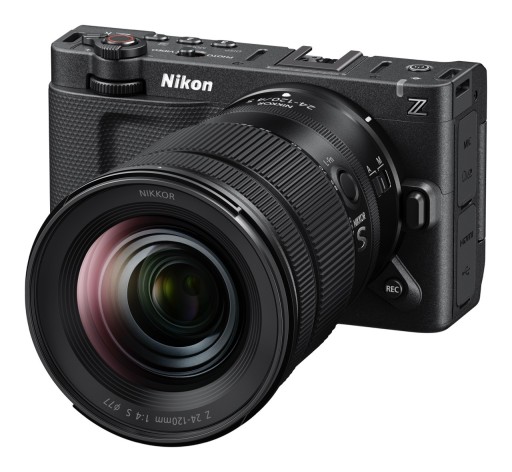
Nikon’s first dedicated cinema camera combines the company’s Z-mount lens system with RED’s R3D color science and processing. The ZR records in the new R3D NE RAW format up to 6K/60p, providing 15+ stops of dynamic range with RED’s established color profiles that match other cameras in RED’s lineup. The camera features a full-frame sensor with dual base ISOs of 800 and 3200, allowing flexibility across different lighting conditions.
The ZR includes several unique features for a camera at this price point, including 32-bit float audio recording that eliminates the need for manual gain adjustment during recording. Three built-in microphones use Nokia’s OZO technology to provide directional audio pickup patterns, while the new digital accessory shoe enables direct communication and power delivery to compatible accessories. The fanless design keeps the camera silent during operation while maintaining thermal management for up to 125 minutes of continuous recording.
- RED color science with R3D NE RAW recording up to 6K/60p
- 32-bit float audio with five selectable pickup patterns from built-in mics
- Fanless operation with 125-minute continuous recording capability
- 4-inch DCI-P3 LCD eliminates the need for an external monitor in most situations
- Lightweight at 1.19 lbs with weather sealing and magnesium construction
- New R3D NE codec requires updated post-production workflows
- Digital accessory shoe has limited compatible accessories at launch
- Higher price than traditional hybrid cameras
- Sensor: Full-frame 35.9 × 23.9 mm CMOS sensor
- Effective Resolution: 24.5 megapixels
- Lens Mount: Nikon Z mount (supports autofocus lenses)
- Video Recording: 6K (6048 × 3402) up to 60 fps (REDCODE RAW), DCI 4K (4030 × 2268) up to 120 fps, UHD 4K (3984 × 2240) up to 120 fps, Full HD (1920 × 1080) up to 240 fps
- Codecs / Formats: REDCODE RAW (R3D), N-RAW, ProRes RAW / 422 HQ, H.265 / H.264
- Dynamic Range: Over 14 stops
- Dual Base ISO: 800 and 6400
- Stabilization: 5-axis in-body sensor-shift stabilization (up to 7.5 stops)
- Shutter: Electronic shutter up to 1/16,000 sec; shutter angle 5.6°–360°
- Autofocus: Deep-learning AI AF with human, animal, and vehicle detection
- Display: 4.0” articulating touchscreen LCD, 3.07M dots, DCI-P3 gamut, auto-flip
Watch Our Nikon ZR Review
Best Cinema Cameras – RED
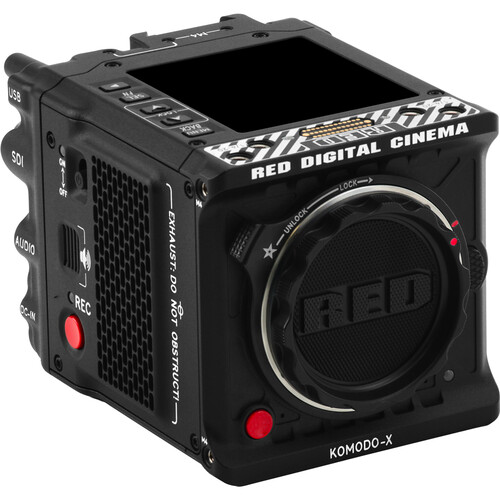
A compact Super 35 cinema camera available in both Z and RF mounts. It features a global-shutter 6K sensor with high dynamic range and durable construction. Requires external monitoring and rigging for full functionality.
- Global shutter accuracy
- Modular flexibility
- Compact for multicam rigs
- Requires external accessories
- No built-in ND or audio
- Additional cost for rigging
- Sensor: Super 35 6K Global Shutter
- Dynamic Range: 16+ stops
- Recording: REDCODE RAW (R3D)
- Mounts: RF / Z
- Weight: ≈ 2.7 lb
Best Cinema Cameras – Panasonic
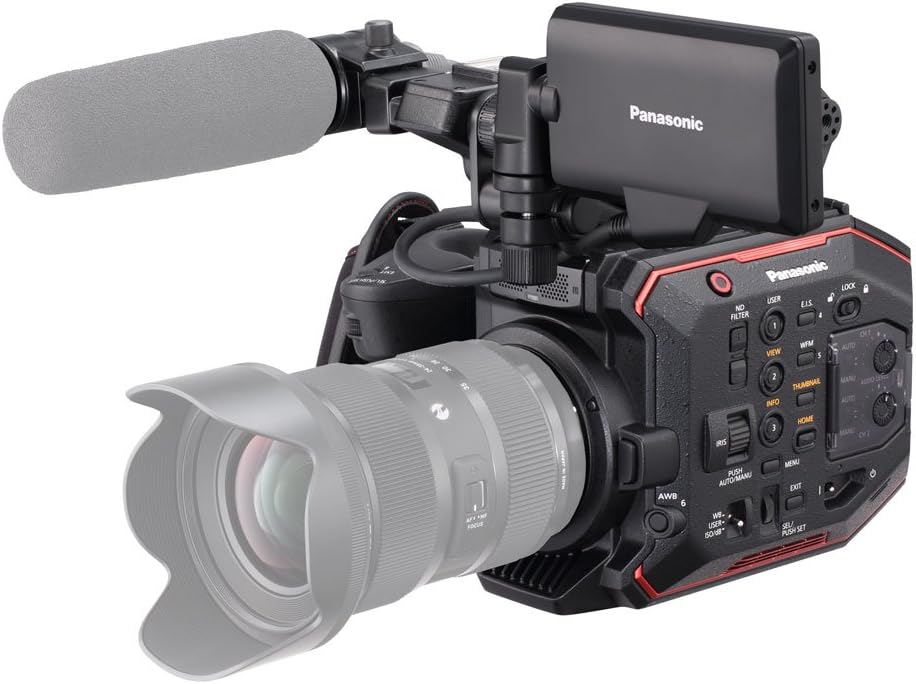
A compact Super 35 camera emphasizing color accuracy and reliability. It uses Panasonic’s Dual Native ISO for strong low-light performance and records internally in 10-bit 4:2:2. Lacks modern autofocus but remains a trusted option.
- Dual Native ISO system
- Strong color science
- Professional audio I/O
- Limited autofocus performance
- Heavier than mirrorless models
- Older media format
- Sensor: Super 35 5.7K CMOS
- Dynamic Range: ≈ 14 stops
- Recording: 10-bit 4:2:2 internal
- Audio: Dual XLR
- Weight: ≈ 2.6 lb
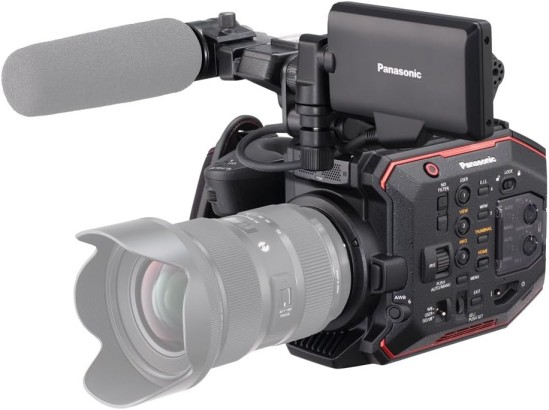
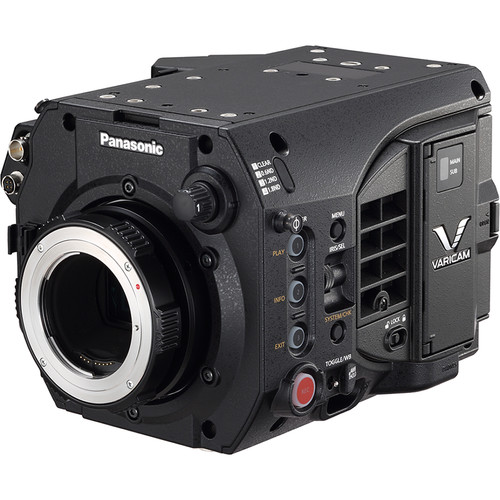
A Super 35 cinema camera built for broadcast and feature production. Offers Dual Native ISO and modular connectivity. Its color rendering and highlight roll-off remain benchmarks, though the size and cost limit its appeal for solo operators.
- Exceptional dynamic range and color science
- Professional modular design for customization
- Proven track record in high-end film and television
- Comprehensive professional features and connectivity
- Very expensive for most independent products. A complex operation requiring a professional crew
- Older technology compared to the newest cinema cameras
- Sensor: Super35 4.4K CMOS with dual native ISO
- Video: 4.4K/120p, 4K/60p internal recording
- Codecs: V-Raw, AVC-Ultra, comprehensive professional options
- Dynamic Range: 14+ stops
- Features: Dual native ISO (800/5000), modular design
- Audio: Professional multi-channel audio recording
- Connectivity: Professional cinema camera I/O
- Storage: Express P2 cards, professional media
- Price: $18,000+
Best Cinema Cameras – Sony
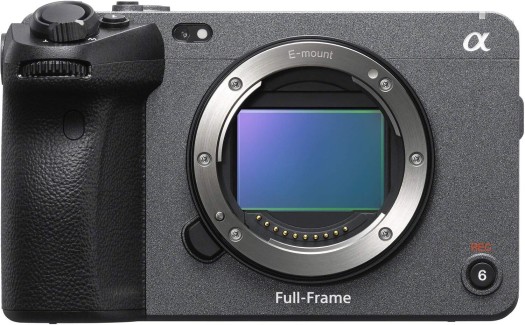
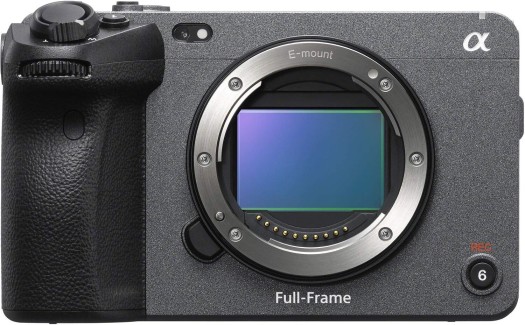
A compact full-frame cinema camera that revolutionized the industry by bringing Sony’s acclaimed cinema color science to an ultra-portable form factor. The ultra-compact design without an electronic viewfinder prioritizes handheld and gimbal work, while S-Cinetone color science matches higher-end Sony cinema cameras for seamless multi-camera workflows. No recording time limits and excellent heat management make it ideal for extended production work in challenging environments.
- Ultra-compact design perfect for handheld and gimbal work
- Professional S-Cinetone color science matches high-end Sony cameras
- No recording time limits with excellent heat management
- Exceptional low-light performance inherited from A7S III
- No built-in electronic viewfinder
- Requires additional accessories for professional audio
- Limited physical controls compared to traditional cinema cameras
- Sensor: 12.1MP Full-Frame Back-Illuminated Exmor R CMOS
- Video: 4K/120p, 1080p/240p internal recording
- Codecs: XAVC S-I (10-bit 4:2:2), S-Cinetone, S-Log3
- Dynamic Range: 15+ stops in S-Log3
- Stabilization: 5-axis Active Mode stabilization
- Audio: XLR handle adapter, 3.5mm inputs
- Connectivity: Full-size HDMI, USB-C, multi-interface shoe
- Storage: CFexpress Type A + SD UHS-II slots
- Price: $3,898
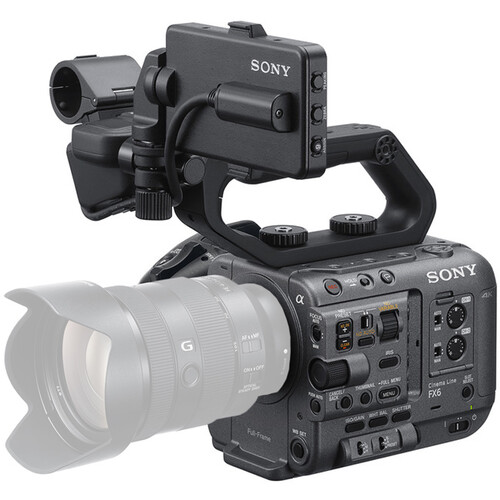
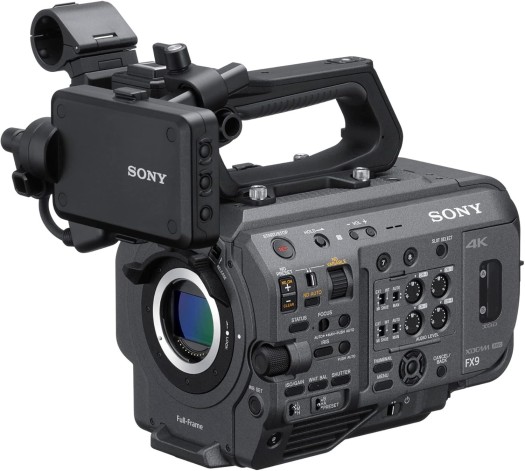
Professional cinema camera offering the perfect balance of full-frame image quality and broadcast-ready features in a traditional camcorder form factor. Professional features include built-in ND filters, comprehensive audio inputs, and traditional camcorder ergonomics that are ideal for documentary work, corporate video, and broadcast applications. Extensive professional connectivity, including SDI and genlock enables integration with complex production workflows.
- Built-in variable ND filters eliminate the need for external filters
- Professional XLR audio inputs with comprehensive controls
- Traditional camcorder ergonomics are familiar to broadcast operators
- Comprehensive professional connectivity, including SDI and genlock
- Higher price point than compact cinema cameras
- Larger form factor limits some shooting situations
- A complex menu system requires a learning curve
- Sensor: 10.2MP Full-Frame Back-Illuminated Exmor R CMOS
- Video: 4K/120p, 1080p/180p internal recording
- Codecs: XAVC-I (10-bit 4:2:2), 16-bit RAW output, S-Cinetone
- Dynamic Range: 15+ stops in S-Log3
- Features: Built-in variable ND filters (1/4 to 1/128)
- Audio: Dual XLR inputs with phantom power, 4-channel recording
- Connectivity: 12G-SDI, full-size HDMI, genlock, timecode
- Storage: CFexpress Type A + SD slots
- Price: $5,998
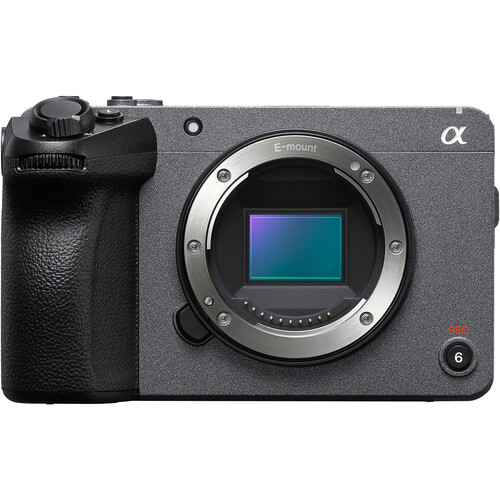
Compact APS-C cinema camera bringing Sony’s professional video capabilities to a smaller sensor format with exceptional value for money. Affordable entry into Sony’s cinema line with professional features and color science that matches higher-end cameras. The APS-C sensor provides additional reach for wildlife and sports applications while maintaining cinematic image quality in an ultra-portable package.
- Affordable entry into Sony’s professional cinema line
- APS-C sensor provides additional reach for wildlife/sports
- Professional color science matches higher-end FX cameras
- Compact size ideal for handheld and gimbal work
- APS-C sensor limits low-light performance vs full-frame
- No built-in electronic viewfinder. A smaller sensor provides less shallow depth of field
- Sensor: 26.1MP APS-C Back-Illuminated Exmor R CMOS
- Video: 4K/120p, 1080p/240p internal recording
- Codecs: XAVC S-I (10-bit 4:2:2), S-Cinetone, S-Log3
- Dynamic Range: 14+ stops in S-Log3
- Features: Compact cinema design, no electronic viewfinder
- Audio: XLR handle adapter, professional audio options
- Connectivity: Full-size HDMI, multi-interface shoe
- Storage: CFexpress Type A + SD slots
- Price: $1,898
Comparison Chart
| Product Name | Price Range | Dimensions / Weight | Key Specs | Special Features |
| ~$2,995 | Compact modular box / 1.9 lb | Full-frame 6K HDR sensor, dual CFexpress | Modular body with multiple mounts (L, EF, PL) | |
| Blackmagic PYXIS 12K | ~$6,595 | Modular / 2.1 lb | Full-frame 12K RGBW, 16 stops DR | OLPF for moiré control, high-resolution workflow |
| Blackmagic Cinema Camera 6K | ~$2,495 | 7″ x 4″ x 4″ / 1.9 lb | Super 35 6K HDR, 13 stops DR | Touchscreen control, Blackmagic RAW |
| Blackmagic Pocket Cinema Camera 6K Pro | ~$2,495 | 7″ x 4″ x 4.5″ / 2.7 lb | Super 35 6K, built-in ND filters | Dual mini-XLR, tilting HDR display |
| Blackmagic URSA Mini Pro 4.6K G2 | ~$5,995 | 8.3″ x 6.9″ x 8.7″ / 5 lb | Super 35 4.6K HDR, 15 stops DR | Built-in ND, broadcast I/O |
| Blackmagic URSA Mini Pro 12K / OLPF | ~$9,995 | 8.3″ x 6.9″ x 8.7″ / 5.6 lb | Super 35 12K, 14+ stops DR | 12K capture with OLPF option |
| Canon EOS C50 | ~$3,899 | Compact body / 1.5 lb | 7K full-frame CMOS, 12-bit RAW | 3:2 open gate, vertical crop modes |
| Canon EOS C70 | ~$5,499 | 6.2″ x 4.5″ x 4.2″ / 2.6 lb | Super 35 4K/120p, Dual Gain Output | Built-in ND, RF lens mount |
| Canon EOS C80 | ~$7,499 | 6.3″ x 4.5″ x 4.3″ / 2.9 lb | Super 35 4K, enhanced low light | Dual XLR, ND filters, improved processing |
| Canon EOS C400 | ~$11,999 | 6.7″ x 5.3″ x 5.8″ / 4.2 lb | Super 35 6K RAW, 16+ stops DR | Full I/O, modular build |
| Nikon ZR Cinema Camera | ~$5,999 | Compact full-frame / 1.2 lb | 6K full-frame RAW, 32-bit float audio | Fanless design, RED NE RAW workflow |
| RED Komodo X (Z & RF Mount) | ~$6,995 | Box-style / 2.7 lb | Super 35 6K Global Shutter, 16+ stops DR | Modular RF/Z mounts, global shutter |
| Panasonic AU-EVA1 | ~$7,495 | 6.7″ x 5.3″ x 5.2″ / 2.6 lb | Super 35 5.7K, Dual Native ISO | Professional I/O, 10-bit 4:2:2 internal |
| Panasonic VariCam LT | ~$9,000 (used) | 10.2″ x 7.4″ x 8.3″ / 6 lb | Super 35 4.4K, Dual ISO 800/5000 | Modular cinema system, SDI/Genlock |
| Sony FX3 | ~$3,898 | 5.1″ x 3.3″ x 3.3″ / 1.6 lb | Full-frame 4K/120p, 15 stops DR | Compact body, active cooling |
| Sony FX6 | ~$5,998 | 6.0″ x 4.6″ x 4.5″ / 2.0 lb | Full-frame 4K/120p, variable ND | Professional I/O, SDI output |
| Sony FX9 | ~$11,098 | 6.1″ x 5.7″ x 8.6″ / 4.4 lb | Full-frame 6K oversampled 4K | Dual SDI, ENG-style body |
| Sony FX30 | ~$1,798 | 5.1″ x 3.3″ x 3.3″ / 1.4 lb | APS-C 4K/120p, 14 stops DR | Affordable entry into Sony FX system |
Key Cinema Camera Features
Professional Audio
Cinema cameras prioritize professional audio with XLR inputs, phantom power, and multi-channel recording capabilities. Many models include built-in preamps and comprehensive audio monitoring tools essential for professional production.
Advanced Cooling Systems
Unlike hybrid cameras, cinema cameras feature active cooling systems enabling unlimited recording times. Professional productions require cameras that can run continuously without thermal limitations.
Professional Connectivity
SDI outputs, genlock, timecode synchronization, and comprehensive monitoring outputs enable integration with professional production workflows. These features are essential for multi-camera productions and broadcast applications.
Internal ND Filters
Built-in neutral density filters eliminate the need for external filters and enable quick exposure adjustments during shooting. Professional cinema cameras often feature variable ND systems with precise control.
Modular Design
Many cinema cameras feature a modular design, allowing customization for specific production needs. Accessories like electronic viewfinders, audio modules, and mounting systems can be added as required.
Cinema Color Science
Dedicated color science optimized for post-production workflows provides maximum flexibility in color grading. Features like S-Cinetone, Canon Log, and Blackmagic’s color science ensure consistent, professional results.
Cinema cameras represent the pinnacle of video-focused design, prioritizing professional features and workflow integration over traditional photography considerations. They’re essential tools for serious video production, offering capabilities that enable professional results in demanding production environments.
Understanding Video Camera Formats
Full Frame (36mm x 24mm)
Full-frame sensors provide the largest image area, delivering exceptional low-light performance and the shallowest depth of field for cinematic looks. They excel in challenging lighting conditions and offer the most natural field of view when using traditional lens focal lengths. Professional productions often prefer full-frame for its superior image quality and flexibility in post-production. However, full-frame cameras and lenses are typically larger, heavier, and more expensive than smaller sensor alternatives.
APS-C/Super35 (23.6mm x 15.6mm)
APS-C sensors offer an excellent balance of image quality, portability, and cost. The crop factor (typically 1.5x) provides additional reach for wildlife and sports applications while maintaining good low-light performance. Many professional films are shot on Super35 sensors, proving their cinematic capabilities. APS-C cameras are generally more compact and affordable than full-frame options, with smaller, lighter lenses that make them ideal for travel and handheld work.
Micro Four Thirds (17.3mm x 13mm)
Micro Four Thirds sensors prioritize portability and stabilization performance over ultimate image quality. The 2x crop factor significantly increases telephoto reach, making these cameras excellent for wildlife videography. Advanced in-body stabilization systems often provide superior performance compared to larger sensors. While low-light performance is more limited, modern MFT sensors deliver professional results with proper lighting and technique. The compact size and extensive lens selection make MFT ideal for travel and documentary work.
What’s the difference between hybrid and cinema cameras?
Hybrid cameras maintain traditional camera ergonomics with electronic viewfinders and photography controls while adding professional video features. They’re ideal for creators who need both excellent stills and video capabilities. Cinema cameras prioritize video with purpose-built form factors, professional audio inputs, advanced cooling, and features like built-in ND filters. They’re designed specifically for video production workflows.
Do I need internal RAW recording for professional video?
Internal RAW recording provides maximum flexibility in post-production but creates enormous file sizes and requires significant storage and processing power. ProRes 4K at high quality settings can consume over 1TB per hour of footage. Many professionals achieve excellent results with high-quality compressed codecs like 10-bit XAVC or ProRes 422. RAW is essential for high-end color grading and VFX work, but may be overkill for standard commercial or content creation work.
How important is sensor size for video work?
Full-frame sensors provide better low-light performance and shallower depth of field, making them ideal for cinematic looks and challenging lighting conditions. APS-C and Super35 sensors offer more reach for wildlife/sports and often provide better rolling shutter performance. Many professional films are shot on Super35 sensors. Micro Four Thirds offers excellent stabilization and compact lens options. Choose based on your specific shooting needs rather than sensor size alone.
What codec should I use for different types of projects?
For social media and web content, high-quality H.264/H.265 provides good results with manageable files—corporate and commercial work benefits from 10-bit codecs like ProRes 422 or XAVC-I for better color grading flexibility. High-end commercial and film work may require RAW codecs for maximum post-production flexibility. Always consider your entire workflow from capture through final delivery when selecting codecs.
How much storage do I need for professional video production?
Storage requirements vary dramatically based on codec and resolution. 4K H.264 uses approximately 20-30GB per hour, while 4K ProRes can consume 200-600GB per hour, depending on quality settings. 8K RAW recording can exceed 1TB per hour. Budget for at least 3x your estimated recording time to account for multiple takes, B-roll, and backup copies. High-speed CFexpress cards are essential for professional codex, but can cost $500+ for 1TB.
What’s the advantage of built-in ND filters on cinema cameras?
Built-in ND filters allow quick exposure adjustments without changing aperture or introducing color shifts from external filters. They’re essential for maintaining a consistent depth of field and proper exposure when moving between different lighting conditions. Professional productions often require specific aperture settings for creative control, making ND filters crucial for exposure management.
Can these cameras replace traditional cinema cameras for professional work?
Many cameras in this guide have been used for Netflix-approved content, major commercials, and feature films. The Sony FX series, Canon Cinema EOS line, and Blackmagic cameras offer professional features at accessible prices. However, consider your specific workflow needs: high-end productions may still require traditional cinema camfor particularcific features like anamorphic support, advanced monitoring, or specific professional requirements.
How important is autofocus for professional video work?
Modern autofocus systems with subject detection and tracking have become essential tools for many professional applications, particularly documentary work, interviews, and solo shooting. However, many narrative filmmakers still prefer manual focus for creative control. The best video cameras offer reliable autofocus when needed while providing excellent manual focus, tools including focus peaking, magnification, and professional follow focus compatibility.
What accessories are essential for professional video production?
Essential accessories vary by camera type but typically include: high-speed memory cards (CFexpress for professional workflows), external monitors for critical focus and exposure, professional audio solutions (wireless mics, XLR adapters), adequate storage solutions (1TB+ external SSDs), and stabilization (tripods, gimbals, or sliders). Budget 50-100the % of camera cost for essential accessories.
How do I choose between different manufacturer ecosystems?
Consider lens ecosystem, color science preferences, and existing gear when choosing manufacturers. Sony offers the most comprehensive video camera lineup with excellent autofocus. Canon provides outstanding color science and a growing RF lens selection. Panasonic leads in professional video features and codec support. Fujifilm offers unique color science and excellent build quality. Nikon provides exceptional value with recent video-focused releases. Choose based on your specific needs rather than brand loyalty.
What’s the learning curve for transitioning from photography to video?
Video production requires understanding frame rates, shutter angles, audio recording, and color grading workflows in addition to traditional exposure controls. Many modern cameras offer automatic modes that simplify the transition. At the same time, professional features allow growth into more advanced technology—plan for additional time learning post-production software like DaVinci Resolve, Final Cut Pro, or Premiere Pro. The investment in learning professional video techniques pays dividends in production quality and creative possibilities.