
Best Budget Canon Lenses: Complete Buyer’s Guide for Every Photographer

Table of Contents
 Our Picks
Unlike the budget lenses of the DSLR era, which often felt like afterthoughts, Canon’s RF budget lineup is designed with a different philosophy. These lenses leverage the “mirrorless” aspect of mirrorless cameras to achieve designs that are lighter and smaller than ever before. While RF lenses can get pricey, Canon’s budget lineup proves that you don’t need to spend thousands to get capable glass.
Sometimes, budget lenses mean plastic builds and slower variable apertures. But in this guide, you will also find effective optical stabilization and unique macro capabilities that make these lenses compelling options for everyone from EOS R100 beginners to EOS R6 Mark II professionals looking for a lightweight travel kit.
Why Trust Us
We’ve been testing Canon cameras and lenses for years, covering everything from entry-level RF kits to professional-grade L-series optics. Each lens in this guide has been assessed for real-world performance, handling, optical quality, and value.
For lenses we haven’t tested in person, we consulted our network of professional photographers and RF shooters, ensuring that our recommendations reflect both hands-on experience and broad community feedback.
We never accept payment to include products in our buyer’s guides. While affiliate links help support Imaging Resource, our recommendations always come from real-world experience and editorial judgment—not commissions.
Our Picks
Canon’s budget RF strategy is built on versatility and portability. The Canon RF 50mm f/1.8 STM remains the absolute essential first purchase for any system owner, offering excellent low-light performance in a tiny package. For landscape photographers and vloggers, the RF 15-30mm f/4.5-6.3 IS STM and the ultra-compact RF 16mm f/2.8 STM provide wide-angle coverage that was previously heavy and expensive to acquire.
The lineup shines particularly bright for hybrid shooters who need close-focusing capabilities. The RF 35mm f/1.8 IS Macro STM and RF 85mm f/2 Macro IS STM are unique “dual-threat” lenses, offering fast apertures for street and portrait photography while doubling as capable 0.5x macro lenses. For travel, the RF 24-105mm f/4-7.1 IS STM offers a lightweight “do-it-all” solution, while the RF 100-400mm f/5.6-8 IS USM brings genuine wildlife and sports reach to the masses in a package that fits easily into a standard camera bag.
Our Best Picks by Category
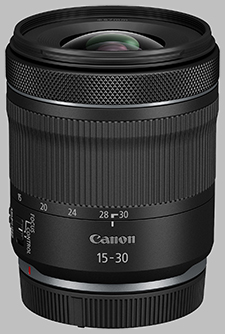
A wide-angle zoom lens with a variable f/4.5–6.3 aperture, 15–30mm focal range, and optical image stabilization rated up to 4.5 stops. It uses 13 elements in 11 groups with a 7-blade aperture, provides a minimum focus distance of 0.28m, and offers 0.26x magnification. The lens weighs 390g (13.8 oz) and measures 76.6 × 88.8 mm, using a 67mm front filter.
- Ultra-wide coverage at low cost
- Compact retractable design
- Optical stabilization
- Variable aperture limits low light
- Plastic construction
- No weather sealing
- Mount: Canon RF
- Focal Length: 15–30mm
- Aperture: f/4.5–6.3 variable
- Image Stabilization: 4.5 stops
- Weight: 390 g (13.8 oz)
I just came back from an exclusive look inside Canon’s lens factory in Japan, and this is one of the lenses that went along in my kit. It covers a nice range of wide angle focal lengths, liminting the need to take a few primes with you. Wide-angle photography doesn’t need a shallow depth of filed, so the f/4.5-6.3 aperture range is perfect.
With built-in optical image stabilization, you can use this lens on a camera with In-Body Image Stabilization (IBIS) for several additional stops of image stabilization, or use it on a camera like the Canon R8 that doesn’t have stabilization.
Read Our Full Review
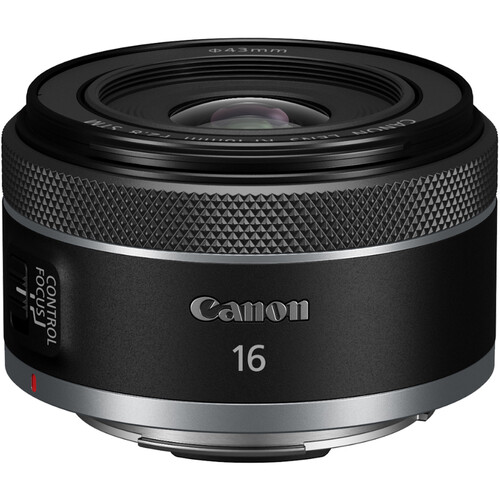
A compact wide-angle prime using a 16mm focal length and f/2.8 maximum aperture with a 9-element, 7-group optical design. It offers a 0.13m minimum focus distance, 0.26x magnification, uses a 43mm filter, and weighs 165 g (0.36 lb). The lens measures 69.2 × 40.1 mm and uses an STM motor for quiet autofocus.
- Ultra-compact size
- Affordable wide prime
- Quiet STM autofocus
- Distortion requires correction
- Plastic build
- Lower edge sharpness
- Focal Length: 16mm
- Aperture: f/2.8
- Weight: 165 g (0.36 lb)
- Minimum Focus: 0.13m
- Elements/Groups: 9/7
This is a terrific “pancake” lens (a term photographers use for a small, flat lens) with a wide-angle focal length. I love that this lens, and its longer focal length sibling below, have great optical quality and wide apertures, but are at really reasonable prices.
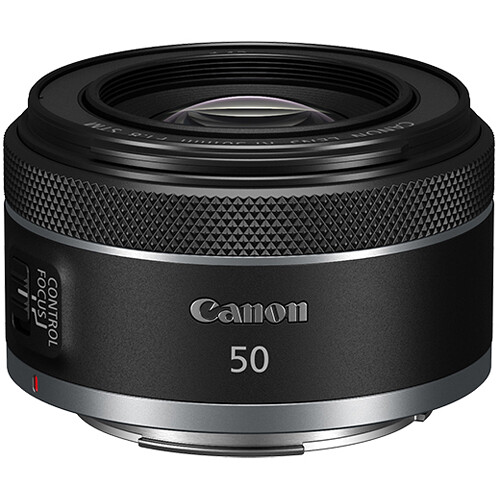
The RF 50mm f/1.8 STM delivers classic 50mm perspective in Canon’s most affordable RF lens package. At 30cm minimum focus distance with 0.25x magnification, it focuses closer than most 50mm lenses, enabling frame-filling shots of individual plates or desserts from a comfortable working distance. The f/1.8 maximum aperture provides strong background separation when shooting at typical food photography apertures of f/2.8 to f/4. Optical construction includes one aspherical element with Super Spectra coating to minimize flare and ghosting. A stepping motor provides smooth, quiet autofocus suitable for video work. The customizable control ring allows direct adjustment of aperture, ISO, or exposure compensation. At 160g, it barely adds weight to mirrorless camera bodies.
- Excellent optical value
- Very compact and light
- Smooth STM autofocus
- Plastic build
- No weather sealing
- AF may hunt in low light
- Focal Length: 50mm
- Aperture: f/1.8
- Weight: 160 g (0.35 lbs)
- Aperture Blades: 7 rounded
- Compatible Mountings : Canon RF
Like with its sibling 16mm lens (above) this is one of my favorite lenses, not just in the budget category but in Canon’s lineup in general.
You can find more information in our guide to the best lenses for food photography.
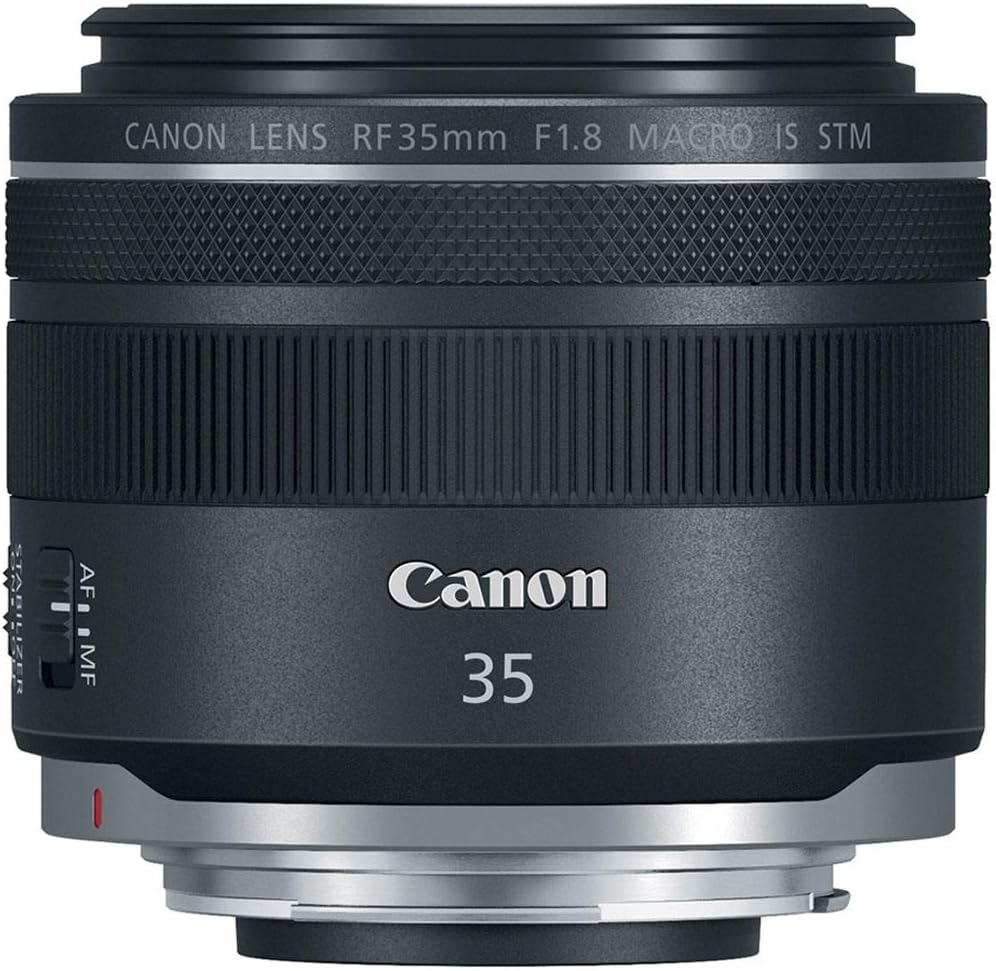
Canon’s versatile 35mm prime combines traditional focal length with true 0.5x macro magnification capability. The f/1.8 maximum aperture provides good low-light performance, while the 5-stop optical stabilization enables sharp handheld shooting in challenging conditions. The STM autofocus motor delivers smooth, quiet focusing for both stills and video applications.
- The 0.5x macro magnification capability eliminates the need for separate macro lenses when photographing small subjects and details.
- The 5-stop optical image stabilization enables sharp handheld shooting in low-light conditions and at slower shutter speeds.
- The 35mm focal length provides versatile framing for street photography, environmental portraits, and general travel shooting.
- The pricing exceeds basic 35mm prime alternatives that lack macro capability and image stabilization features.
- The lens lacks weather sealing protection for shooting in challenging environmental conditions.
- The autofocus performance slows when operating in the macro focus range compared to standard focusing distances.
- Focal Length: 35mm
- Aperture: f/1.8
- Stabilization: 5 stops
- Weight: 305 g (0.67 lbs)
- Compatible Mountings: Canon RF
- Optical Construction: 9 rounded aperture blades
A “taller” lens than the 50mm and 16mm lenses, this 35mm has a surprisingly wide aperture, perfect for shots with background blur (often called Bokkeh). It’s light, and I think the images from it are excellent.
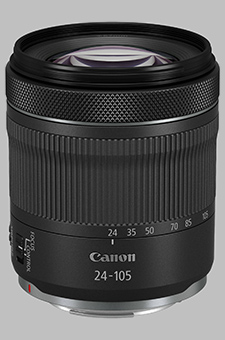
A standard zoom designed for portability with a variable f/4–7.1 aperture, 13-element, 11-group design, and 5-stop optical stabilization. It weighs 395 g (13.9 oz), measures 76.6 × 88.8 mm, and offers 0.24x maximum magnification.
- Compact and lightweight
- Very affordable
- Quiet STM AF performance
- Slow maximum aperture
- Basic build quality
- Lower image quality at extremes
- Focal Length: 24–105mm
- Aperture: f/4–7.1 variable
- Stabilization: 5 stops
- Weight: 395 g (13.9 oz)
- Compatible Mountings: Canon RF
If you’re looking for one all-around lens for your Canon mirrorless kit, this is the one. The aperture range doesn’t let in a lot of light at the long focal length range, but it’s an affordable lens that does the job of several prime lenses.
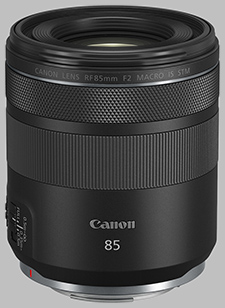
A portrait-macro hybrid lens offering an 85mm focal length, f/2 aperture, and 1:2 macro capability with 5-stop stabilization. The lens weighs approximately 500 g and includes 9 rounded blades.
- IS for portrait + macro
- Dual-purpose versatility
- Reasonably priced
- f/2 limits background blur vs f/1.4
- Some macro distortion
- Not as sharp as premium primes
- Focal Length: 85mm
- Aperture: f/2
- Stabilization: 5 stops
- Weight: ~500 g
- Compatible Mountings : Canon RF
I’ve used this for both macros and portraits, and it’s great for both. It’s one of the more expensive lenses in this guide, but it’s one of the few really affordable macro lenses in the Canon lineup. The built-in image stabilization is great when you’re trying to hold still to photograph an insect or tiny plant.
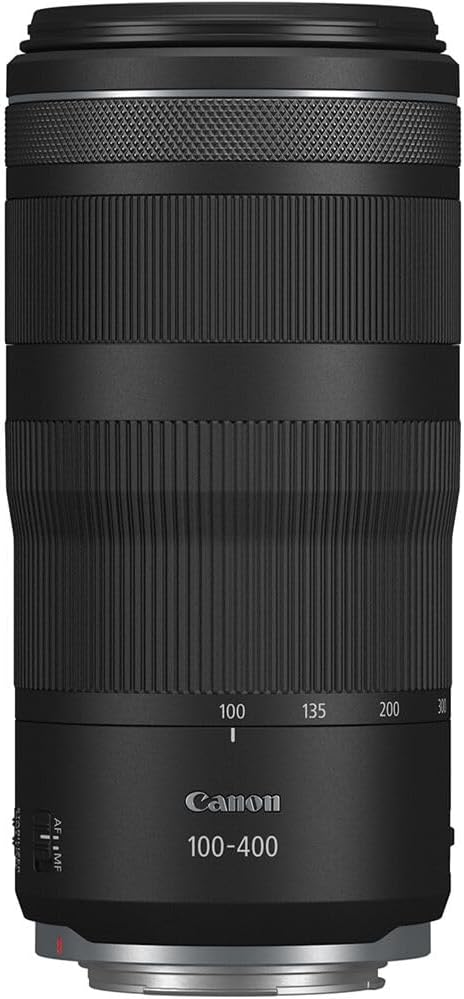
Canon’s compact telephoto zoom delivers true 400mm reach while weighing significantly less than traditional 70-200mm lenses. The variable aperture design enables the reduced weight and compact form factor, though the f/8 maximum at 400mm requires adequate lighting for optimal results. The 5.5-stop image stabilization system works with camera IBIS to compensate for the narrower maximum aperture.
- The 100-400mm focal range delivers genuine telephoto capability while weighing less than most 70-200mm alternatives.
- The 5.5-stop optical stabilization coordinates with camera IBIS to enable slower shutter speeds despite the variable aperture.
- The compact design makes true telephoto photography practical for travel situations including wildlife, safaris, and distant subjects.
- The variable f/5.6-8 aperture reaches f/8 at 400mm, requiring bright lighting conditions for optimal autofocus and shutter speeds.
- The autofocus system performs slower than professional L-series telephotos, potentially limiting action and wildlife photography.
- The build quality lacks the weather sealing and durability of professional-grade telephoto lenses.
- Focal Length: 100–400mm
- Aperture: f/5.6–8
- Stabilization: 5.5 stops
- Weight: 635 g (1.40 lbs)
- Compatible Mountings: Canon RF
This is another lens I frequesntly reocmmend to photographers looking for a budget lens for wildlife or other long-focal-length photography. At fthe 400mm range you lose a lot of light with the f/8 aperture, but you get the reach no other budget lens can give you. Often when you’re shooting at super-long focal lengths there’s enough light to overcome the aperture issues.
As an image stabilized lens, it’s easier to shoot at 400mm without blur from shaking, especially if this is used with a body that has IBIS.
See our Complete List of Other Buyer’s Guides
Frequently Asked Questions (FAQ)
Are budget lenses actually good enough for everyday photography?
Budget lenses can deliver great results for general photography. They often use simpler optical designs and less durable materials, but modern lens design has improved image quality and sharpness at the budget level. Most budget options produce quality images as long as you work within their limitations, such as slower apertures or slower autofocus performance than more expensive lenses.
What’s the biggest trade-off when choosing a budget lens?
The most noticeable compromise is usually the maximum aperture, which affects low-light performance and depth of field. Budget lenses may also have slower or noisier autofocus motors and fewer weather-sealing features.
Will a budget lens limit my ability to shoot in low light?
Lenses with smaller maximum apertures let in less light, which means you may need to increase ISO or use slower shutter speeds to compensate. For everyday use, this is manageable, but for action, night, or indoor photography, you may see more noise or motion blur.
Do budget lenses have worse image quality?
Not necessarily. Many budget lenses are sharp at their middle aperture ranges and perform well in typical shooting conditions. Differences become more noticeable at the edges of the frame, with the aperture wide open, or in very challenging lighting. For most non-professional work, budget lenses provide image quality that’s more than enough.
Are budget lenses durable enough for travel or heavy use?
They often use lighter plastics and fewer reinforced components, which means they may not handle drops or harsh environments as well as premium models. For typical travel and everyday shooting, though, they hold up fine—just avoid rough handling and extreme weather conditions.
Do I need image stabilization in a budget lens?
Image stabilization helps reduce blur from camera shake, especially in low light or when using longer focal lengths. If your camera body already has in-body stabilization, lens stabilization becomes less important. For cameras without stabilization, choosing a budget lens with built-in stabilization can make a huge difference.
Why do some budget lenses have variable apertures?
Variable apertures keep lens size, weight, and cost down. As you zoom in, the amount of light reaching the sensor decreases. This isn’t a problem for everyday shooting, but it’s something to keep in mind for indoor or action photography, where consistent exposure might matter more.
Are prime lenses better than zoom lenses at the budget level?
Prime lenses typically offer better sharpness and wider apertures for the price. Zoom lenses provide more flexibility and convenience. The right choice depends on your shooting style—primes for low light and portraits, zooms for travel and general use.
Will a budget lens work well for video?
Many budget lenses work fine for casual video, though you may notice more audible autofocus noise or jumpy focus. If silent focusing or smooth manual control is important, look for lenses specifically designed with video in mind.
Should beginners start with budget lenses?
Yes. Budget lenses are ideal for learning because they’re affordable, lightweight, and cover the fundamentals without overwhelming you with advanced features. As your skills grow, you’ll naturally understand which upgrades are worth investing in later.