
Nikon DX 16-50mm f/2.8 VR Review – The Best of Nikon’s APS-C Lenses?

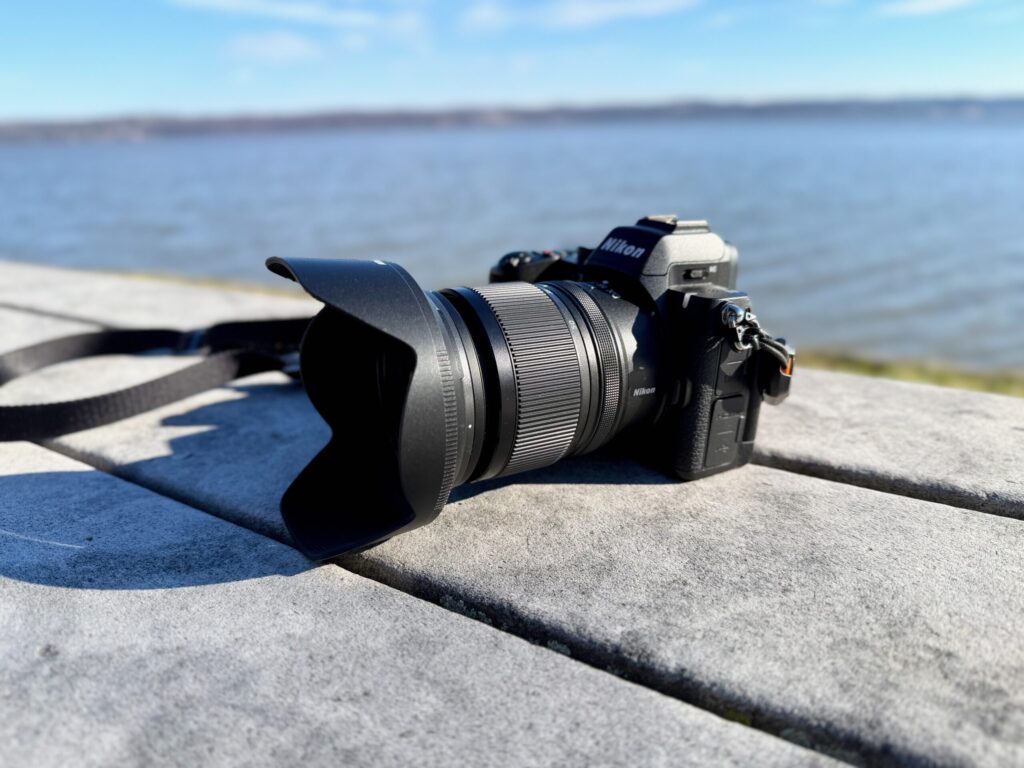
Table of Contents
 DX 16-50mm f/2.8 VR Our Thoughts
DX 16-50mm f/2.8 VR Our Thoughts
For people looking for a compact, lightweight camera system, APS-C is the perfect choice. APS-C sensors are smaller than full-frame sensors, so the body and lenses in an APS-C system are just a fraction of the size of full-frame setups.
Despite the benefits of APS-C systems, there are fewer lenses than there are for full-frame, and the ones that are available tend to be aimed at a beginning photographer. We see a lot of lenses with variable apertures, mediocre image quality, and rarely have convenience features like focus lock switches or aperture dials.
That’s why it’s refreshing to see the Nikon Nikkor DX 16-50mm f/2.8 VR, a well-rounded and pro-grade lens that offers great image quality and image stabilization in a fixed aperture lens.
The amount of light entering the lens stays the same as it does on a full-frame camera, but the background defocus (“bokeh”) is the equivalent of f/4 on this lens. Put another way, your exposure on a full-frame camera was 1/100th at f/2.8; it will be the same on an APS-C camera, but it will have less blur than f/2.8 on the same full-frame system.
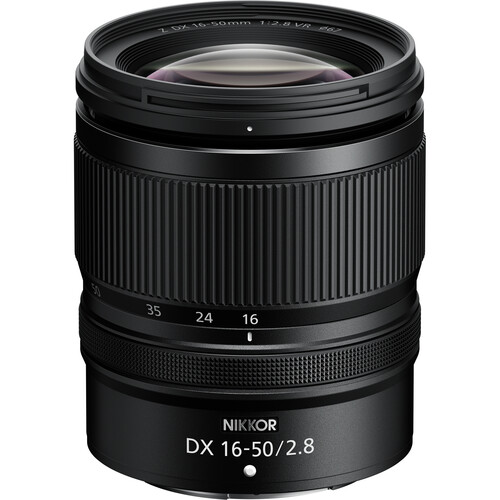
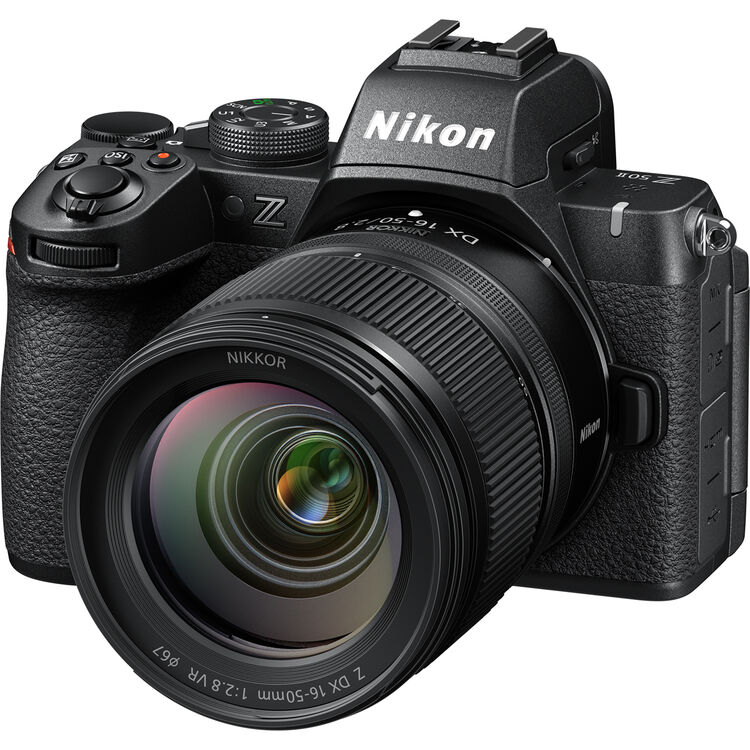
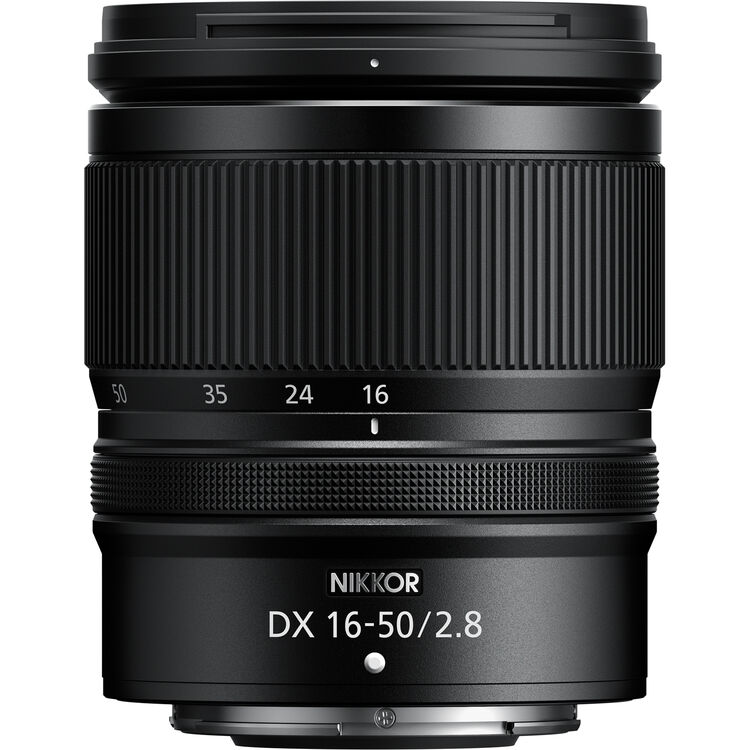
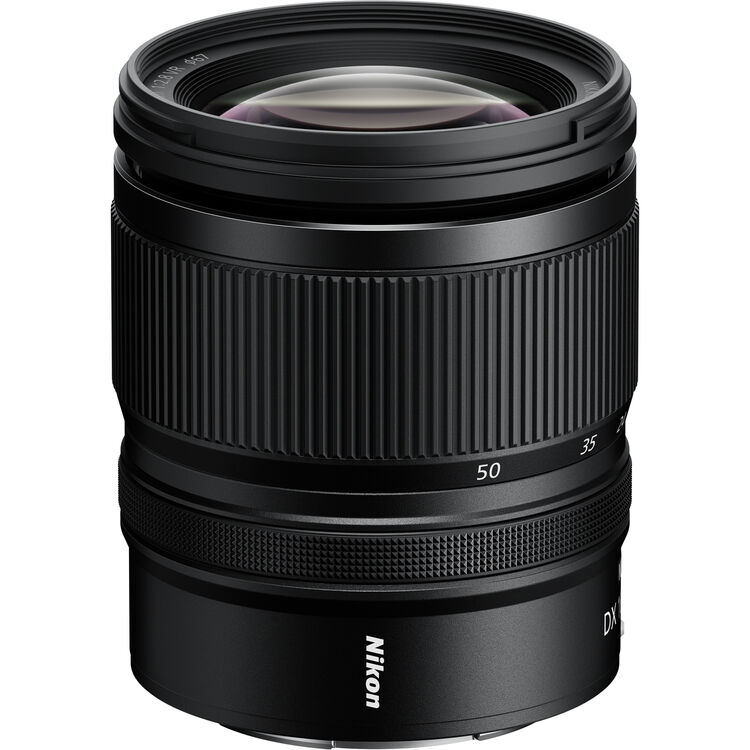
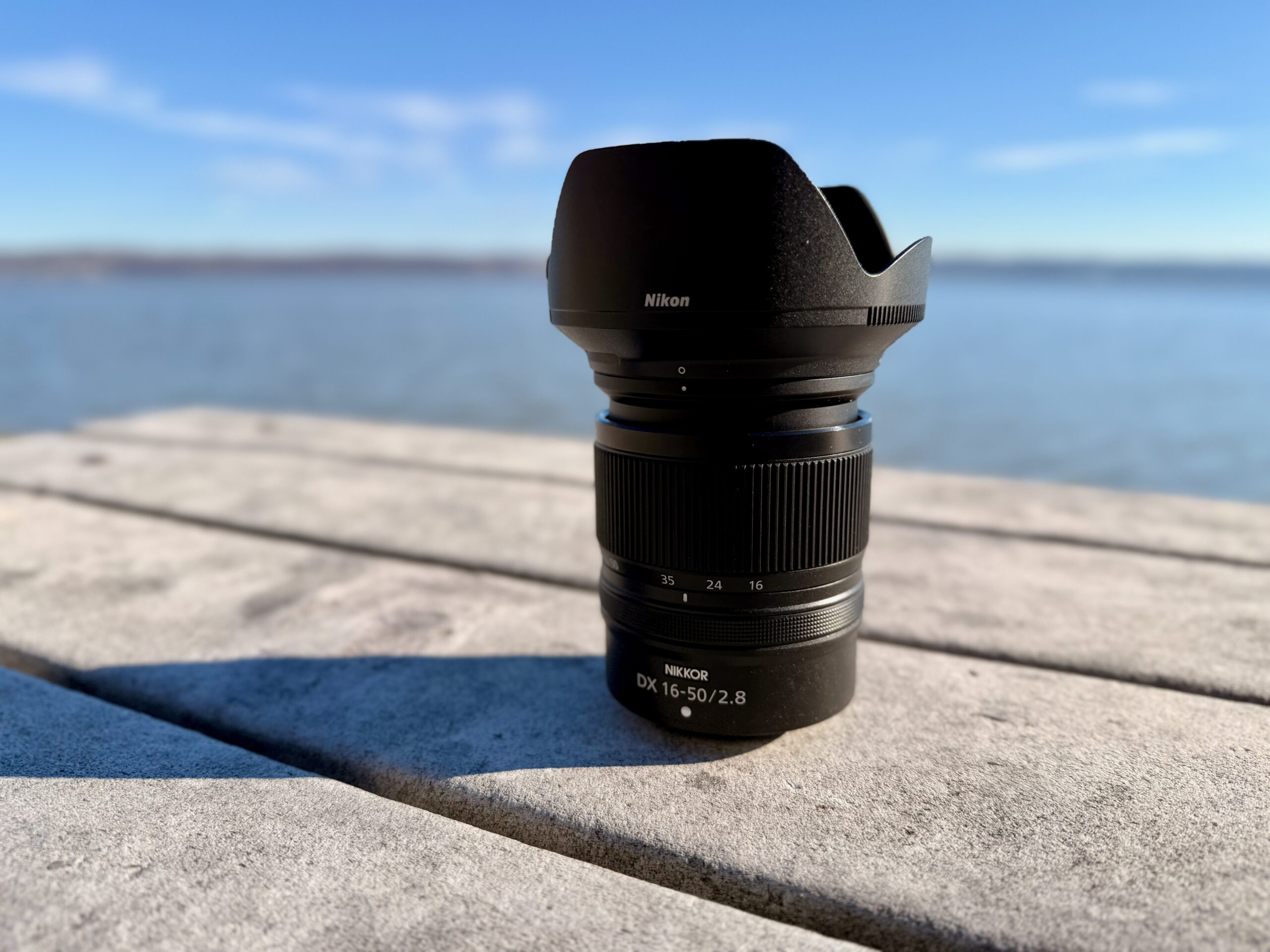
This is a compact standard zoom designed specifically for Nikon’s DX-format Z-mount cameras. It covers a 24–75mm equivalent field of view and maintains a constant f/2.8 aperture throughout the zoom range. The lens includes built-in optical VR, internal zooming, and a retracting design for portability.
- Constant f/2.8 for low-light and depth-of-field control
- Internal zoom design keeps length consistent
- Optical VR reduces handshake at slower shutter speeds
- Not a true macro performer
- Larger than typical DX kit zooms
- Expensive compared to other DX lenses
- Focal Length: 16–50mm (24–75mm equivalent)
- Maximum Aperture: f/2.8 (constant)
- Minimum Aperture: f/116
- Aperture Blades: 9 (rounded)
- Filter Size: 62mm
- Mount: Nikon Z (DX Format)
- Dimeansions : 73 mm × 67 mm (2.87 in × 2.64 in)
- Weight: 285 g (10.05 ounces)
DX 16-50mm f/2.8 VR – An Excellent Lens With Excellent Features
The smaller sensor on APS-C cameras means that lenses behave differently from a full-frame lens, so specs aren’t equal. There’s around a 1.5x crop on the focal length and aperture, so the 16–50mm lens has the equivalent field of view of a 24-75mm full-frame lens. The f/2.8 aperture has the equivalent of f/4 on full-frame, mostly.
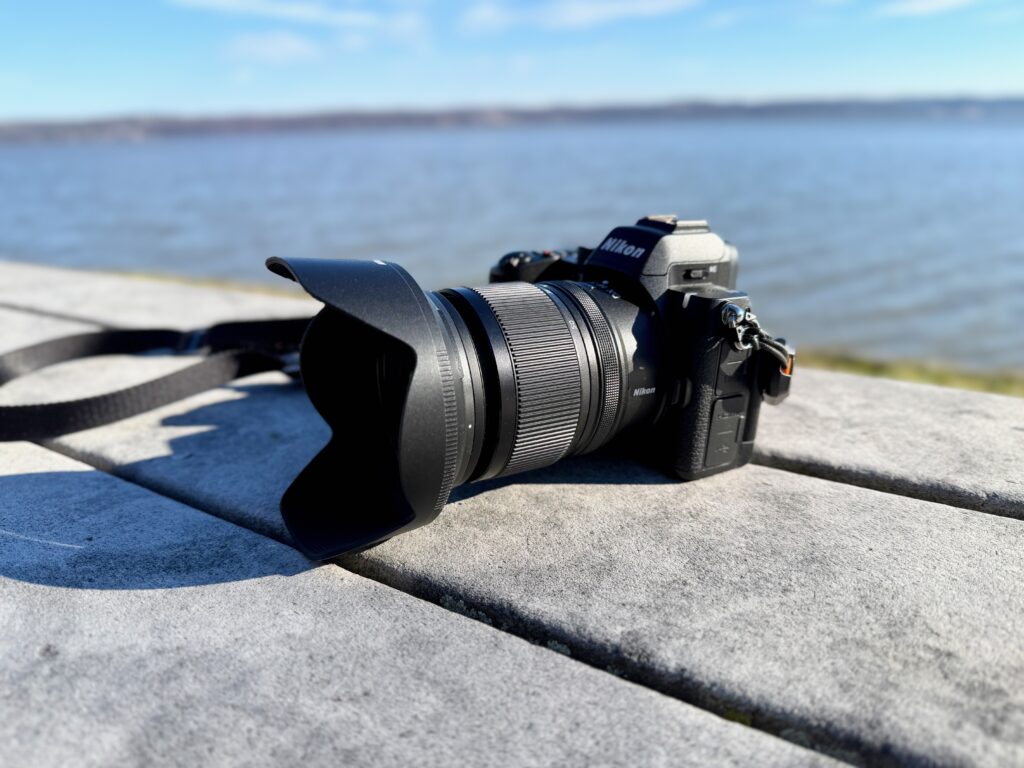 What you get with this lens is a common focal length and aperture in full-frame systems for the enthusiast photographer, but with an extra bit of versatility. A 24-70mm f/4 lens or Nikon’s 28-75mm f/2.8 is a common tool of the photographer who doesn’t want to spend the money Nikon’s 24-70mm f/2.8, and this lens hits that mark.
But with the f/2.8 aperture, you’re getting a lens with the same look as a 24-70mm f/4 but with a full stop extra light gathering. This is the best of both worlds, a small lens that has the same low-light performance as more expensive f/2.8 glass.
Generally speaking, the more elements inside a lens, the better the image quality since each piece of glass corrects for some common image imperfections.
This lens is comprised of 12 elements in 11 groups and has 1 ED and two aspherical elements. The design is more sophisticated than many APS-C lenses, allowing it to create images on par with 24-70mm f/4 advanced enthusiast or pro lenses in larger format systems.
The number and shape of aperture blades determine the softness of the out-of-focus areas of an image, and this lens has nine rounded blades. In my testing, the background defocus was smooth and lacked common artifacts found in lenses with fewer aperture blades. Many pro lenses have 11 or more aperture blades, which naturally make for even smoother images, but at a much higher price.

The minimum focus distance is .5 feet (.15 meters), and it has a magnification of .24x, which makes it far from a macro lens, but still good for close-up work.
It’s a relatively compact lens at only 3.5 inches long (90 millimeters), and the internal zoom keeps it from growing when zooming, another feature of more expensive lenses. It’s about half the size of my 24-75mm f/2.8 GM II lens on my Sony 7R V system, and much lighter.
With optical Vibration Reduction (VR), Nikon’s name for optical image stabilization, combined with In-Body Image Stabilization (IBIS), the lens is easy to use at slow shutter speeds or when moving.
Testing the Nikon DX 16-50mm f/2.8 VR
I shot the DX 16-50 f/2.8 VR for a few weeks, and it’s a very capable lens. The vibration reduction is excellent, making this a good (albeit a bit noticeable) lens for street photography. I also found it great for snapshot-style photos while walking down the street, and images came out much sharper than with a non-VR lens.

I coupled the lens with the Nikon Z50 II, Nikon’s most recent pro-style DX body. The Z50 II is one of my favorite APS-C cameras because the layout and design are nearly identical to the Z5 II, a camera that I love.
Read Our Nikon Z5 II Review
Detail is excellent across the aperture range, and like most lenses, the image quality improves when it’s stopped down, but only a bit. That’s not because the lens doesn’t get better at smaller apertures; it’s that the lens is excellent at f/2.8. Detail is crisp, background blur is very good, and color rendition is on par with all of Nikon’s glass, which is to say, excellent.
In this long-exposure shot of the Mario Cuomo Bridge in New York, the support cables are rendered well despite the challenging conditions.

Objects like this rusted support pillar have great detail, and the colors were accurate to what I saw in person.

From an image-quality standpoint, this lens is terrific, and while APS-C sensors have poorer low-light performance than a full-frame sensor, the 16-50mm f/2.8 squeezes every bit of image quality out of the sensor.

Interestingly, when I was shooting into the sun for this image and a sequence of a dozen other photos, there was sun flare visible on the bottom of the image on an angle from the sun. But looking at these in Capture One, there’s no flare of any kind. The Z50 II is a mirrorless camera, so the image I saw in the viewfinder is what the camera is recording, yet the flare isn’t still there. I suspect some degree of in-camera lens correction took care of it, but it’s an interesting thing to note, no matter why it works.
That said, there’s pretty noticeable chromatic aberration on the surface of the water. It’s not so visible here with the compression of the online JPEG files, but the original has heavy purple edging. Shooting in to the sun like this isn’t a typical shooting scenario, but Nikon’s pro FX lens wouldn’t have had these image issues.
Price Versus Performance and Features
Along with the professional-level image quality comes a nearly pro-grade price. At just a tad under $900, it’s an expensive lens. In fact, it’s only about $150 less than Nikon’s Z 24-70mm f.4 S for their full-frame FX cameras. The Nikon Z50 II itself comes in at only about $150 more than the lens, so it’s a significant investment.

Since many photographers who start with APS-C systems eventually move up to full-frame cameras, it is a pricy piece of glass.
But the combination of the Z50 II and this lens comes in around $800 less than a Nikon Z5 II and the FX 24-70mm f/4 for Nikon’s FX full-frame camera, although the FX lens does not have VR. For some photographers, that price difference might be worth it for a full-frame camera and lens, but if compact size and compact price are your ultimate goal, this is a fantastic choice.

For the price, I would have liked to have seen some on-lens controls, like a selector switch between AF and manual focus. All lenses aimed at the enthusiast and above should have a dedicated aperture dial, though this lens has a programmable control ring that makes it more versatile.
For the APS-C shooter looking for a lens that’s on par with Nikon’s full-frame glass, this is an excellent choice, and it shows the strength of the APS-C format.
Should You Buy This Lens
If you’re looking for a nearly pro-level lens for your Nikon DX camera, and can handle the price, the Nikon NIKKOR DX 16-5-mm f/2.8 VR is a no-brainer.
The price will be the one obstacle for APS-C shooters who bought into the platform due to the lower cost of lenses in the DX format.
With relatively few DX lenses to choose from in the mirrorless Z-mount, it’s a standout piece of glass. If Nikon keeps producing lenses as good as this in the DX lineup, it will have one of the most well-rounded APS-C systems on the market.
More Images