
Best Cameras for Wildlife and Sports 2026

Table of Contents
-
 Why Trust Us
 -
Canon EOS R3
-
Canon EOS R6 Mark III
-
Fujifilm X-H2S
-
Nikon Z8
-
Nikon Z6 III
-
Watch Our Video Review of the Nikon Z6 III
-
Sony a1
-
Sony A7 V
-
What’s the difference between a stacked sensor and a partially-stacked sensor?
-
Do I really need more than 24 megapixels for wildlife photography?
-
What frame rate do I actually need for sports and wildlife?
-
Is full-frame really necessary for wildlife photography, or can APS-C compete?
-
How important is weather sealing for wildlife photography?
-
What’s the advantage of Eye Control AF on the Canon R3?
-
Should I prioritize resolution or low-light performance?
-
Do I need CFexpress cards or are SD cards sufficient?
-
How much does the camera body matter versus the lens?
-
Can these cameras work well with adapted lenses?
Wildlife and sports photography puts tremendous demands on camera equipment. It’s one of the areas in which it is both about the photographer and the camera gear. So in this guide, we bring you the Best Cameras for Wildlife and Sports photography and videography.
-
-
Canon EOS R6 Mark III
- Sensor: 33-megapixel full-frame CMOS
- Autofocus: Dual Pixel CMOS AF II with subject detection
- Continuous Shooting: 40fps electronic shutter, 12fps mechanical shutter
- Video: 7K oversampled 4K, C-Log 2/3, open gate recording
-
Fujifilm X-H2S
- Sensor: 26.1 MP APS‑C X‑Trans CMOS 5 HS
- Processor: X‑Processor 5
- Autofocus: Intelligent Hybrid AF with advanced detection, 425 AF points
- Video: 6.2K up to 30p, 4K up to 120p, FHD 240p; internal ProRes 422 HQ
-
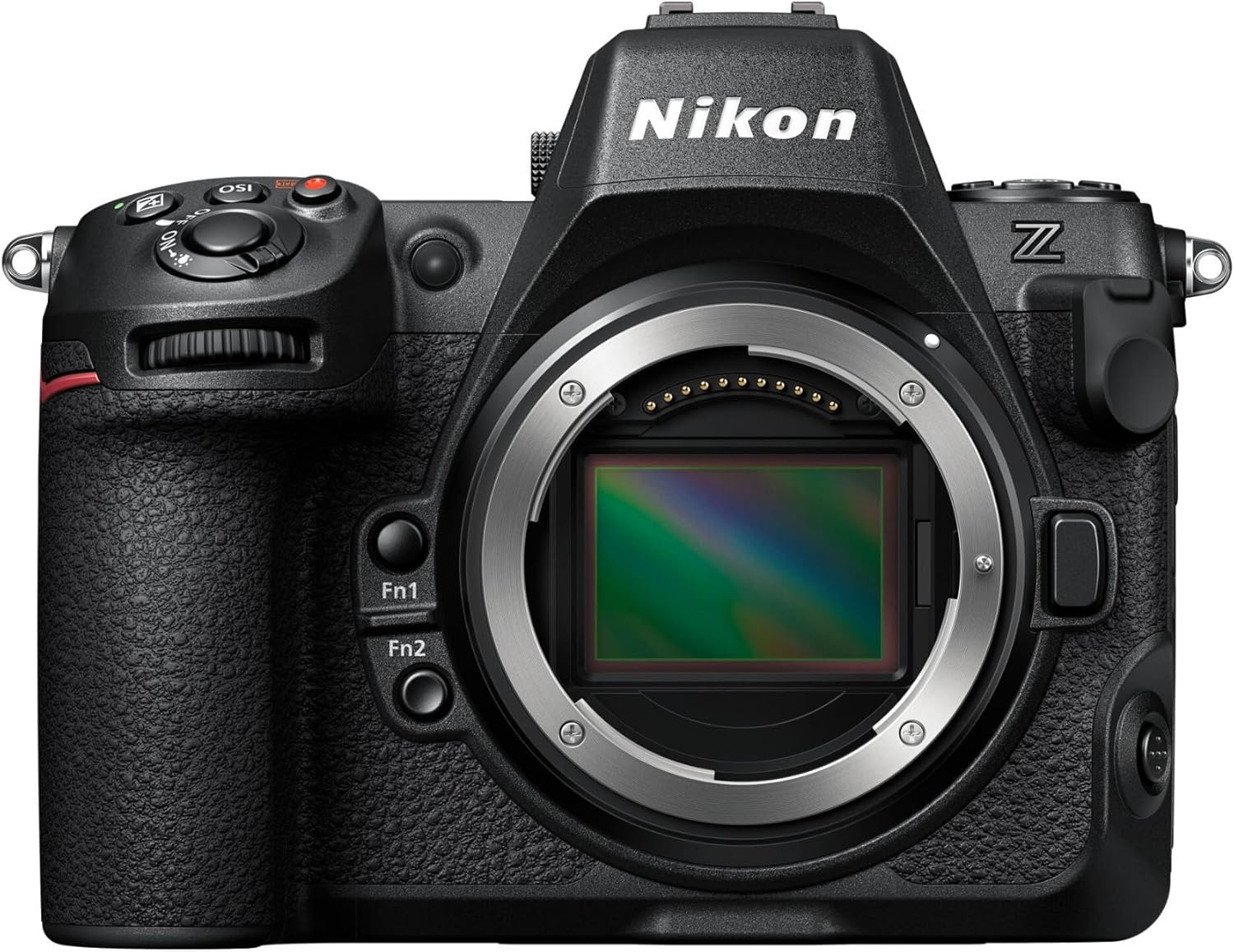
Nikon Z8
- Sensor: 45.7 MP full‑frame stacked CMOS
- Processor : EXPEED 7
- Autofocus: Same AF system family as Z9
- Video: Up to 8.3K/60p N‑RAW, 4K up to 120p, 8K/30p
-
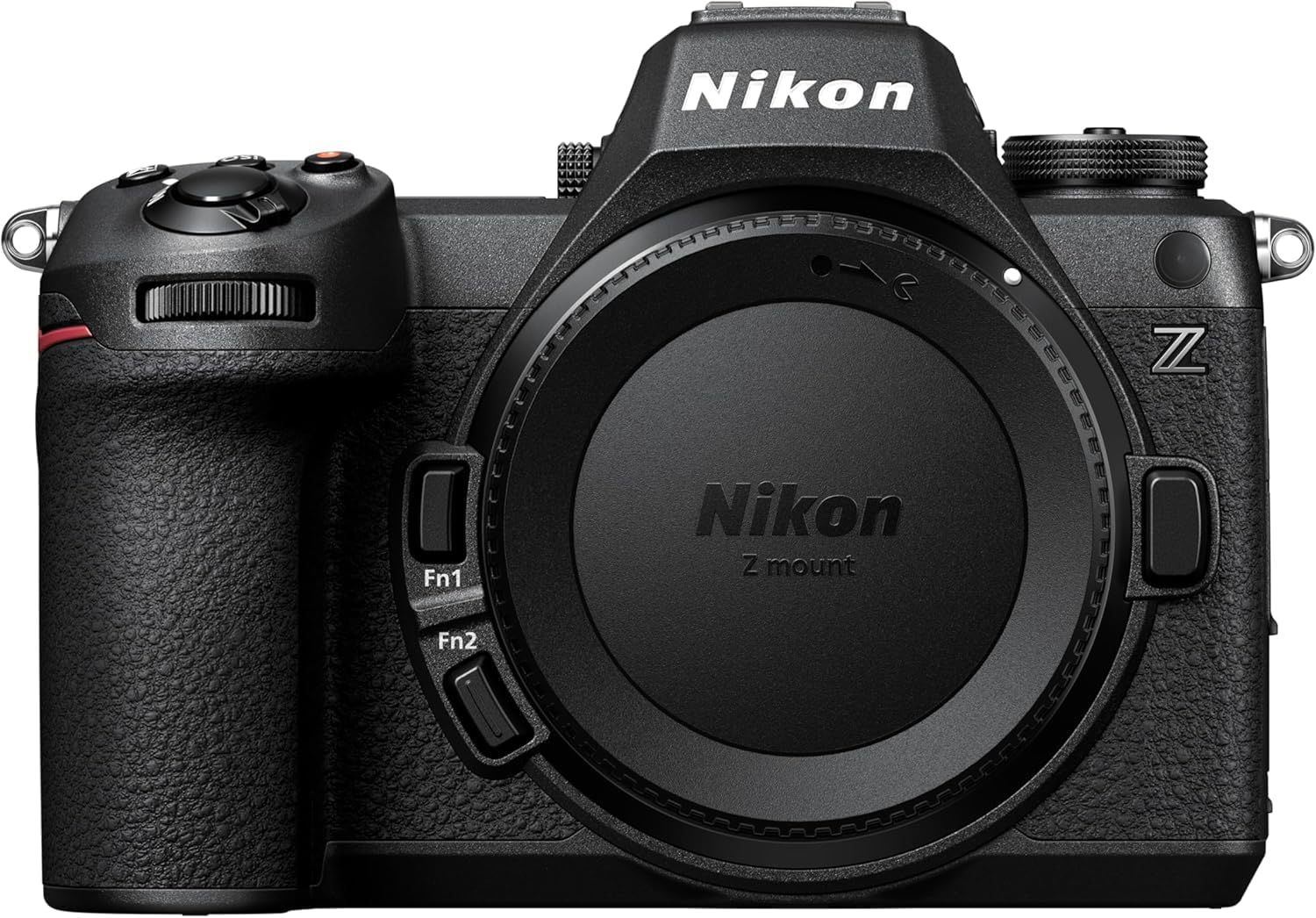
Nikon Z6 III
- Sensor: 24.5 MP full‑frame partially‑stacked CMOS
- Processor : EXPEED 7
- Autofocus: 493-Point Phase-Detection AF
- Video: 6K N‑RAW (to 60p), 4K up to 120p, FHD up to 240p
-
-
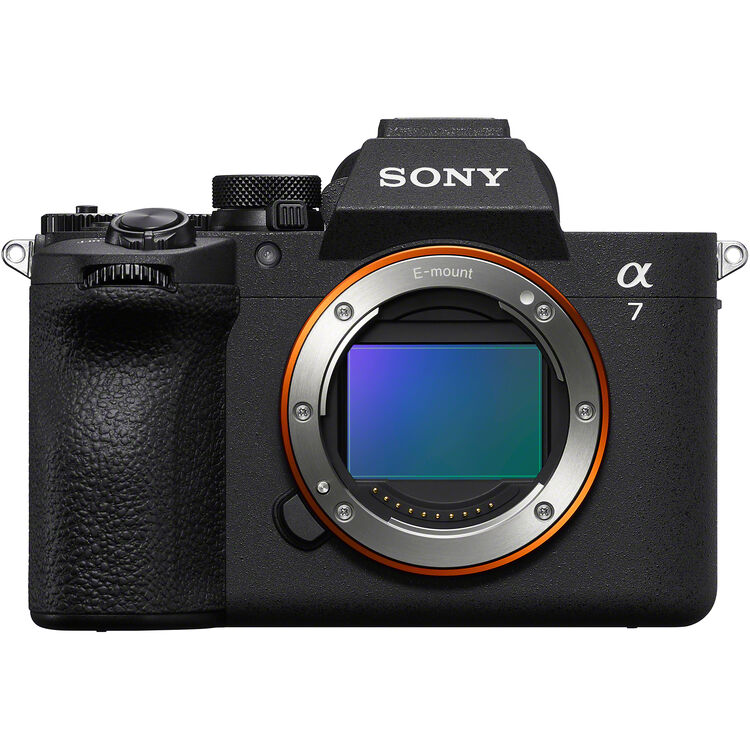
Sony a7 V
- Sensor: 33-megapixel full-frame partially stacked BSI CMOS
- Autofocus: AI-powered subject recognition
- Continuous Shooting: 30fps electronic, 10fps mechanical
- Video: 4K 60p, 10-bit 4:2:2 recording
About the Cameras in This Guide
Each of these brands, with the exception of Fujifilm, has a flagship camera that has all of the features each system offers. It would be obvious to suggest the most expensive camera in each brand, but that’s not practical for most shooters. If you’re making a living off of wildlife and sports, and you can afford it, the top-end camera will always have the best features.
Instead, we’ve looked at each company’s lineup, and given two choices: the best camera for wildlife, and then the best camera that will do wildlife photography with only minimal compromises.
Why Trust Us
I have tested and shot with every lens in this guide, and between myself and the Imaging Resource staff, we have tested all of them several times over.
At Imaging Resource, we’ve tested travel-friendly lenses across Sony’s E mount system in real-world scenarios—from street shooting and landscape hikes to on-the-go video—so you can see how they perform where it matters. As a mostly Sony shooter (thanks to being a reviewer I shoot all systems) I own or have owned many of the lenses in this guide.
We never accept payment for placement, and even though our articles contain affiliate links, they do not influence our editorial rankings./productryust Us
Canon
- 30fps burst with eye-control autofocus
- Integrated vertical grip for portrait orientation
- Professional build quality and weather sealing
- Eye-control AF enables rapid focus point changes
- 6K RAW video for professional productions
- Large size limits portability for casual use
- 24MP resolution restricts heavy cropping capability
- Premium pricing above the enthusiast camera range
- A complex operation requires professional experience
- Sensor: 24MP full-frame stacked CMOS
- Processor: DIGIC X
- Autofocus: Dual Pixel CMOS AF II with eye-control
- Video: 6K 60p RAW, 4K 120p
- Image Stabilization: 8-stop in-body stabilization
- Viewfinder: 5.76M-dot OLED EVF with eye-control sensors
- LCD: 3.2” fully articulating touchscreen
- Battery: LP-E19 (860 shots)
- Burst Rate: 12fps mechanical, 30fps electronic
- Dimensions: 5.9 x 4.4 x 3.3″ (150 x 111 x 85mm)
- Weight: 2.0 lb (916g) with battery
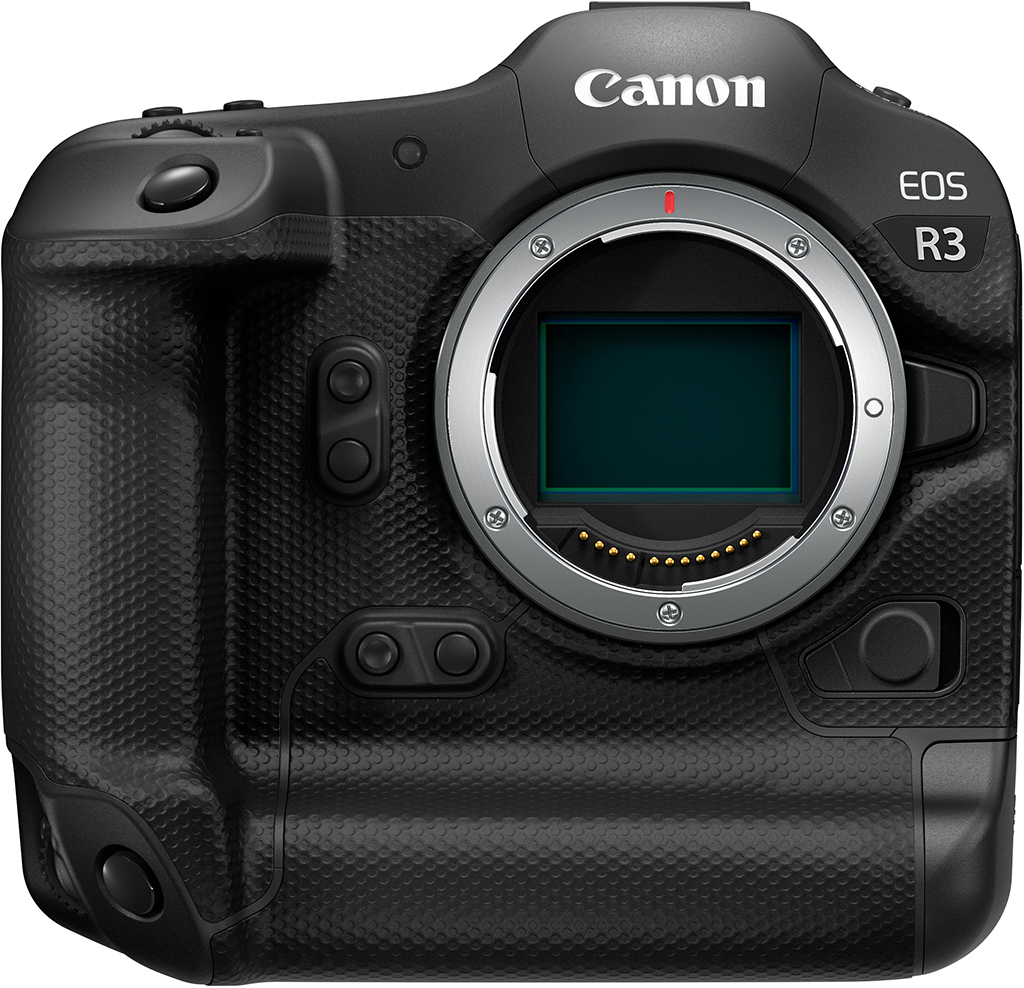
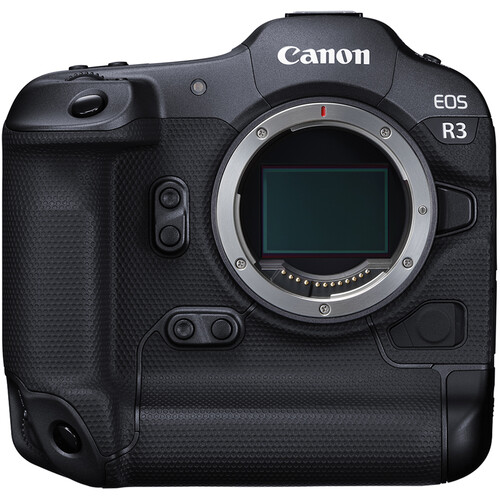
Canon EOS R3
The Canon EOS R3 packs almost all of the flagship features of the R1 into a smaller, less expensive body. The R3 arrived before the R1, and it was the first mirrorless camera designed specifically for sports, wildlife, and photojournalism.
I’ve shot extensively with both the R3 and the R1, and I actually prefer the R3, due to its lower weight and its body design. It just feels better in the hand to me than the R1, although sometimes I miss features found on the R1.
The R3 has a 24 megapixel stacked sensor, which means very low distortion when panning, and the ability to shoot at up to 30 frames per second with precapture. It uses Canon’s unique Eye Control AF, which focuses on whatever subject you’re looking at.
The vertical grip is a big plus for wildlife shooters, as it makes vertical shooting more comfortable and, I think, more accurate. By putting all of the controls in both the horizontal layout and vertical layout, it’s easier to make sure you’re getting the right switch. I think the vertical grip makes it easier to shoot long telephoto lenses, since you can support the camera from the bottom instead of reaching over the top.
The R3 has amazing low-light focus capabilities; it can focus down to -7.5 EF, which is nearly completely dark. Itis also weather sealed, something that’s important when you’re out in the rain trying to catch a shot of an elusive eagle or cloud leopard.
You can read our full review of the EOS R3.
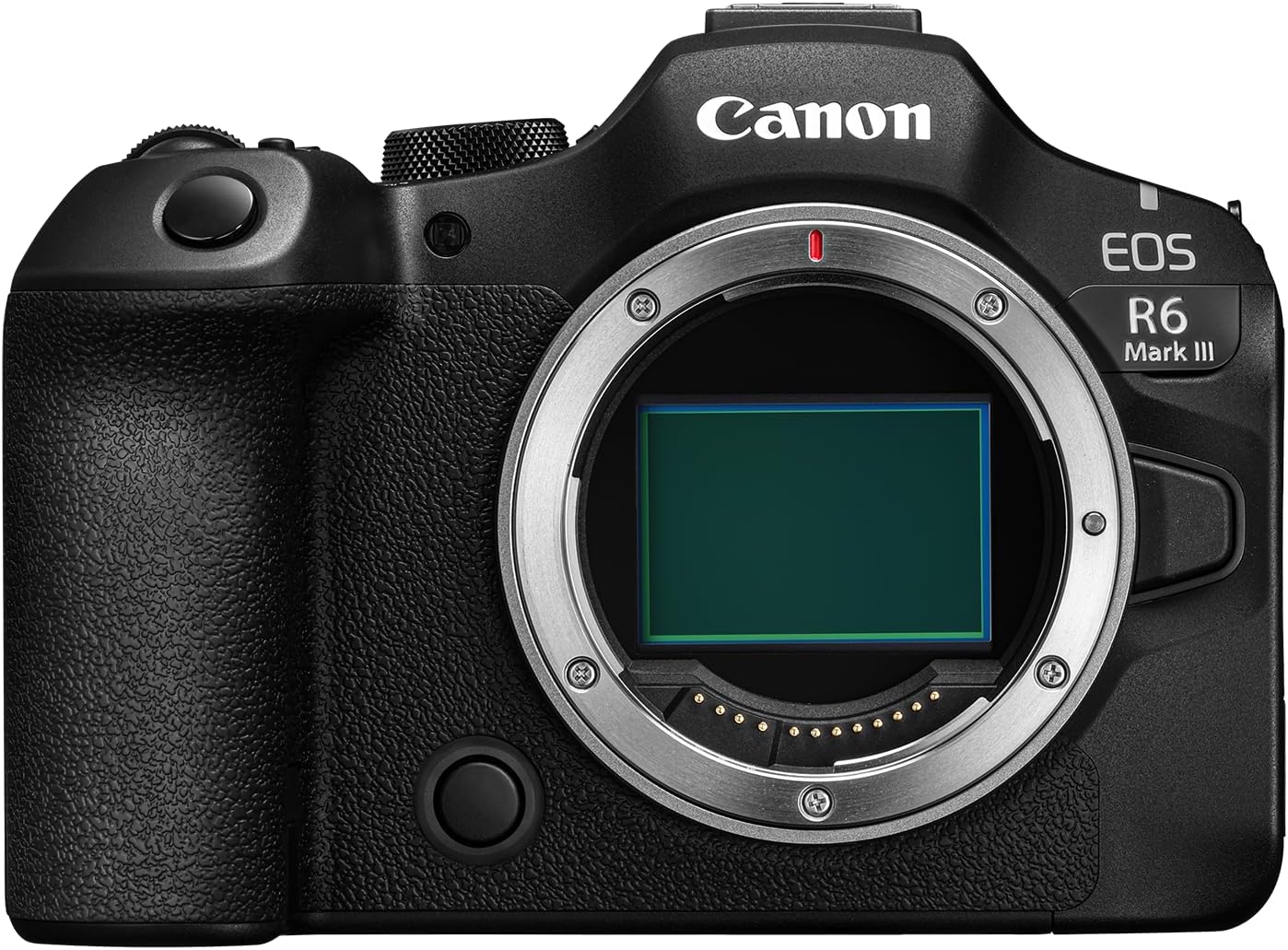
Canon EOS R6 Mark III
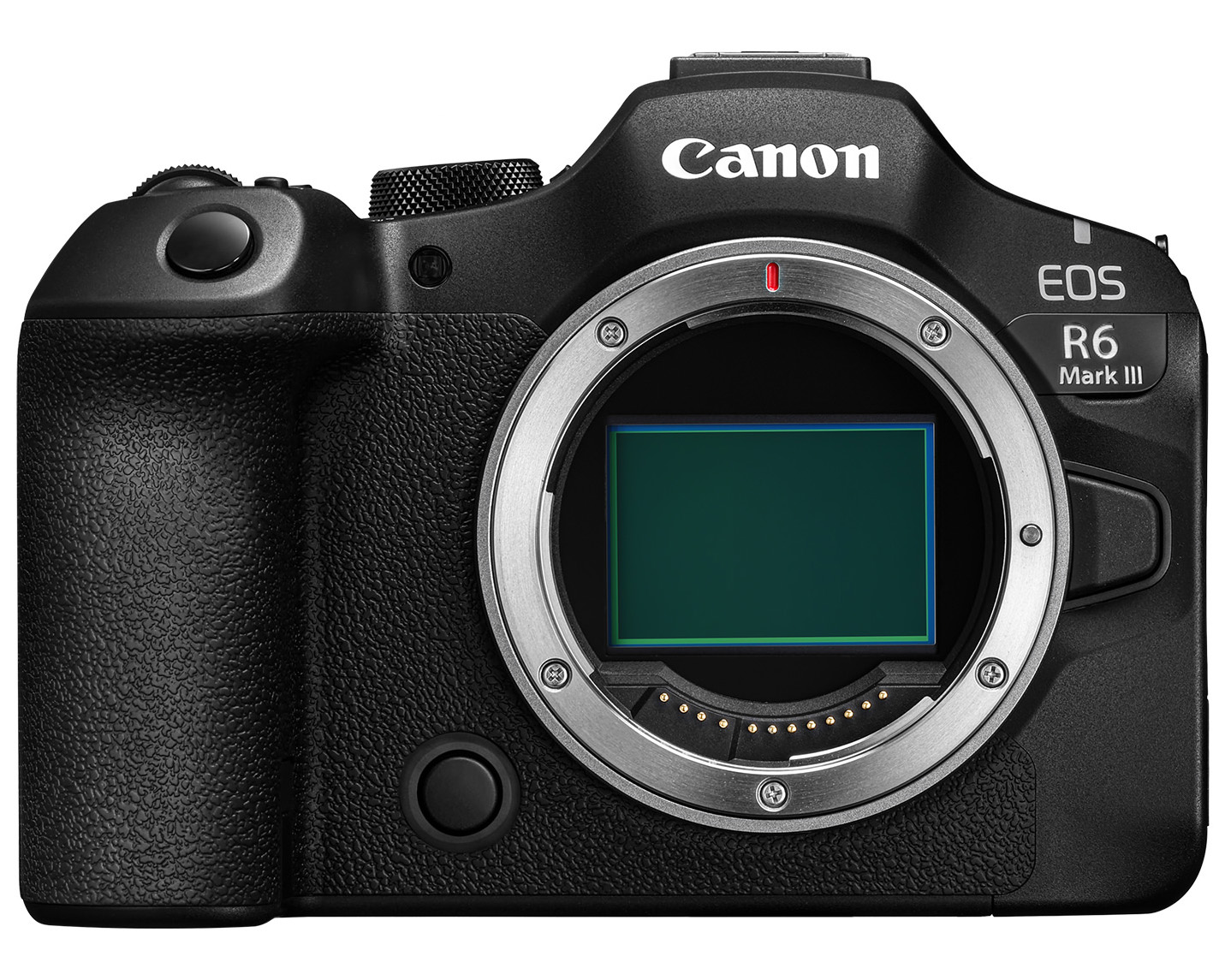
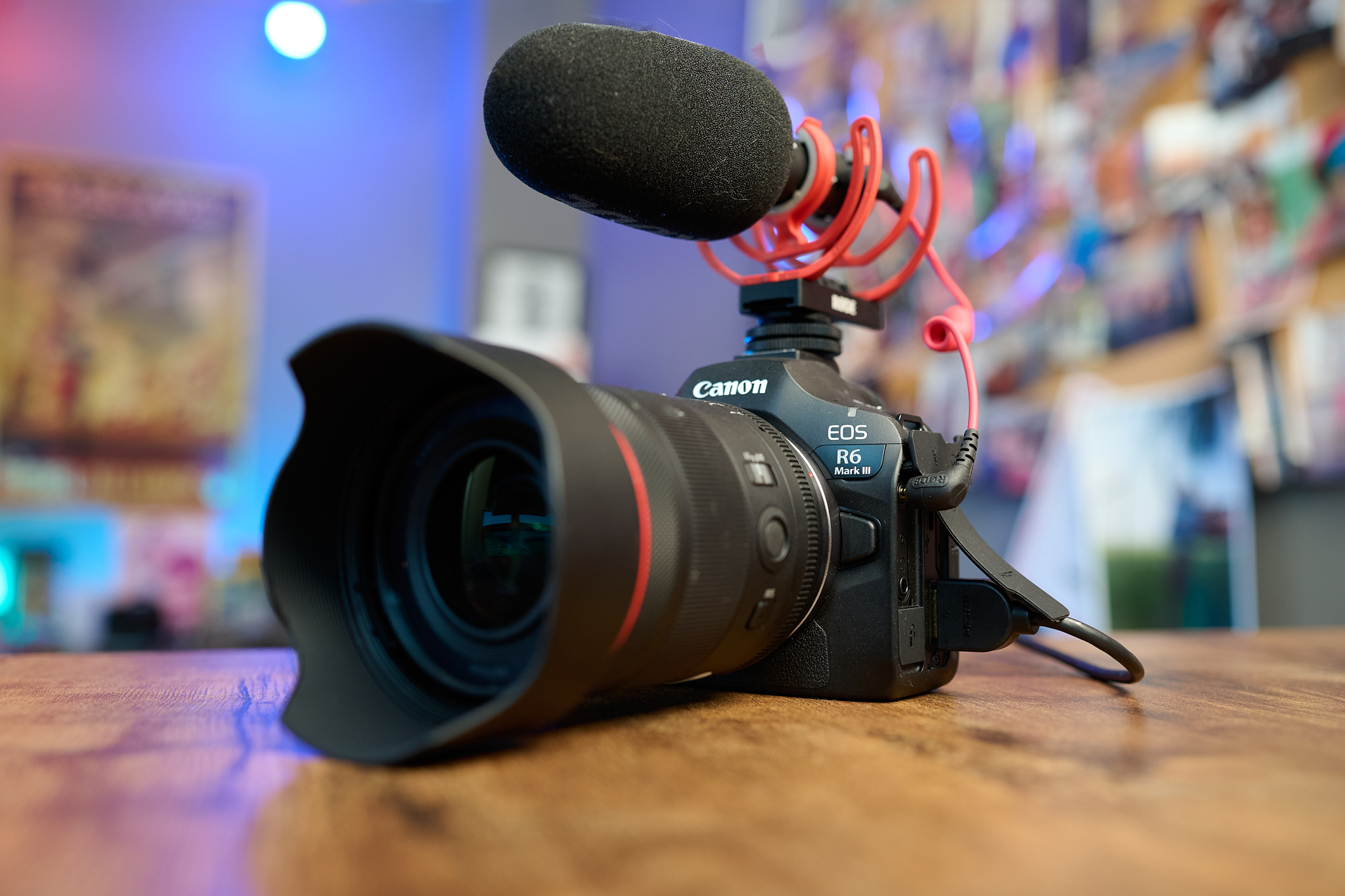
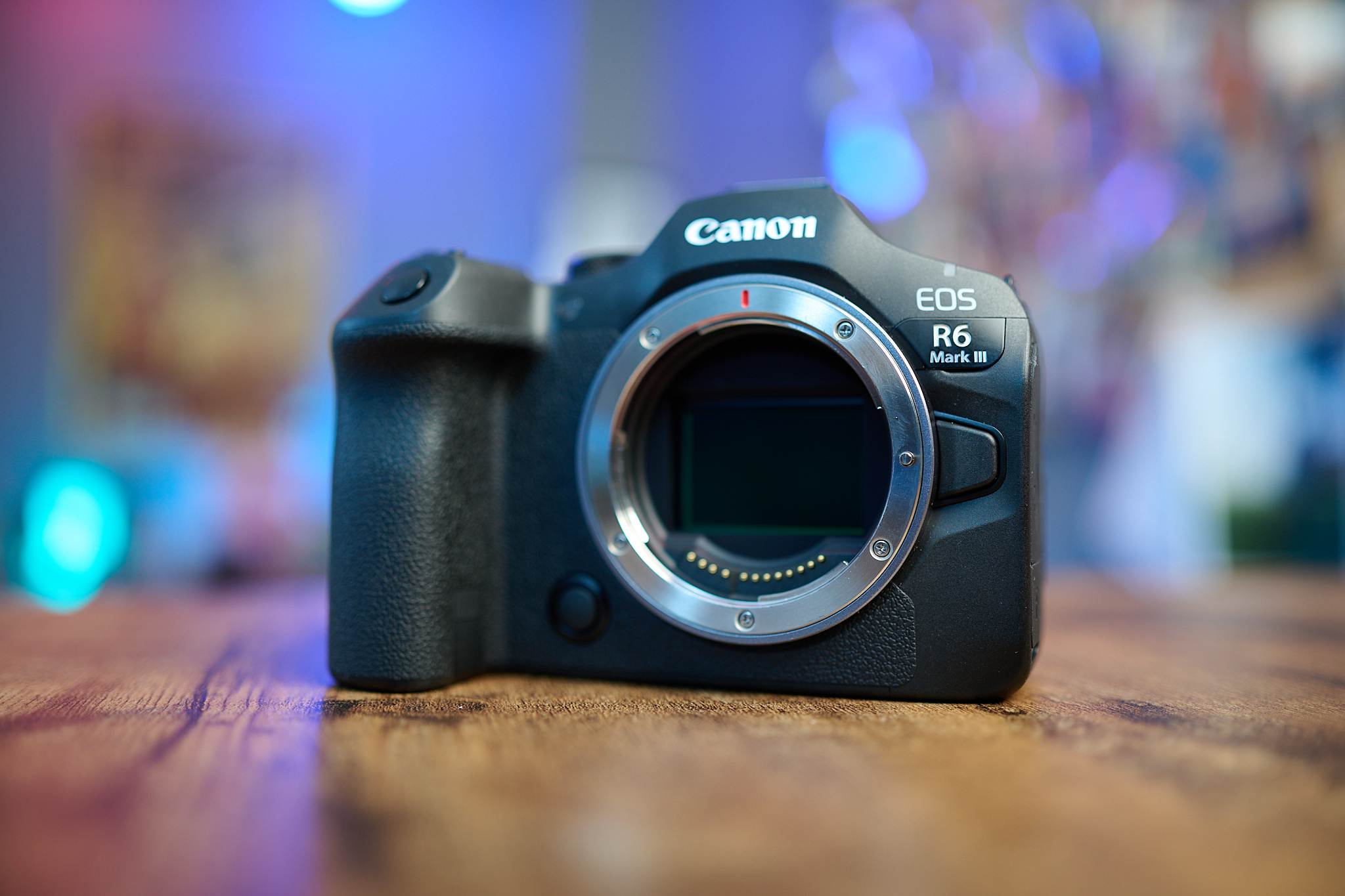
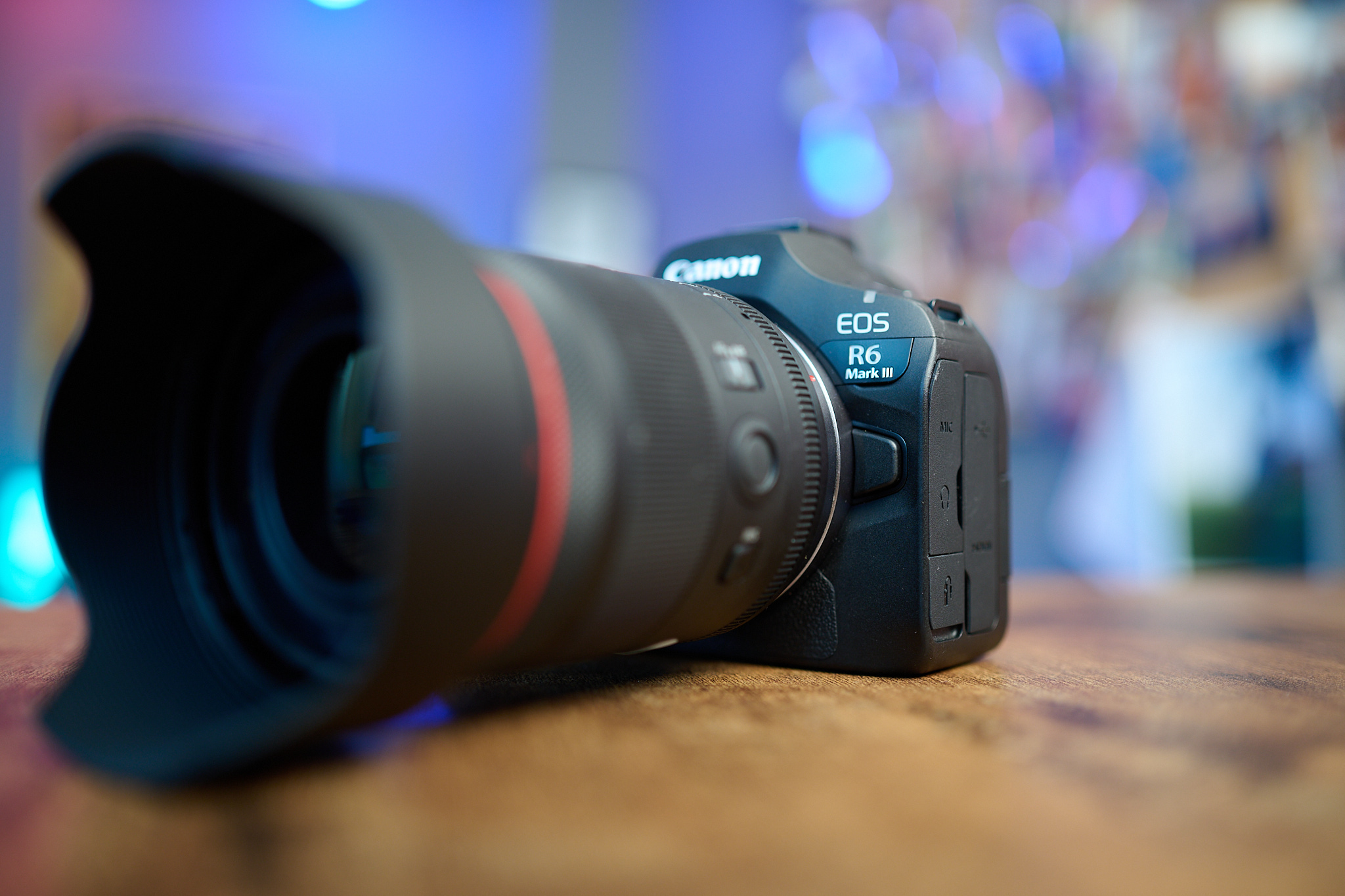
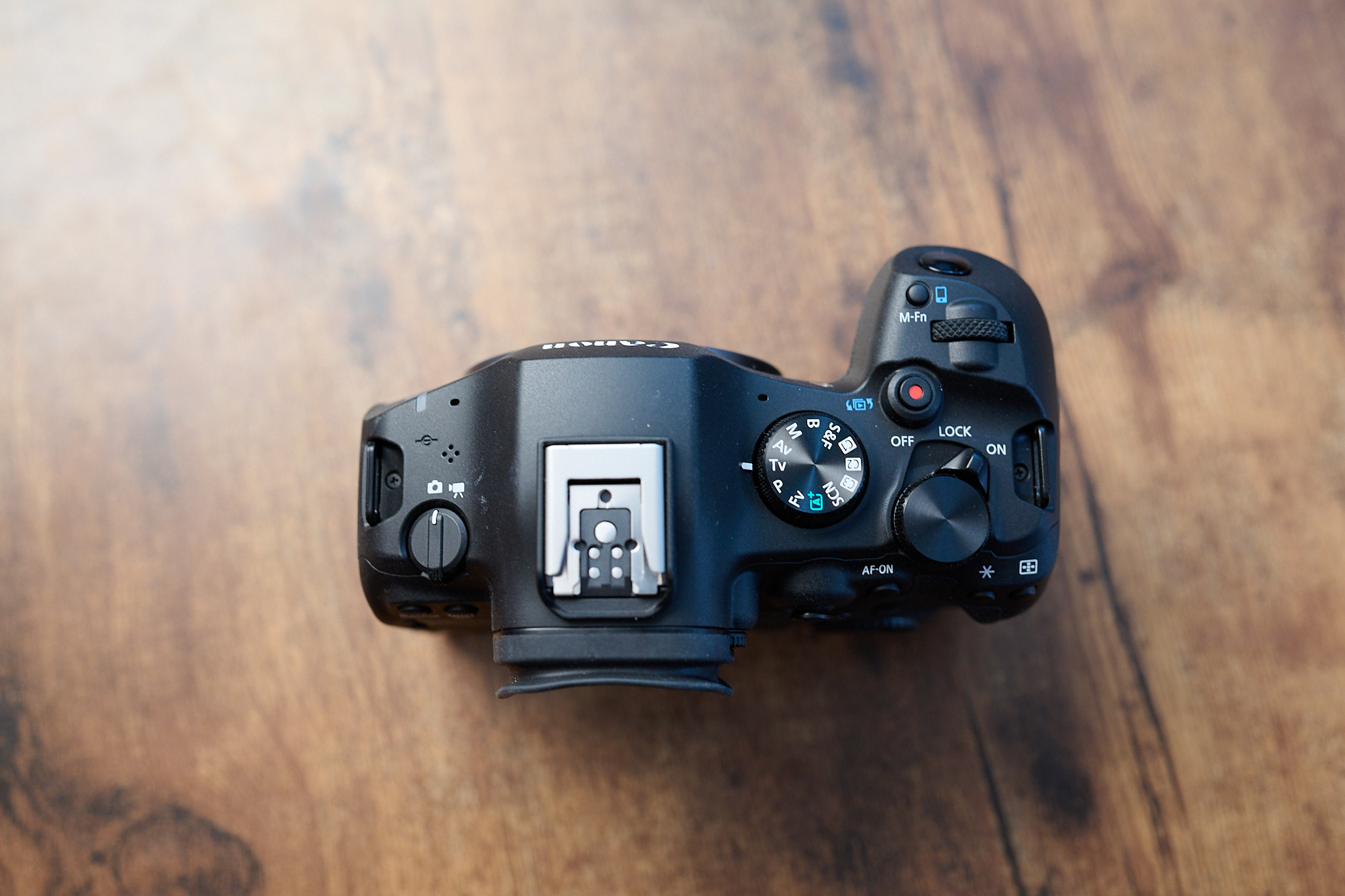
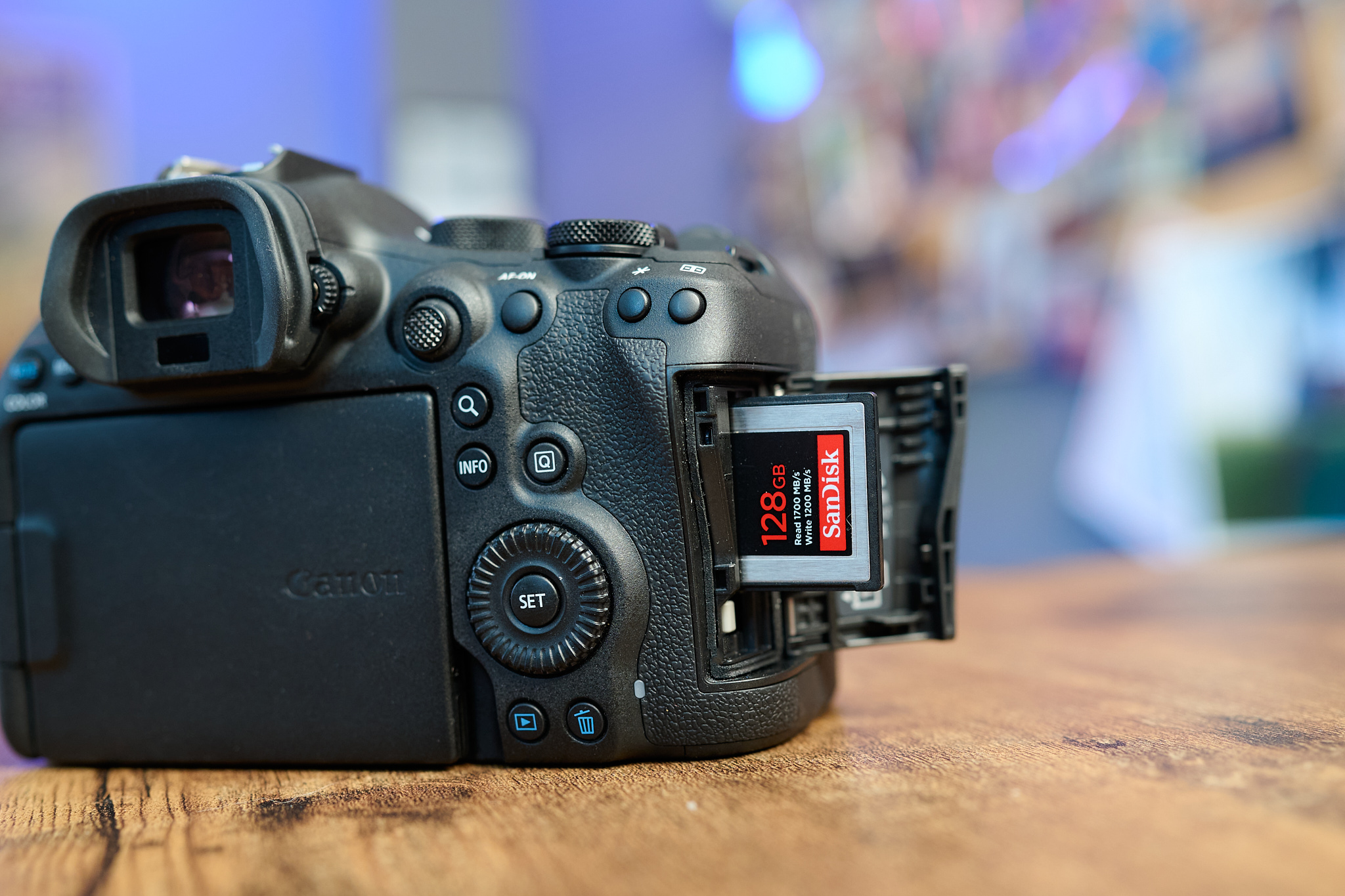
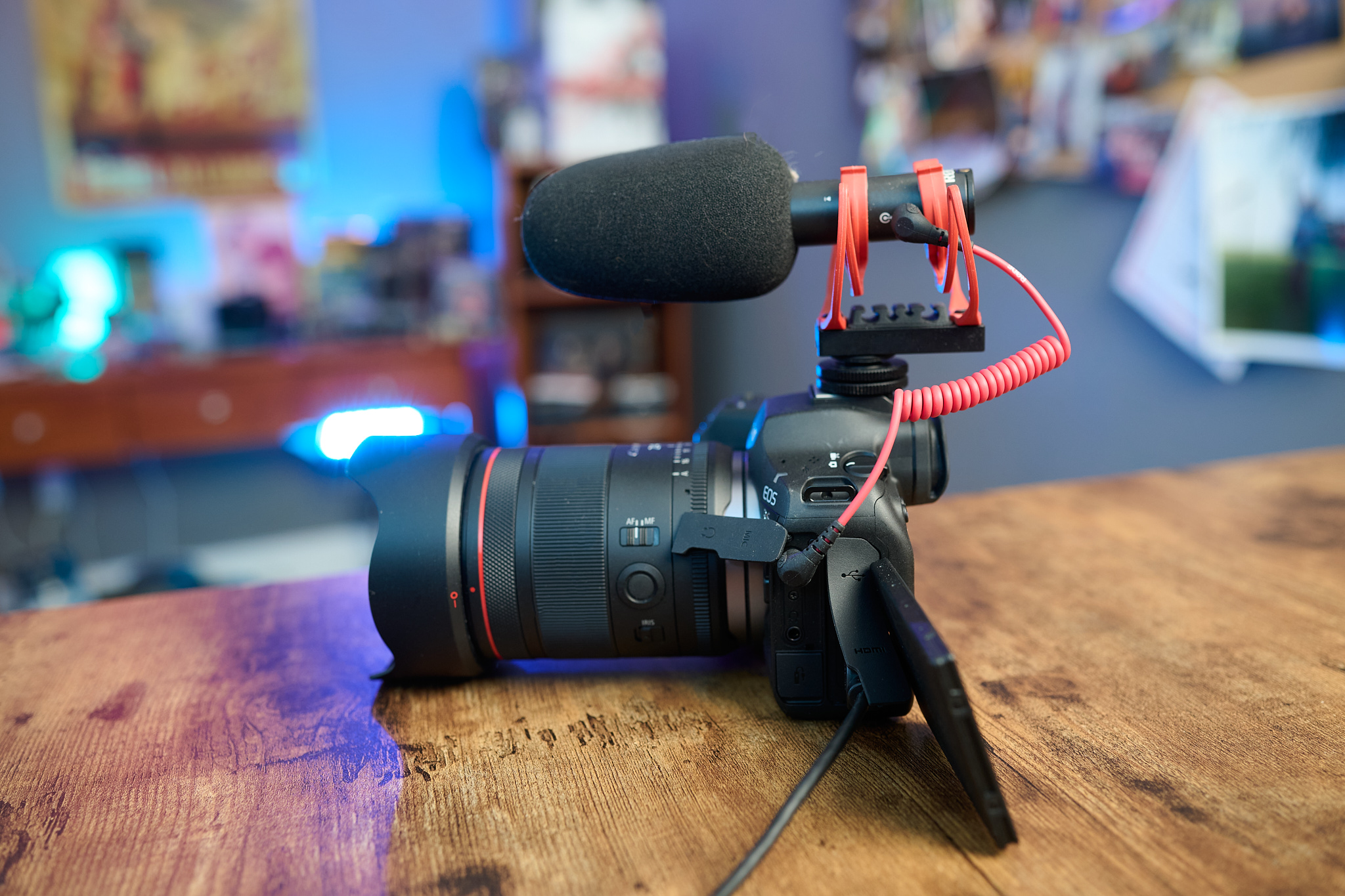
The Canon EOS R6 Mark III is a full-frame mirrorless camera designed for hybrid creators with professional-grade features in both stills and video.
Its 32.5-megapixel CMOS sensor and DIGIC X processor is used fast burst shooting—up to 40 frames per second electronically or 12 frames per second mechanically—with Dual Pixel CMOS AF II autofocus. In-body image stabilization provides up to 8.5 stops of correction with optically stabilized lenses. AF subject detection gives reliable focus across portraits, wildlife, and action, though it lacks the action based focus of the higher end Canon models.
It is a video-first hybrid with recording up to 7K, over sampled 4K up to 120p, and 180fps slow motion capture. It can record raw internally. The R6 III features dual card slots including CFexpress Type B for high-speed data and a SD slot, and has a full-size HDMI port,
- High-resolution 32.5MP full-frame CMOS sensor delivers detailed stills and sharp oversampled video.
- Dual Pixel CMOS AF II with advanced subject detection for accurate tracking in photo and video.
- Up to 40 fps electronic and 12 fps mechanical burst shooting.
- 5-axis in-body image stabilization offering up to 8.5 stops of correction.
- Internal 7K RAW and oversampled 4K 60p recording with 10-bit 4:2:2 color.
- Dual card slots (CFexpress Type B + UHS-II SD) for speed and redundancy.
- Full-size HDMI port for reliable external recording and monitoring.
- Tally lamps, waveform display, and magnify-while-recording features for pro workflows.
- Familiar, weather-sealed body with intuitive Canon controls and vari-angle touchscreen.
- Excellent power efficiency using the new LP-E6P battery (~600 shots per charge).
- No built-in cooling system; extended 7K or 4K 120p recording may trigger thermal limits.
- Slightly reduced maximum ISO range compared to previous models.
- Subject Track IS involves a small crop when active.
- CFexpress media is required to access the top recording modes.
- Still limited to one CFexpress slot instead of two for full redundancy as the SD slot is slower than CFexpress.
- Sensor: 32.5MP full-frame CMOS
- Processor: DIGIC X
- Image Stabilization: 5-axis IBIS, up to 8.5 stops coordinated with IS lenses
- Autofocus System: Dual Pixel CMOS AF II with subject detection
- ISO Range: 100–64,000 (expandable to 204,000)
- Continuous Shooting: 40 fps electronic / 12 fps mechanical
- Video Recording: 7K RAW up to 60p; 4K 10-bit 4:2:2 up to 120p
- Viewfinder: 3.69M-dot OLED EVF
- LCD Screen: 3.0-inch vari-angle touchscreen
- Storage: CFexpress Type B + UHS-II SD dual slots
- Battery: LP-E6P (approx. 600 shots per charge)
- Ports: Full-size HDMI, mic, headphone, USB-C
The Canon EOS R6 Mark III is my favorite camera in Canon’s lineup. Not only is it a great choice for still photography, but the video features make it one of the most capable cameras available today for wildlife videography.
The EOS R6 Mark III has so many improvements over the R6 Mark II that it feels like it’s from a completely different camera lineup.
The upgraded 32.5MP sensor (up from 20MP) provides better cropping flexibility while maintaining the R6 series’ excellent low-light performance. The R6 III has inherited the improved subject-based tracking, including tracking modes for several popular sports. These modes really up the accuracy when capturing things like soccer, as the camera can track who has the ball, not just the person in the focus box.
The addition of pre-continuous shooting of about 20 frames means the camera captures moments before you fully press the shutter, and once you do, the camera can capture up to 40fps.
This is something I’ve come to rely upon for photography of birds, where you’re never quite sure they’re going to take off until they have just taken off. With pre-capture, the camera is always saving images when the shutter is half pressed, and it records a group of shots from before the shutter is triggered.
Enhanced IBIS reaching 8.5 stops at the center helps when handholding long lenses in marginal light, and combines with the optical stabilization in many of Canon’s telephoto lenses.
I gave the camera high marks in my review.
Fujifilm
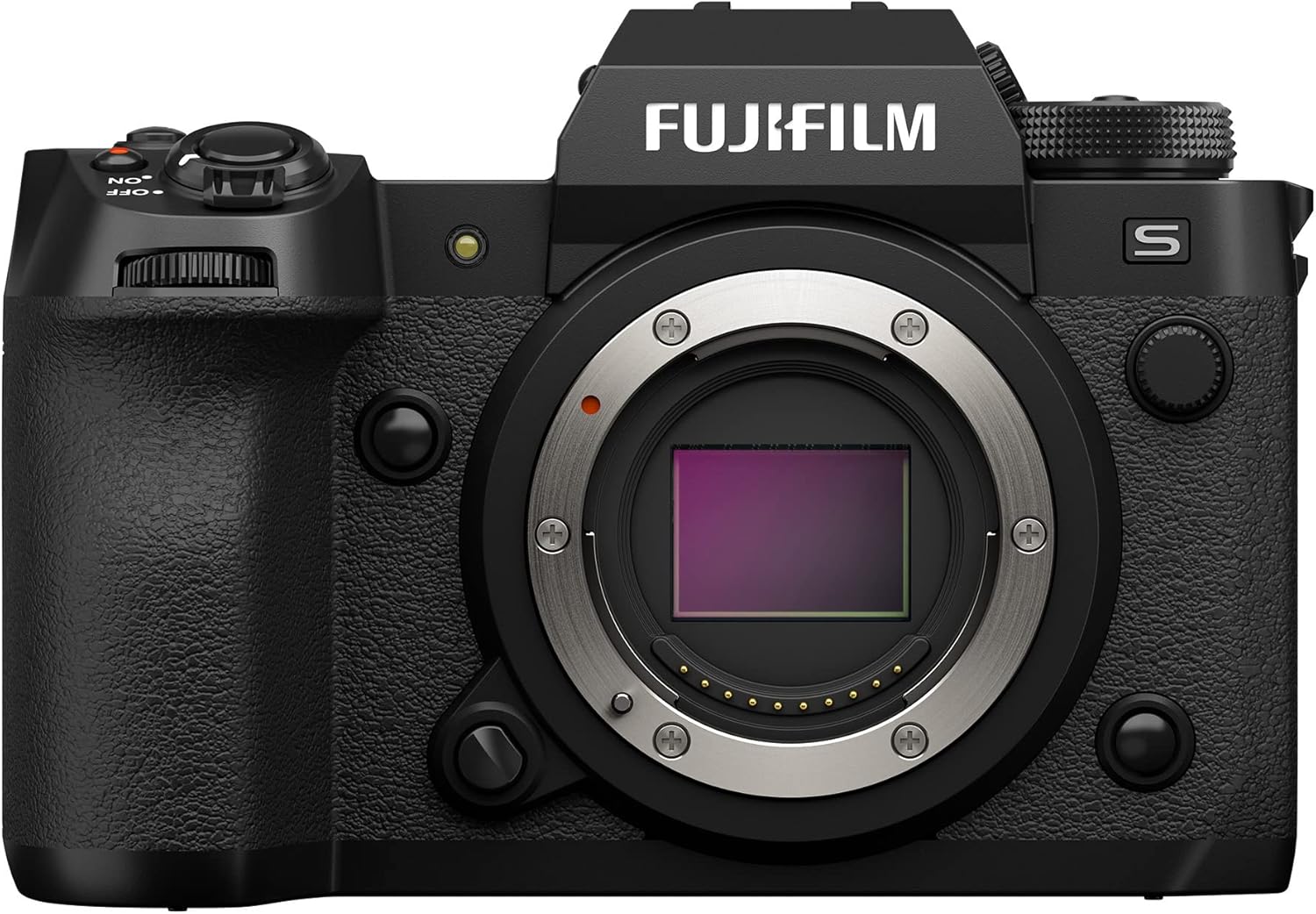
Fujifilm X-H2S
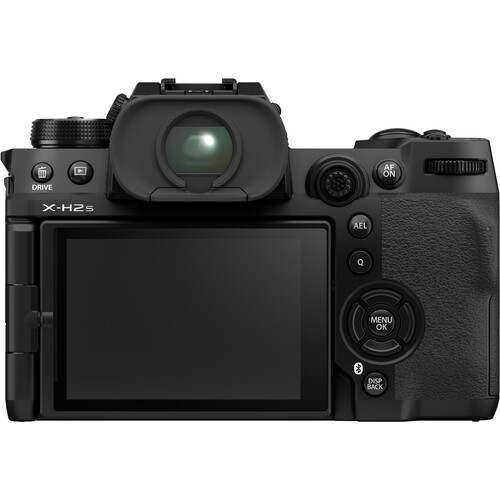
This camera is Fujifilm’s speed and video flagship, and I’ve been consistently impressed with its performance for fast-action photography. The stacked sensor eliminates rolling shutter issues, and the build quality matches anything in the professional camera market. For Fujifilm users who need maximum performance, this is the camera to pick.
Fujifilm’s flagship camera features advanced stacked sensor technology that virtually eliminates rolling shutter while also enabling fast burst shooting performance. Professional build quality and comprehensive video features make it suitable for demanding applications.
- Stacked sensor technology nearly eliminates rolling shutter artifacts while enabling exceptional burst shooting speeds for sports and wildlife photography.
- Professional-grade build quality with comprehensive weather sealing provides reliability for demanding commercial and outdoor applications.
- Advanced video features, including high frame rates and professional codecs, rival dedicated video cameras in a compact mirrorless package.
- Premium pricing for APS-C format may be difficult to justify when full-frame alternatives offer similar features at comparable costs.
- A complex feature set may overwhelm casual photographers who don’t require advanced professional capabilities and extensive customization options.
- APS-C sensor format limits low-light performance compared to full-frame alternatives in challenging shooting conditions.
- Sensor: 26.1MP APS-C X-Trans Stacked CMOS
- Processor: X-Processor 5
- Video Resolution: 6.2K 30p, 4K 120p
- Continuous Shooting: 15 fps (mechanical), 40 fps (electronic)
- Stabilization: 7-stop IBIS
- Viewfinder: 5.76m-Dot OLED EVF
- LCD: 3″ 1.62m-Dot vari-angle touchscreen
- Battery Life: Approx. 720 shots (CIPA)
Fujifilm isn’t a brand I usually recommend for wildlife and sports photography, as most of its cameras are aimed at street photography, fine art photographers, landscapes, and portraits.
But the Fujifilm X-H2S is Fujifilm’s flagship speed-oriented APS-C camera, specifically designed for sports and wildlife photographers. It features a 26.1MP stacked X-Trans CMOS 5 HS sensor delivering 40fps burst shooting and advanced AI subject detection.
The X-H2S offers professional-level performance in a more compact and affordable APS-C package than competitors have. In fact, there are no APS-C bodies from the main three manufacturers I’d recommend to sports and wildlife shooters because the full frame options are so good.
The combination of high-speed shooting, excellent image quality with Fujifilm’s beloved color science, and the reach advantage of the APS-C crop factor makes this camera particularly compelling for wildlife photographers on a budget.
The stacked sensor reduces motion blur effects, while also enabling the 40fps still performance and 240fps video rates.
This flagship Fujifilm uses a CFexpress Type B card, especially useful for 40fps shooting and for video capture. This camera is packed full of video features, and that CFe Type B card means you don’t run into bottlenecks while shooting high frame rates or video.
The 1.5x crop factor of APS-C works to the wildlife photographer’s advantage, effectively extending the reach of telephoto lenses. In APS-C, a 400mm lens ends up with a 600mm equivalent, for example.
This APS-C body comes in at a lower price than full-frame cameras and is much lighter as well.
In our review, we called this Fujifilm’s Best Hybrid Camera.
Nikon
Nikon Z8
The Nikon Z8 is a full-frame mirrorless camera featuring a 45.7-megapixel stacked CMOS sensor, paired with Nikon’s EXPEED 7 image processor. It supports up to 120 fps continuous shooting, RAW video recording up to 8.3K/60p, subject-detection for nine object types and 3D-tracking, and is built for durability in varied shooting environments.
- 120fps burst shooting with 1,000+ frame buffer for never missing critical action
- Internal 8K 60p and 4K 120p recording without external recorders
- 30% smaller and lighter than Z 9 while delivering identical image quality
- No built-in vertical grip like the Z 9
- High price point still requires serious investment
- Battery life shorter than Z 9 due to smaller body
- Sensor: 45.7 MP full‑frame stacked CMOS
- Processor : EXPEED 7
- Autofocus: Same AF system family as Z9
- Video: Up to 8.3K/60p N‑RAW, 4K up to 120p, 8K/30p
- Stabilization: 5.5-axis IBIS (up to 6 stops)
- Burst Rate: 120fps (Raw, 1,000+ frames)
- Build: Weather-sealed magnesium alloy (-10°C rated)
The Nikon Z8 is the sweet spot in Nikon’s mirrorless lineup for sports and wildlife photographers. Nikon had a DSLR model that offered a near-flagship experience in a smaller body, and that continues with its mirrorless models. The Z
This camera delivers flagship Z9 performance in a more compact, affordable body that’s comparable in size to my beloved D850 from the DSLR era. Like the D850, this body has everything I need for shooting sports and wildlife, without breaking the bank.
With its 45.7MP stacked sensor, blackout-free 20fps shooting, and advanced subject detection for birds, animals, and aircraft, the Z8 has become my go-to choice for wildlife shooting on the Nikon platform.
The 45.7MP resolution provides extensive cropping flexibility, perfect for subjects that refuse to get close (I’m looking at you, peregrine falcon). The stacked sensor reduces blur from quick movement, and the subject-based autofocus works well, even when combined with the 20fps shooting and long lenses.
This camera is also featured in our Best Nikon Cameras guide.
Nikon Z6 III
The Nikon Z6 III is a full-frame mirrorless body that pairs a 24.5 MP partially-stacked CMOS sensor with the EXPEED 7 processor to deliver faster readout, robust hybrid autofocus with expanded subject detection, and advanced video options including 6K/60fps RAW and 4K/120fps. It also features high-performance in-body stabilization, dual card slots (CFexpress/XQD + SD), a 5.76 M-dot EVF, and a weather-sealed body weighing approximately. 760 grams (1.68 pounds). Designed for creators who need one camera to do high-resolution stills and video with professional workflow support.
6K internal recording up to 60 fps for flexible post-production
Hybrid autofocus with subject detection and solid tracking
Reliable in-body stabilization rated up to 8 stops
Dual card slots (CFexpress + SD) for mixed workflows
Compact, weather-sealed body that feels balanced with Z-mount lenses
High-resolution EVF and fully-articulated touchscreen
24 MP sensor may limit cropping flexibility for wildlife or large prints
Rolling shutter still visible in some fast-motion 6K modes
Battery life is average for its class
Heavier than competing hybrid bodies like the Canon R8 or Sony a7C II
No built-in cooling, which can limit long 6K recording sessions
- Sensor: 24.5 MP full‑frame partially‑stacked CMOS
- Processor : EXPEED 7
- Autofocus: 493-Point Phase-Detection AF
- Video: 6K N‑RAW (to 60p), 4K up to 120p, FHD up to 240p
The Nikon Z6 III brings professional-grade autofocus and shooting capabilities to a more affordable price through its partially-stacked sensor design. A stacked sensor puts the sensor and memory on the same chip. It’s expensive to make, but it also results in much faster performance than a typical sensor. A semi-stacked sensor is less costly and gives about 80% of the performance without adding too much to the cost.
This camera delivers Z8-level subject tracking and detection at $1,500 less, making it an excellent entry point for wildlife photographers transitioning from DSLRs or looking to upgrade from earlier Z6 models. I think it’s one of the best values in photography today.
Like the Z8, it has subject detection (make sure you update the camera to firmware 2.0 to get this tracking), and it captures 20fps with almost no buffering. You can shoot JPEGs almost indefinitely.
The Z6 III has excellent low-light capabilities, thanks mostly to the 24.5 megapixel sensor’s excellent light-gathering capability. It also has superb dynamic range, perfect when shooting animals contrasted against a bright sky, or more brightly colored animals against dark foliage.
The claimed 8-stop IBIS is class-leading, enabling handheld shooting at shutter speeds that would have been impossible just a few years ago, and it pairs with in-lens stabilization on some of Nikon’s lenses.
Watch Our Video Review of the Nikon Z6 III
This camera is also in our Best Nikon Camera Buyer’s Guide.
Sony
Sony a1
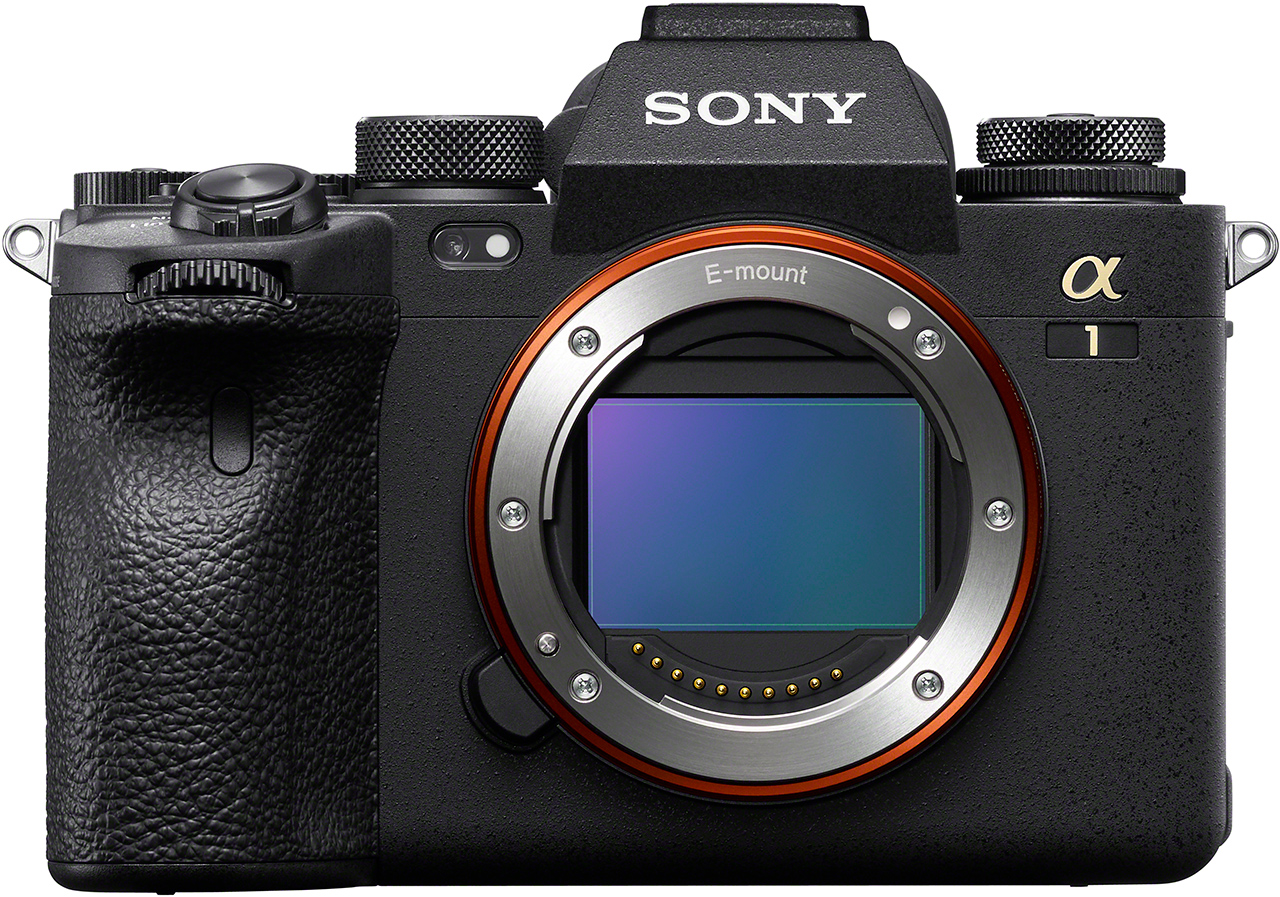
Sony’s flagship camera is the a1 II, the second generation of its everything but the kitchen sink solution to super-demanding photoshoots.
The A1 is still available and is nearly $1,000 less than the A1 II, while still featuring the best that the A1 II has to offer.
The biggest difference is that the a1 II has subject detection autofocus, while the a1 uses the earlier Real-time tracking AF. That said, the A1 has some of the fastest and most accurate autofocus in any camera, with the A1 II just adding the ability to recognize specific subjects. I’ve rarely seen the A1 miss focus, and it seldom drops focus.
I really fell for the A1 when shooting peregrine falcons. The a1 locked onto the bird despite it being mostly a distant shape in the sky, and then continued to track it as it tucked its wings and went into a fast dive. The 759 autofocus points make it lock on and stay locked on.
The A1 has a 50.1 megapixel sensor that’s still capable of shooting at 30fps, with no viewfinder blackout. That massive resolution allows photographers to crop images without losing detail, turning a long telephoto into a super-long telephoto.
The CFexpress (CFe) Type A card slot accepts the super-fast CFe cards or SD cards in the same slot, so that you can shoot with either card type in either slot.
It’s also a superb video camera, capturing at 8K in 10-bit 4:2:2, and 16-bit over HDMI, and can shoot in S-Log to match footage with Sony’s cinema cameras.
Sony A7 V
The Sony a7 V features a 33-megapixel partially stacked full-frame BSI CMOS sensor with BIONZ XR2 processor and integrated AI processing unit. It shoots blackout-free at 30fps electronic shutter and 10fps mechanical shutter with 759 phase-detection AF points covering 94% of the frame. The camera includes pre-capture functionality recording up to 1 second before shutter press at 30fps, Speed Boost function for instant burst rate switching, and buffer capacity of up to 95 compressed RAW or 185 JPEG images at 30fps with CFexpress Type A cards. Image stabilization provides up to 7.5 stops at the center and 6.5 stops at the periphery. Video capabilities include 7K oversampled 4K 60p full-frame, 4K 120p in Super 35 crop, and Full HD 240fps, all with 10-bit 4:2:2 internal recording. The camera features a 3.69-million-dot OLED viewfinder with a 120fps refresh rate, a 3.2-inch 4-axis vari-angle touchscreen, dual card slots (CFexpress Type A/SD UHS-II and SD UHS-II), NP-FZ100 battery rated for 630 EVF shots or 750 LCD shots, and full-size HDMI, dual USB-C, 3.5mm mic/headphone jacks, Wi-Fi, and Bluetooth connectivity.
- Partially stacked sensor technology delivers exceptional ISO invariance and dynamic range performance superior to competitors.
- Comprehensive feature set makes it truly versatile for both high-end stills and professional video work.
- Refined ergonomics and body design borrowed from flagship models improve handling and usability.
- Premium pricing positions it above mid-range competitors while lacking some flagship features.
- Autofocus performance, while excellent, doesn’t reach the same “sticky” tracking as the a1 or a9 III.
- Battery life is adequate but not class-leading for extended shooting sessions.
- Sensor: 33-megapixel full-frame partially stacked BSI CMOS
- Autofocus: AI-powered subject recognition
- Continuous Shooting: 30fps electronic, 10fps mechanical
- Video: 4K 60p, 10-bit 4:2:2 recording
- Image Stabilization: 5-axis in-body stabilization
- Viewfinder: High-resolution OLED EVF
The Sony a7 V is the newest kid on Sony’s block, replacing the aging-but-classic a7 IV. This is another camera that has upgraded so much from the previous version, it’s as if it were a whole new camera line.
The Sony a7 V has a lot of features found on the a1 and a1 II. For a photographer, it’s a mini A1 II. The a7 V is the first Sony with the company’s new BIONZ XR2 processor. This new design couples the processor and sensor on the same chip for focus as fast as the flagship camera.
Amazingly, there is no blackout in the viewfinder when shooting at 30 frames per second, and it can capture at that full rate in RAW, not just JPEG, as is the case with some other cameras. It is the lowest-priced Sony to feature pre-capture, a big bonus for wildlife and sports shooters.
The 33 megapixel sensor is partially stacked, so it has more motion blur in video and quick pans, but it’s almost unnoticeable. With a claimed 7.5-stop IBIS stabilization system, it pairs well with Sony’s longer glass, like the Sony 200-600mm, which we featured in our Best Sony Travel Lens guide. When coupled with lenses with optical image stabilization, you get a system that can be easily handheld at super-long focal lengths or at slow speeds.
The Sony a7 V doesn’t have good video specs, albeit not as great as the a1 and a1 II. It creates 4K from oversampled 6K, and has Hybrid Log Gamma for High Dynamic Range (HDR) video capture, and can capture in Sony’s S-LOG and S-Cinetone for color matching
FAQs
What’s the difference between a stacked sensor and a partially-stacked sensor?
A stacked sensor places processing circuitry on a separate layer bonded to the imaging sensor, enabling extremely fast readout speeds for high frame rates and minimal rolling shutter. Partially-stacked sensors add processing circuitry only to the top and bottom of the sensor rather than a complete separate layer, delivering many of the performance benefits at lower cost. Cameras like the Nikon Z8 and Sony Alpha 1 use fully stacked sensors, while the Nikon Z6 III and Sony A7 V use partially-stacked designs.
Do I really need more than 24 megapixels for wildlife photography?
It depends on your shooting style and subjects. Higher resolution sensors (40-50MP) provide more cropping flexibility when subjects are distant, which is common in wildlife photography. However, 24-26MP sensors typically offer better low-light performance, smaller file sizes, and faster processing. If you frequently shoot birds or mammals at long distances and need to crop significantly, higher resolution helps. If you get close to subjects or primarily shoot in challenging light, 24MP may be sufficient.
What frame rate do I actually need for sports and wildlife?
Most wildlife and sports situations are well-served by 10-15fps. Higher frame rates like 20-30fps increase your chances of capturing peak action moments, while 40fps+ can feel like overkill for many scenarios. Consider that more frames mean more time sorting through images. Pre-capture features (which buffer frames before you fully press the shutter) can be more valuable than raw speed for capturing unexpected moments.
Is full-frame really necessary for wildlife photography, or can APS-C compete?
Modern APS-C cameras like the Fujifilm X-H2S deliver professional-level performance with advantages for wildlife: the crop factor provides extra reach (1.5x for APS-C means a 400mm lens acts like 600mm), and lenses are typically smaller and less expensive. Full-frame cameras generally offer better low-light performance, shallower depth of field control, and higher resolution options. For distant wildlife where reach matters most, APS-C can actually be advantageous.
How important is weather sealing for wildlife photography?
Essential if you shoot in challenging conditions. Wildlife photography often means early morning dew, unexpected rain, dusty environments, and temperature extremes. All cameras in this guide feature professional-grade weather sealing, but it’s not waterproof—use rain covers in heavy weather. The best weather sealing won’t help if you constantly change lenses in wet conditions, so plan your lens choices before heading into the field.
What’s the advantage of Eye Control AF on the Canon R3?
Eye Control AF allows you to select focus points by looking at your subject through the viewfinder, dramatically speeding up composition changes when tracking multiple subjects. After calibration, the camera detects where your eye is looking and can instantly move the AF point there. This is particularly valuable in sports where action shifts rapidly between players, or in wildlife when multiple birds appear in the frame. It requires some practice but becomes intuitive with use.
Should I prioritize resolution or low-light performance?
This depends on your typical shooting conditions and subjects. If you photograph birds at long distances in good light and frequently crop images, prioritize resolution (40-50MP). If you shoot mammals in dawn/dusk conditions or need high ISOs regularly, prioritize low-light performance with lower resolution sensors (24-33MP). The Sony Alpha 1 and Nikon Z8 attempt to deliver both, while cameras like the Canon R3 and Nikon Z6 III favor low-light performance.
Do I need CFexpress cards or are SD cards sufficient?
For maximum performance with high-speed shooting, CFexpress Type B cards are recommended. They’re essential for cameras shooting 20fps+ in RAW, extended 4K/6K/8K video recording, or when you need to clear the buffer quickly between bursts. SD UHS-II cards work fine for more modest shooting rates and provide better value. Many cameras offer both types of slots, letting you use CFexpress for performance and SD for overflow or backup.
How much does the camera body matter versus the lens?
For wildlife photography, both are critical but in different ways. A great lens on a modest body will deliver sharper images than a modest lens on a great body. However, modern autofocus systems, frame rates, and tracking capabilities in flagship bodies dramatically improve your keeper rate with distant or erratic subjects. If budget is limited, invest in the best telephoto lens you can afford first, then upgrade the body as finances allow.
Can these cameras work well with adapted lenses?
Performance varies by system. Canon’s EF-to-RF adapter works excellently with older EF lenses, maintaining full autofocus speed. Nikon’s FTZ II adapter similarly works well with F-mount lenses. Sony cameras can use A-mount lenses via adapter with some performance compromises. Third-party adapters for manual focus lenses work on all systems. Native lenses always provide the best performance, but adapters let you transition gradually or leverage existing glass investments.